Extracorporeal Membrane Oxygenation (ECMO)


Left: Robert Bartlett. Right: John H. Gibbon.
The story of ECMO begins in 1930 with Dr. John H. Gibbon, as he watched one of his patients die from a pulmonary embolism. In his own words, “During that long night… the idea naturally occurred to me that if it were possible to remove some of the blue blood from the patient’s swollen veins, put oxygen into that blood and allow carbon dioxide to escape from it, and then inject continuously the now-red blood back into the patient’s arteries, we might have saved her life. We would have bypassed the obstructing embolus and performed part of the work of the patient’s heart and lungs outside the body.” Working with his wife Mary at Jefferson Medical College in Philadelphia, Gibbon built increasingly sophisticated devices over a 22 year period, and on May 6, 1953, he performed the first successful open-heart operation using an extracorporeal circuit with a bubble oxygenator — repair of an atrial septal defect in an 18-year-old woman.
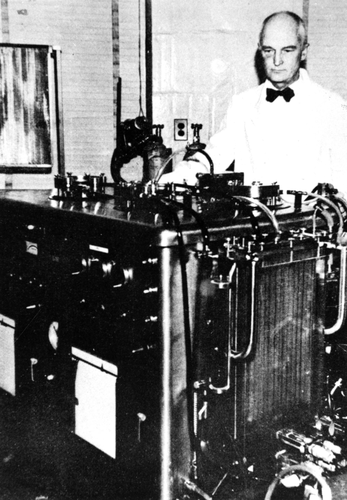
Gibbon’s machine, though revolutionary, could only be used for the brief duration of surgery, because the direct exposure of blood to oxygen in a bubble oxygenator would destroy blood cells and proteins within hours, leading to organ failure and making it lethal for prolonged use. The development of silicone membranes in the late 1950s, which could be interposed between blood and oxygen to allow gas exchange without direct contact, was a critical breakthrough. The membrane oxygenator — the defining feature that separates ECMO from conventional bypass — made prolonged extracorporeal support theoretically possible.
The leap from operating room to intensive care unit came in 1972,* when San Francisco surgeon J.D. Hill used a membrane oxygenator to support a 24-year-old trauma patient with acute respiratory failure for 75 hours — the first time extracorporeal support had been used outside of surgery. The patient survived. By this time, Robert Bartlett, a thoracic surgeon and researcher at the University of California, Irvine, had spent years in the laboratory refining the membrane lung for prolonged use. He had already successfully used ECMO in a two-year-old cardiac patient in 1972. But the defining moment came in 1975.
In 1975,* a young woman from Baja, Mexico gave birth in Orange County, California. The infant was found to have severe meconium aspiration syndrome with pulmonary hypertension and was failing rapidly. With the baby’s pO₂ down to 12 and nothing left to try, Bartlett wheeled in an ECMO machine in from his laboratory. Consent was obtained through an interpreter by flashlight, to avoid disturbing other patients, from a mother who signed only with an “X”. The nursing staff named the child Esperanza — Spanish for “hope.” After 72 hours on ECMO, she was decannulated, recovered fully, and went on to live a healthy life with children of her own. Bartlett published the case in 1976. By 1984 he was reporting a 90% success rate for most forms of neonatal respiratory failure.
The path from experimental rescue therapy to standard of care required clinical trials — and neonatal ECMO generated some of the most ethically and statistically debated trials in intensive care medicine.
In 1985, Bartlett and colleagues published the first randomized controlled trial of neonatal ECMO, using a novel “play-the-winner” design that updated the probability of assignment to each treatment based on prior outcomes. Of 12 infants enrolled, 11 were randomized to ECMO — all survived — while the single infant assigned to conventional management died. The result was compelling but the design drew criticism, and further trials followed. O’Rourke and colleagues at Harvard published a second adaptive trial favoring ECMO in 1989. The definitive evidence came from a large UK randomized trial conducted from 1993 to 1995: survival was 70% in the ECMO group versus 41% in conventionally managed infants. A subsequent Cochrane review of four trials found 77% survival with ECMO compared to 44% without. From that point, neonatal ECMO was established as standard of care, and “adaptive” clinical trials have become widely used.
Early neonatal ECMO required ligation of the right common carotid artery for venoarterial (VA) cannulation — a necessary sacrifice that raised lasting concerns about neurological consequences. The development of dual-lumen venovenous (VV) cannulae in the early 1990s addressed this, allowing single-site access through the internal jugular vein and sparing the carotid artery entirely. VV ECMO provides respiratory support without bypassing the heart, preserving pulsatile blood flow and myocardial perfusion.
The oxygenator itself evolved in parallel. Early circuits used silicone membrane or polypropylene hollow-fiber oxygenators, both prone to plasma leakage. Polymethylpentene oxygenators, introduced in the 2000s, offered better gas exchange, reduced blood trauma, and greater durability — an important advance given that anticoagulation management and hemorrhagic complications, particularly intracranial hemorrhage, remained the most feared risks of neonatal ECMO.
In 1989, Bartlett founded the Extracorporeal Life Support Organization (ELSO), envisioning it as the “motor for research, the forum for discussion, the internal conscience, and the external voice of extracorporeal life support.” ELSO established a global registry that became one of the most important outcomes databases in critical care medicine. As of October 2024, more than 36,500 neonates have been placed on ECMO for respiratory failure, with 72% surviving to hospital discharge.
As neonatal ECMO became established during the 1990s, parallel advances — surfactant replacement, high-frequency ventilation, and especially inhaled nitric oxide for persistent pulmonary hypertension — reduced the number of term infants who reached ECMO thresholds. The result was paradoxical: overall neonatal ECMO use declined, but the patients still requiring it became progressively more complex, concentrated among infants with congenital diaphragmatic hernia, structural lung disease, and conditions refractory to every other available intervention. One biological constraint proved durable: the heightened risk of intraventricular hemorrhage with anticoagulation limits ECMO in most centers to infants of at least 34 weeks’ gestational age, leaving the most premature infants — those who might benefit most — largely beyond its reach.
Robert Bartlett died on October 20, 2025, at the age of 86, and is widely known as the “Father of ECMO.” He lived to see ECMO technology grow into a global standard of care, with more than 250,000 patients treated at over 800 hospitals in 66 countries. For neonates in particular, ECMO transformed outcomes that had been nearly universally fatal — giving the field a true rescue therapy of last resort, and redefining what it meant to survive.
* Sources differ on several of the dates in this article. For example, some articles have 1971 and some have 1972 for J. D. Hill’s first use of a membrane oxygenator, in a human while some have 1974 and others have 1975 for Bartlett’s treatment of baby “Esparanza.” Dr. Bartlett’s own article “The Story of ECMO” (2024) gives the dates as 1972 and 1975 respectively, so those are the dates we have used in this posting.
- Extracorporeal Life Support Organization – among other things this site has a worldwide statistics dashboard and a beautiful tribute to Dr. Bartlett.
Foundational and Review Articles
- Bartlett RH, Gazzaniga AB, Jefferies MR, Huxtable RF, Haiduc NJ, Fong SW. Extracorporeal membrane oxygenation (ECMO) cardiopulmonary support in infancy. Trans Am Soc Artif Intern Organs. 1976;22:80-93.
- Bartlett RH, Roloff DW, Cornell RG, Andrews AF, Dillon PW, Zwischenberger JB. Extracorporeal circulation in neonatal respiratory failure: a prospective randomized study. Pediatrics. 1985 Oct;76(4):479-87.
- Bartlett RH, Gazzaniga AB, Toomasian J, Coran AG, Roloff D, Rucker R. Extracorporeal membrane oxygenation (ECMO) in neonatal respiratory failure. 100 cases. Ann Surg. 1986 Sep;204(3):236-45.
- UK collaborative randomised trial of neonatal extracorporeal membrane oxygenation. UK Collaborative ECMO Trail Group. Lancet. 1996 Jul 13;348(9020):75-82.
- Wolfson PJ. The development and use of extracorporeal membrane oxygenation in neonates. Ann Thorac Surg. 2003 Dec;76(6):S2224-9.
- Gibbon JH Jr. The development of the heart-lung apparatus. Rev Surg. 1970 Jul-Aug;27(4):231-44.
- Bartlett RH. Esperanza: the first neonatal ECMO patient. ASAIO J 2017;63(6):832–843.
- Bartlett RH. The Story of ECMO. Anesthesiology. 2024 Mar 1;140(3):578-584.
Portions of this page were drafted with machine assistance; the final text was reviewed, verified, and edited by the author.
Last Updated on 07/20/26