Robert H. Bartlett, MD (1939–2025)
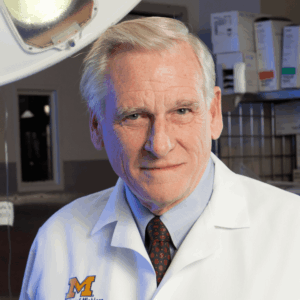
Robert Hawes Bartlett, MD, known worldwide as the “Father of ECMO,” was born on May 8, 1939, at University Hospital in Ann Arbor, Michigan. The oldest of four children, medicine was in his blood: at the time of his birth, his father was a surgical resident at the University of Michigan. He earned a B.A. from Albion College in 1960, then his medical degree with honors from the University of Michigan Medical School in 1963. He completed general and thoracic surgical training at the Peter Bent Brigham and Children’s Hospitals in Boston, where the course of his career was set. Working under Robert Gross, MD, the chief of surgery and a pioneer in pediatric cardiac surgery, Bartlett asked whether a membrane oxygenator might allow prolonged extracorporeal support. Gross’s reply — “Good! Why don’t you work on that” — launched a fifty-year scientific mission.
In 1970, Bartlett joined the faculty of the University of California, Irvine, as assistant director of surgical services and director of the Burn Center. In 1972,* the first adult patient was supported on ECMO and survived, and that same year the NIH funded his research to demonstrate prolonged extracorporeal circulation using a membrane lung. The decisive neonatal milestone came on April 29, 1975,* when Bartlett’s team cared for a critically ill Hispanic newborn at Orange County Medical Center. The baby arrived with central cyanosis and severe respiratory failure from meconium aspiration and persistent fetal circulation. Her mother consented to an experimental therapy never before used in a neonate, and the nurses named the child “Esperanza” — Hope. After venoarterial bypass, pulmonary function gradually improved, the patent ductus was ligated on circuit, and Esperanza was ultimately discharged in good neurological condition ten weeks after birth. The original case report was prepared but never published at the time; the full account did not appear in the literature until Bartlett reconstructed it in the ASAIO Journal in 2017.
Bartlett returned to the University of Michigan in 1980, where he spent 25 years as director of the surgical intensive care unit and served as Chief of General Surgery, program director of the Surgical Critical Care fellowship, and director of the extracorporeal life support laboratory. In 1985, he published the landmark prospective randomized trial of ECMO versus conventional treatment in neonatal respiratory failure in Pediatrics, using the “randomized play-the-winner” design. Of twelve enrolled infants meeting objective high-mortality criteria, eleven were randomized to ECMO and all survived; the one infant assigned to conventional therapy died. Prior to ECMO, mortality from neonatal respiratory failure or congenital diaphragmatic hernia exceeded 80 percent; after the introduction of Bartlett’s technique, survival rates improved dramatically, first in specialized American centers and then across Europe and Asia.
In 1989, Bartlett founded the Extracorporeal Life Support Organization (ELSO) and its registry, which today documents more than 100,000 lives saved using ECMO. ELSO established a global registry that became one of the most important outcomes databases in critical care medicine; according to the registry, as of October 2024, more than 36,500 neonates have been placed on ECMO for respiratory failure, with 72% surviving to hospital discharge. ECMO gained renewed prominence during the COVID-19 pandemic, with more than 17,000 COVID patients worldwide placed on ECMO. Overall, the ELSO registry now records more than 261,000 patients supported at approximately 800 centers in 66 countries.
Over his lifetime, Bartlett published nearly 600 scientific papers and authored the seminal reference Extracorporeal Life Support: The ELSO Red Book. He and his team won funding from the NIH for research on ECMO care and advanced life support technology for over 50 years. Honors include election to the National Academy of Medicine in 2003, election as a Fellow of the American College of Surgeons, and being named a Fellow of the National Acadamy of Inventors in 2024. Other honors included included the Ladd Medal and Robert Gross Award from the American Academy of Pediatrics (AAP) and American Pediatric Surgical Association (APSA), the Medallion for Scientific Achievement from the American Surgical Association, and a Lifetime Achievement Award from the Society of Critical Care Medicine, and too many others to list here. At the University of Michigan, he served in numerous leadership positions including Chief of the Division of General Surgery, director of graduate education in surgery, and chief of the Trauma/Critical Care Division.
Even after retiring from the operating room in 2005, Dr. Bartlett remained active in his laboratory, working on wearable artificial lungs and non-thrombogenic circuit materials. He was known to remind trainees that machines do not save lives — people do. Robert Hawes Bartlett died in Ann Arbor on October 20, 2025, at the age of 86. He was survived by his wife, Wanda, and their three children.
* Sources differ on several of the dates in this article. For example, some articles have 1971 and some have 1972 for J. D. Hill’s first use of a membrane oxygenator, in a human while some have 1974 and others have 1975 for Bartlett’s treatment of baby “Esparanza.” Dr. Bartlett’s own article “The Story of ECMO” (2024) gives the dates as 1972 and 1975 respectively, so those are the dates we have used in this posting.
- Bartlett RH. Esperanza: the first neonatal ECMO patient. ASAIO J 2017;63(6):832–843.
- Bartlett RH. The Story of ECMO. Anesthesiology. 2024 Mar 1;140(3):578-584.
- Michigan Medicine. Robert H. Bartlett, ‘Father of ECMO,’ dies at 86. October 21, 2025. https://www.michiganmedicine.org/news-release/robert-h-bartlett-father-ecmo-dies-86
- UC Irvine School of Medicine. In Memoriam: Robert H. Bartlett, MD. October 2025. https://medschool.uci.edu/news/memoriam-robert-h-bartlett-md
- ELSO. Dr. Bartlett tribute. https://www.elso.org/ecmo-resources/drbartlett.aspx
- Robert Bartlett, Surgeon. Wikipedia. https://en.wikipedia.org/wiki/Robert_Bartlett_(surgeon)
Portions of this page were drafted with machine assistance; the final text was reviewed, verified, and edited by the author. Click here to learn more.
Last Updated on 07/20/26