Alexandre Minkowski (1915–2004)
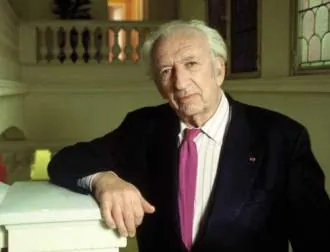
Alexandre Minkowski was born in Paris on December 5, 1915 into a family steeped in medicine and intellectual life. His father was the eminent medical philosopher Eugène Minkowski and his mother the psychiatrist Françoise Minkowska, Polish Jewish physicians who became naturalized French citizens after World War I; his uncle, Mieczysław Minkowski, was a distinguished Zurich neurologist whose early studies of fetal reflexes left a lasting impression on the young Alexandre. He later recalled his childhood walks through his uncle’s laboratory in Zurich — the sight of fetuses preserved in jars, he would acknowledge, was almost certainly not unrelated to the direction his career would take.
Minkowski completed his secondary education at the École Alsacienne and his medical training at the Faculty of Medicine in Paris, receiving his hospital internship (Interne des hôpitaux de Paris) at the age of 22 in 1938. His formative encounter with modern neonatal medicine came during a Rockefeller Fellowship in the US during 1946-47, which revealed to him how far France lagged behind the Anglo-Saxon world in the care of the premature newborn. On his return to Europe in 1950, Minkowski committed himself entirely to the care of infants who had arrived before their hour, taking charge of the newborns at the Baudelocque Hospital in Paris.
Obstetric culture in French maternity units of the 1950s left little room for a pediatrician at the cotside of a premature birth. Working with a handful of enlightened obstetricians, Minkowski campaigned with characteristic combativeness to make the gravity of the situation understood and to persuade the state to provide the material means to address it. In 1966, he became Head of the Department of Resuscitation and Neonatal Medicine at the Port-Royal Hospital. The result was France’s first dedicated neonatal service, followed some years later by the construction of the Port-Royal maternity building, which housed an integrated center of research and care that achieved international standing.
At Port-Royal, Minkowski developed a new clinical and epistemological model: the pluridisciplinary unit. To advance knowledge of the premature brain, he assembled under one roof the disciplines of biochemistry, anatomopathology, electrophysiology, and developmental science, working in direct collaboration with clinicians. This environment made it possible to establish scales of biological maturation, degrees of neurobiological development, and the electrical signatures of neonatal mental states. Among his closest collaborators was the neurophysiologist Colette Dreyfus-Brisac (1916–2006), whose EEG studies of the premature brain became foundational to neonatal neurology.
In 1957 Minkowski founded the journal Études Néo-Natales (later Biologia Neonatorum), published by Karger of Basel. He served as its editor for twenty-six years. In 1970 the journal was renamed Biology of the Neonate, and eventually, in 2006, Neonatology. Initially published in French and English, since 1962 it has been published in English only. As founding editor he shaped the primary international vehicle for fetal and neonatal research across a generation of investigators.
Minkowski directed the Centre de Recherches Biologiques Néonatales, the INSERM research unit at Hôpital Port-Royal in Paris, where the proximity of intensive care unit and research laboratory — on adjacent floors of the same building — embodied his conviction that bench and bedside were not separate realms. He was elected Fellow of the Royal College of Physicians of London (FRCP) in 1979 and was named a Grand Officer of the Legion of Honor by decree of July 12, 2002.
His commitments extended far beyond the walls of any hospital. Minkowski was among the pioneers of international humanitarian medicine for children, working in conflict zones across Southeast Asia, South Asia, and the Middle East — Vietnam, Cambodia, Bangladesh, Lebanon, Palestine — without ideological calculation and, colleagues recalled, without personal hesitation when bombs were near. He served as a chargé de mission under Bernard Kouchner at the Secrétariat d’État à l’Action Humanitaire, and later became an activist in the Génération Écologie movement. In his final years, drawing on neuroscience and the human sciences together, he turned his attention to the concept of cerebral resilience in children who had survived the psychological trauma of genocide and war.
He was the author of Le mandarin aux pieds nus [The Barefoot Mandarin] (Éditions du Seuil, 1975) — the title, as friends understood it, an ironic self-portrait: a mandarin, yes, but one who kept his feet on the ground. His son is the orchestral conductor Marc Minkowski. Alexandre Minkowski died in Paris on May 7, 2004.
Biographical Resources
- Wikipedia: Alexandre Minkowski (French Wikipedia – much more complete entry than the English Wikipedia, use Google Translate)
- Royal College of Physicians Museum — Inspiring Physicians
- Histoire de la Médecine — Minkowski Alexandre (histrecmed.fr) – use Google Translate
- La disparition d’Alexandre Minkowski — Santé, Société et Solidarité (Persée, 2004) — tributes from colleagues including Claudine Amiel-Tison and Émile Papiernik
- Minkowski A: 1915–2004. Biology of the Neonate 86:183, 2004. doi:10.1159/000079519
Last Updated on 04/28/26