Ethel Collins Dunham, MD (1883–1969)
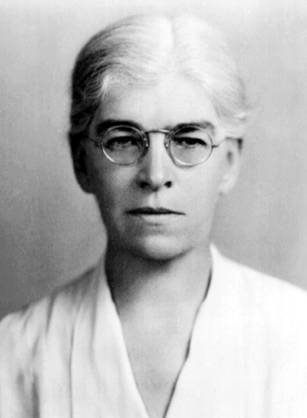
Pioneer in Newborn Care and National Standards
Ethel Collins Dunham was one of the most consequential figures in the early history of American neonatal medicine. At a time when premature infants were routinely dismissed as unlikely to survive and newborn care varied widely from hospital to hospital, Dunham brought scientific rigor, clinical advocacy, and federal policy authority to bear on what had been an afterthought in American medicine.
Dunham was born in Hartford, Connecticut, in 1883, graduated from Bryn Mawr College in 1914, and began her medical training at Johns Hopkins School of Medicine that same year alongside her partner, Martha May Eliot. Hopkins was one of the few American medical schools then admitting women. After completing her internship in pediatrics under Dr. John Howland, she served as the first female resident at New Haven Hospital, then was appointed instructor at Yale Medical School in 1920, rising to associate clinical professor by 1927.
During her Yale years, Dunham developed the convictions that would define her later policy work. She introduced numerous practical innovations: arranging for interns to perform home visits for new mothers and babies, reorganizing the dispensary appointment system, and negotiating with the chief of obstetrics to allow pediatricians direct involvement in nursery care. In 1933 she presented her research on neonatal mortality and morbidity to the American Pediatric Society, which appointed her head of its committee on neonatal studies — positioning her as the field’s leading voice on newborn outcomes just as federal child health infrastructure was expanding under the New Deal.
In 1935, Dunham was appointed chief of child development at the Children’s Bureau, with Martha May Eliot serving alongside her as assistant chief. Her first initiative was to investigate the treatment of premature babies and establish national standards for the care of newborns. The results of her first study appeared in 1936, and in 1943 her guidelines were published as Standards and Recommendations for the Hospital Care of Newborn Infants, Full Term and Premature. This was the first nationally authoritative guide to newborn nursery practice in the United States, addressing temperature regulation, feeding, infection control, and the physical environment for premature infants. She also launched programs bringing hospital-level follow-up into the homes of new mothers through public health nurses and social workers, with results that shaped policies and practices in many health districts.
From 1949 to 1951, Dunham studied premature birth with an international team of experts for the World Health Organization in Geneva, contributing to internationally comparable definitions of prematurity and standardized vital statistics. Her major text, Premature Infants: A Manual for Physicians (Children’s Bureau, 1948), became the standard clinical reference in the field. It was widely recognized as an authoritative treatise on all aspects of premature infant care, and it remained influential enough that Dunham’s Premature Infants, Third Edition (1961) was revised by Dr. William Silverman, himself one of neonatology’s most important figures. The continued use of the title Dunham’s Premature Infants into the 1960s was a testament to the durability of her contribution.
Dunham retired in 1952. In 1957 the American Pediatric Society awarded her their highest honor, the John Howland Medal — making her the first woman pediatrician to receive it. She died on December 13, 1969. Medical and nursing students today who learn about evidence-based newborn care, standardized nursery protocols, and post-discharge follow-up are working within a framework Dunham helped build — decades before the word “neonatologist” even existed.
- National Library of Medicine, Changing the Face of Medicine — Ethel Collins Dunham biography: https://cfmedicine.nlm.nih.gov/physicians/biography_90.html
- Wikipedia — Ethel Collins Dunham: https://en.wikipedia.org/wiki/Ethel_Collins_Dunham
- Social Networks and Archival Context (SNAC) — Dunham, Ethel C. (archival papers, Harvard/Countway): https://snaccooperative.org/view/36062697
Last Updated on 04/10/26