Fürst – On Warming Devices – 1887
Machine translated from the German original.
On Warming Devices for Prematurely Born or Constitutionally Weak Children (Part 1)
[Über Wärmevorrichtungen für zu früh geborene lebensschwache Kinder]
By Dr. med. L. Fürst, Lecturer at the University of Leipzig.
Deutsche Medicinische Wochenschrift 13(34):749-752, Aug. 25, 1887.
[p. 749] It is a generally known fact that children born prematurely, or very feeble at birth, tolerate the transition from the blood-warmth of the amniotic fluid into the cooler room air—subject to greater fluctuations—only with difficulty, and that they very frequently succumb to this temperature difference, which affects their skin and their lungs.
Nothing was therefore ever more obvious than, in such cases, to create for the child conditions under which it could be maintained as far as possible at a temperature corresponding to intra-uterine warmth, until it had become more resistant to the influences of the season, the climate, and the outside air. This endeavour—to put insufficiently vigorous young into a position, by a kind of “after-brooding,” to complete and continue their development even outside the maternal organism—is not without analogies in the animal world. The inflamed, hyperaemic and warmer blood-patches of certain birds are to be regarded as natural warming devices, whose task is to keep the young animal in more direct contact with the warmth of the mother animal; and after-brooding (hovering, Hudern) serves the same ends. Even the warmer nest-building in cold climates may be counted here, since it is connected with the care for the young, still very sensitive to drops in temperature; and no less does the continued post-embryonic growth of the young marsupial in the mother’s pouch take the form of a completion of intra-uterine development occurring under the protection of raised warmth. This extra-uterine brooding and after-ripening in the animal world has evidently furnished the model for the artificial brooding and warming devices which primitive peoples provide for their offspring—in an admittedly very primitive simplicity—in the form of warm wrappings and coverings of sand, ash, furs, foliage and cloths, while the civilized peoples, in their greater valuation of child life, have progressed from swaddling in cotton wool and woollen materials to the use of stove-warmth, hot-water bottles and the more complicated warming apparatuses. The latter have indeed been specified and introduced for the preservation of children only within the last decade, in imitation of the brooding apparatuses customary in poultry-raising, whereas double-walled tubs, for example, have already been in use for half a century.
It is surely worth the trouble to give a systematic compilation of those devices which have been recommended, or used, for the purpose in mind, and at the same time to attach to it some historical-critical as well as clinical-practical remarks.
The task of all such apparatuses, in so far as they are intended for the child whose intra-uterine development has been disturbed, or which is too weak although born at term, comes down to this: to surround such children for weeks at a time with as constant a temperature as possible, of about 32° C, so as to replace for them the lacking uterine warmth, to reduce the cooling through skin and lungs, to raise the mean body warmth permanently, and on the one hand to prevent a fall of the same, while on the other making possible an after-ripening post partum under such artificially created conditions.
As for the realization of this task, one would have to assume a priori that the device which comes closest to the physiological conditions of existence of the foetus in the womb would also be clinically the most perfect. If one could succeed in keeping the child for weeks in a fluid of the temperature of the amniotic fluid, and in providing, as uninterruptedly as possible, respired air of only slightly lower temperature, then the prospects for the preservation of a prematurely born child would, taken theoretically, be the most favourable. Unfortunately the facts and experimental conditions stand in the way of realizing such aims in practice. The child soils itself and the water by its evacuations; it must from time to time be withdrawn from this artificially produced climate for cleaning and feeding and be brought into contact with cooler media, and so this method in reality undergoes interruptions of sufficiently long duration to cloud the purity of the experiment.
On this principle of the permanent warm-water bath rests Winckel’s tub (Fig. 1), which was first described [p. 750] in the Centralbl. f. Gynaekol., 1882, Nos. 1–3. (F. Winckel, “On the Application of Permanent Baths in the Newborn.”) This excellent gynaecologist, still during the time when he directed the Royal Maternity Institution at Dresden, experimented with children born prematurely (28th–36th week) or exhausted by asphyxia and blood loss; but he also recommends the tub constructed according to his specification for children who are greatly emaciated after gastro-intestinal catarrhs, or who suffer from extensive skin diseases. In fact, the child’s stay in this tub comes as close as possible to the protracted sojourn in the amniotic fluid, and one must above all acknowledge that the train of thought to which it owes its origin is not only ingenious and logical but also in accordance with physiological laws.
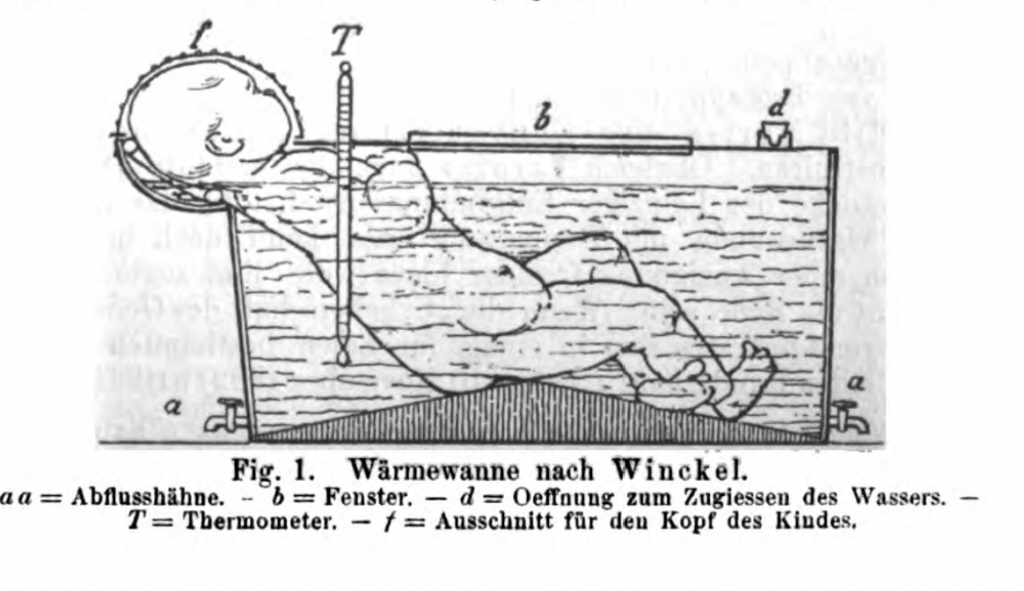
Fig. 1. Warming tub after Winckel. aa = drain taps. b = window. d = opening for pouring in the water. T = thermometer. f = cut-out for the child’s head.
Winckel’s tub (made by the plumber Adolph Schultze in Dresden, Weisseritzstrasse) is of sheet zinc, 50 cm long, 29 cm wide, 22 cm high. The bottom rises in the middle to 9 cm. At the head end there is a hand-shaped cut-out, covered by a cap (f) permeable to air, which leads into a hand-shaped depression 13 cm deep and 11 cm wide. The latter, the support for the child’s occiput, projects beyond the rim of the tub. From this cut-out an inclined plane 8 cm wide and 6 cm long runs toward the interior of the tub, the support for the child’s back. The lid, which closes the tub well by means of overlapping ledges, has at the head end a rim intended to support the chin, padded with soft leather, and in the middle a 20 cm long, 15 cm wide little observation window (b). Corresponding to the head and foot ends there are, near the bottom, 2 drain taps (a), through which not only the water but also the child’s excreta—floating in it or sinking down along the sloping surfaces of the bottom to this point—can be emptied. A filling opening (d) makes possible the refilling of warm water, while an opening fitted over the child’s upper body makes possible a monitoring of the bath temperature by a thermometer kept uninterruptedly below the water surface. The tub holds about 20 litres of water. By refilling ½ litre of warm water every ½–1 hour, the temperature can be kept at the same level. Every 6–8 hours the water is completely changed, on account of the unavoidable soiling.
The analogy with the surrounding of the child by amniotic fluid is here, as regards the skin, carried out in the most perfect way, while of course the respired air has a lower and less constant temperature. Nonetheless this apparatus is, as soon as the necessary careful supervision is present, as Winckel’s experiments show, very well suited for the stated purposes, especially in clinics. The soiling of the bath-water, and the perhaps somewhat constrained position of the child, are two rather insignificant objections. At any rate the apparatus solves, in an interesting way, the problem of letting the natural conditions continue for the child, in certain cases, for a longer time—preventing a lowering of its own warmth and probably also a development of sclerema.
If here the permanent water bath is the principle, then all the other warming devices are founded on that of the permanent warm-air bath, specifically on surrounding the child with air warmed by water. Here one must distinguish apparatuses in which skin and lung partake of this warmed air in equal measure, and those in which the warmth acts only on the body surface, while the respiratory organs are dependent on the temperature of the room air.
The apparatuses of the first-named kind are modelled on the brooding-machines which, as a substitute for the warmth of the brooding hen, have long existed in more or less complicated form. Tarnier in Paris seems to have been the first to conceive the idea of using the brooding apparatuses, in a sense, for after-brooding prematurely born, constitutionally weak children. Analogous to the couveuse pour œufs, which he happened to see in 1878 at the exhibition of brooding apparatuses in the Palais Rameau, he had, in 1881, a couveuse pour enfants nouveau-nés¹ constructed by Odile Martin. Although Tarnier, around the year 1880, on a visit to the Leipzig maternity institution, saw the double-walled warming tub introduced there, there can nonetheless in this case be no question of an appropriation of foreign ideas, such as has been attributed to him. When the “originatorship of the idea” of a warming apparatus was erroneously [p. 751 top] disputed to him,¹ in an article intended for laymen in the Tägliche Rundschau (Berlin, 10 November 1882)—when the couveuse was there designated a “utilization of the knowledge acquired in Leipzig for the Paris Maternité”—then the “suum cuique” commands that it be stated that the couveuse rests on principles totally different from those of the double-walled warming tub. The idea underlying the latter is, as said, more than half a century old and, so far as can be shown, was first realized in St. Petersburg. But for the application of the brooding apparatus to the mentioned obstetric-clinical purposes, the originatorship of the idea belongs unquestionably to Tarnier. He was, to my knowledge, the first to construct, publish and practically test such a device with easily regulable skin- and respiratory-air-warmth. There is no ground to deny the French obstetrician priority and intellectual independence on this point.
¹ Cf. A. Auvard: “De la couveuse pour enfants” (Extraits des Archives de Tocologie), Paris, A. Delahaye & E. Lecrosnier, 1883, p. 3; and G. Eustache: “Une nouvelle couveuse,” in Bulletin de la soc. industr. du nord de la France, 13me Année, No. 50 (Lille, 1885), p. 143.
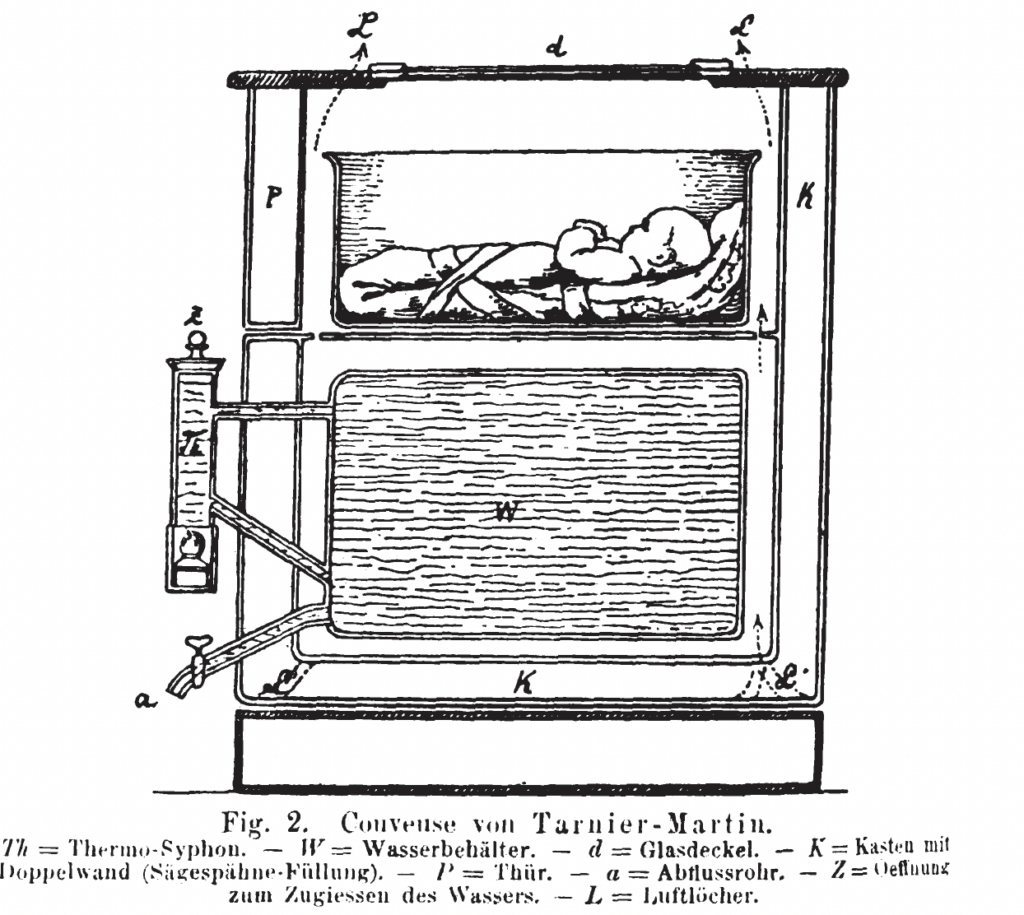
Fig. 2. Couveuse of Tarnier-Martin. Th = thermo-syphon. W = water container. d = glass lid. Doppelwand = double wall (sawdust filling). P = door. a = drain pipe. Z = opening for pouring in the water. L = air holes. K = box.
Tarnier’s couveuse (Fig. 2) is a wooden box which (including the feet) is 95 cm high, 70 cm wide, 85 cm deep, and has a wall 10–12 cm thick, filled with sawdust (K). In the middle it is divided into 2 parts by a horizontal partition. The lower part encloses a container for warm water, the upper part the basket with the child.
The metal water container (W), which fills almost the whole lower compartment, has a width of 40 cm, a depth of 58 cm, a height of 31 cm. Its cubic content amounts to 71 litres. Between the water container (or the basket) on the one side and the wall on the other there is a free space, which allows the warmed air to rise and to exit from the lid of the box. Connected with the water container are a drain tap (a) and a thermo-syphon (Th).
The upper compartment, which is 31 cm high, 45 cm wide and 62 cm deep, is separated from the lower only so far by a wall that the air of both compartments can, as already indicated, communicate. In the upper compartment there are 2 openings, of which the one situated above in the lid (55 cm long, 38 cm wide) is closed by a double glass lid (d)—the observation window—while the other, fitted in the side wall (P), opens like a door and makes possible the placing in or taking out of the child. In the 4 corners of the lid, holes (L) 2 cm in diameter are fitted, which permit the exit of the air that has entered from below at L, been warmed in the apparatus, and risen upward.²
² A different couveuse, likewise used at the Maternité, is larger. The warm-water container has lateral extensions, which form the wall of the upper compartment—a modification that offers no advantages but rather only unnecessarily complicates the apparatus. The Administration de l’Assistance publique in Paris has also supplied similar couveuses to the other hospitals, in which 2, 4, 6 and up to 12 children can be accommodated at the same time.
The thermo-syphon serves to warm the water. After the water contained in it has been warmed by gas, spirit or petroleum, it rises and escapes through the upper pipe into the reservoir. Its place is immediately taken by cooler water, which presses in from the lower part of the reservoir through the lower pipe, so that the water in the container remains in continual [p. 751] circulation. (This corresponds to the principle of the circulating bath-stoves, in which the water stands exactly as high as in the tub connected with it by an upper and a lower pipe.) In the cold season the lamp of the thermo-syphon burns 3 times daily for 2 hours each. It is extinguished as soon as the temperature in the upper compartment is 2° C below the warmth one wishes to attain. Even after extinguishing the lamp, the temperature in the upper compartment rises of its own accord by a further 2° C. To determine the temperature exactly, one fits at the child’s side a thermometer, whose mercury column can be observed through the glass lid.
In the warm season it suffices to heat the thermo-syphon twice daily. One may, moreover, always do this whenever one notices a more considerable fall of temperature. To prevent an insufficient functioning of the apparatus, and a harm to the child that might easily arise through possible carelessness, it is perhaps better to empty the container of its water morning and evening through the drain tap (a), and to refill through the upper filling opening (Z) of the thermo-syphon—which is provided with a screw-out plug—a bucket of boiling water. In this way one obtains a temperature which in the first 2 hours amounts to 29–31° C and only after 12 hours falls to 26 or 25° C. At first, at the Maternité, the temperature of the couveuse was kept at 34, even 35° C.¹ Now one generally takes 30° C as the mean warmth, this temperature giving the best results according to the trials so far. The temperature necessary in the individual case varies according to the age of the child and the time at which its intra-uterine development was interrupted.
¹ A constant, automatic regulation of the temperature is not found on Tarnier’s couveuse. Dr. Budin introduced a similar couveuse at the Hôpital de la Charité, which is heated with gas and in which the temperature is kept constant by a Regnard regulator. The apparatus possesses an electric alarm bell, which informs the attending staff when the temperature rises too high.
At the Maternité each stronger child is given a wet-nurse; more feeble ones receive ass’s milk from the spoon or glass, since feeding bottles are banished from this institution. For the meal, which takes place every 2–3 hours, the child, wrapped in swaddling, is taken from the couveuse, which one at once carefully closes again, especially when (as usual) a second child is lying in it. Immediately after it has drunk and been laid dry, one brings it back into the apparatus. Once daily the child is bathed. The swaddling and clothes are changed about 5–6 times daily, without disadvantage, at the ward temperature. The newborns, when taken from the couveuse, tolerate the outside temperature better than those which were not lying in the couveuse. Although they are, while in the couveuse, in a warm-air bath of about 30° C, they nonetheless do not lie in it unclothed. Between clothes and body the temperature is a further 2–3° C higher (thus 32–33° C), and a further advantage consists in the fact that on removal they do not first have to be dressed and thus lose less warmth.
Another apparatus, which likewise constitutes a warm-air bath for skin and lung and rests no less on the principle of the brooding-machine, is Hearson’s Thermostatic Nurse (Champion Incubator), modified by Eustache (Lille, 1884),² also called Children Coveting Apparatus or Couveuse Champion. (Fig. 3.)
² Cf. Dr. Clement Godson (London W., 9 Grosvenor Street) in the Illustr. London News of 12 April 1874, and Dr. G. Eustache (Lille), loc. cit.
This apparatus, introduced by Godson at the City of London Lying-in Hospital, which costs £6 for 1 child, £10 for 2 children, differs from the Tarnier couveuse—of which it is in essentials a copy—especially through the automatic regulation of temperature combined with it. The firm of Hearson in London seems, as it appears, to have given the first impulse to this modification of the brooding apparatus, and the conversion in question seems to have been carried out, after the mentioned exhibition in the Palais Rameau, first by Tarnier, then (October 1883) by Eustache (Lille), and between the two—but likewise independently—by Godson (London). One may assume that Tarnier and Godson in particular arrived quite independently of one another at the use of the brooding apparatus for children, while for Eustache the Tarnier couveuse may have served as model.
Hearson’s Thermostatic Nurse, or Champion Incubator, an apparatus received with approval at the London Society for Obstetrics and [p. 751, col. 2] Hygiene Exhibition, which is also in wide use in finer English society (babies are even wheeled out in it in the perambulator), differs from the egg-brooding apparatus first in this, that in the latter the brooding-box is situated beneath the water, whereas in the Thermostatic Nurse the child lies in the compartment situated above the water.
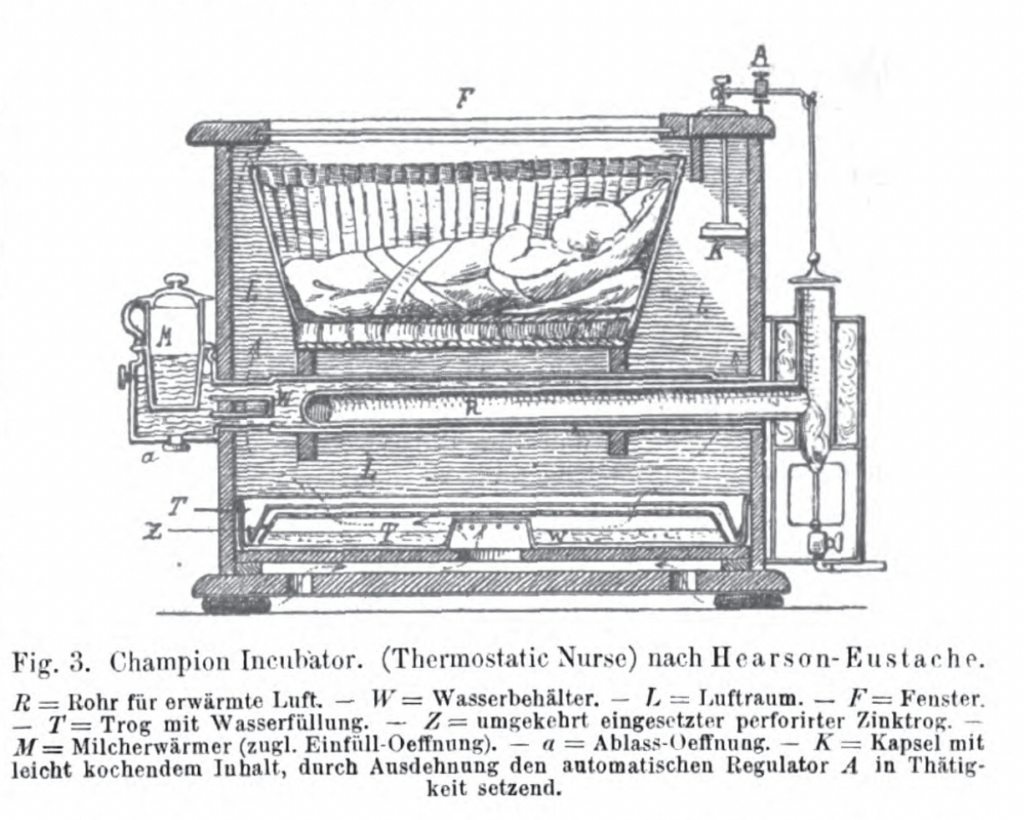
Fig. 3. Champion Incubator. (Thermostatic Nurse) after Hearson-Eustache. R = pipe for warmed air. W = water container. L = air space. F = window. T = trough with water filling. Z = inverted perforated zinc trough. M = milk-warmer (also filling opening). a = drain opening. K = capsule with easily boiling contents, which by expansion sets the automatic regulator A in operation.
The box of the Champion Incubator, 95 cm high, 85 cm wide, 80 cm deep, is of wood. It is divided horizontally into an upper and a lower compartment by a narrow water container (w) which serves to warm the apparatus. This water container comes to within two inches of the box. The free space remaining allows the air free circulation from the lower compartment into the upper. In the latter, the child’s cradle stands on wooden ledges; the child can be observed through a window (F) situated in the lid. This window is fixed with hinges. Besides this, the alarm device, the thermometer and the lever of the regulator are fitted in the lid.
The circulation and warming of the air takes place in the following way. In the floor of the apparatus there is an opening 3 inches in diameter, which permits the entry of atmospheric air. On the floor rests a flat trough (T), which in the middle, corresponding to the air-entry opening, has a cap perforated on top. Into this trough, which is filled with water, dips an inverted, coarsely perforated zinc jug (z). The mentioned cap is covered with a double layer of canvas kept constantly moist. The air must therefore enter in the direction marked by arrows in Fig. 3 and pass through the air-layers between the two troughs, kept constantly moist by the fluid, before it is warmed in the apparatus. The child is accordingly in a moist-warm air, not in dry warmth—an advantage certainly not to be underestimated.
The warming of the air takes place through this, that into the narrow water container (W) there projects from the side a U-shaped pipe (R), which is heated outside the apparatus by a gas or petroleum flame and communicates its warmth to the surrounding water; from this, the air circulating in the apparatus then warms itself, corresponding to the principle of warm-water heating.
Naturally the temperature of the air entering the incubator from outside fluctuates continuously and not inconsiderably. To equalize as far as possible the influence of these fluctuations on the inner air of the incubator, there is fitted to the Hearson apparatus an automatic regulator, consisting of a small, hermetically sealed, expansible metal capsule situated in the apparatus, which contains a liquid boiling at 90° Fahrenheit. Into this capsule a knob is let in above, attached to a strong wire. The wire passes through the lid of the apparatus and is connected with a lever which, at its free end, has a damper that rises and lowers over the chimney of the gas flame. If the warmth in the incubator exceeds 90° Fahrenheit, then the capsule expands, raises the lever-arm in question, or conversely lowers it and damps the flame, so that the warming of the water slackens. After cooling of the air, the capsule flattens again. A sliding weight situated on the lever [p. 752] permits the temperature to which one wishes to set the regulator to be fixed at will.¹
¹ For this, Kemp’s regulator, improved by R. Bunsen, could also be usefully employed, which makes possible the attainment of a constant, arbitrary temperature in the use of illuminating-gas in a very simple, ingenious way. This thermo-regulator rests on the expansion of air by warmth, with mercury closure.
An alarm signal, likewise acting automatically, shows—should the regulation ever fail—this occurrence to the attending staff either directly at the apparatus or (by means of electric wiring) at greater distances as well.
At the foot end of the apparatus the warm-water pipe projects a little beyond the wall. Here there is a drain opening (a), as well as a device (M) suitable for warming the milk.
The couveuse brought into use by G. Eustache (Lille) resembles Hearson’s Thermostatic Nurse in essentials. The actual drying-space intended for the chicks is arranged for 2 children, who lie in little wicker baskets and are put in and taken out through the lid (thus from above). Instead of the U-shaped water pipe, E. has specified a flat water reservoir, which is situated 15 cm above the floor of the box and leaves a free space between itself and the box wall for the air circulation. The air is kept at 30–32° C by a thermostatic apparatus. The renewal and moistening of the air takes place as in the Hearson incubator modified by Godson. The regulator is so arranged that, while the capsule expanding at a certain degree of temperature is indeed situated in the interior of the incubator, the outer lever-arm, as soon as it lowers, reduces the admission of illuminating-gas to the flame and lets only as much pass through as is necessary to preserve the flame from extinction. The constancy of the temperature proved quite reliable. Within two months the greatest fluctuation amounted to only 1° C.
(To be concluded.)
Two translator’s notes on the illustrations, whose column legends were jumbled in the OCR: In Fig. 2, “Doppelwand (Sägespähne-Füllung)” = the sawdust-filled double wall; “K = Kasten” = box. In Fig. 3 the Eustache/Godson figure legend letters (R, W, L, F, T, Z, M, a, K, A) are as rendered above. The Fahrenheit figure “90°” is Fürst’s own; 90° F ≈ 32° C, consistent with his stated working temperatures.
On Warming Devices for Prematurely Born or Constitutionally Weak Children (Part 2)
[Über Wärmevorrichtungen für zu früh geborene lebensschwache Kinder]
By Dr. med. L. Fürst, Lecturer at the University of Leipzig. (Conclusion, from No. 34.)
Deutsche Medicinische Wochenschrift 13(35):772-775, Sept. 1, 1887.
[p. 772] To the warming apparatuses which, like these two modifications of the brooding apparatus, constitute a warm-air bath, one must credit as advantages that they make permanent supervision by attendants less necessary, secure a more constant temperature for the child, and—by acting not only on its skin but also on its lungs—prevent a loss of heat through respiration. Even the brief moments in which the children are taken out of the couveuse for cleaning and changing, and the longer interruptions during which they are given drink, are well tolerated by the children, since their whole body warmth is set to a higher level and does not fall so quickly through cooling.
The very fine investigations by Eröss, “On the Influence of External Temperature (of artificial warming and cooling) on the Body Warmth, Pulse and Respiration of Young Infants, and on the Practical Application of Artificial Warmth,”¹ have shown that body temperature does indeed undergo an increase of 1–2° C from this supply of warmth from without, and that accordingly the release of warmth proceeds more slowly—so that this surplus in a sense forms a reserve of warmth from which the artificially warmed child can draw for a time, whereas an unwarmed child would in the same period already show subnormal temperatures. That this advantage must be greatest with the couveuse is self-evident, and is confirmed by Auvard’s investigations. As a drawback of these apparatuses [p. 773] it deserves mention that they are somewhat complicated and, on account of their cost, are as a rule accessible only to the very well-to-do. In institutions (maternity hospitals, foundling homes, children’s hospitals) they can no doubt be very useful, as the examples of London, Paris and Brussels show, whereas for simpler and private circumstances one must be content with apparatuses that are more easily obtained or improvised, and that can be supervised even by the untrained without special instruction.
¹ Prager Zeitschr. f. Heilkunde, 1884, Nos. 4 and 5.
This striving after simpler apparatuses—which, to be sure, work neither so precisely nor so perfectly—is therefore entirely justified. It has for a long time already led to warming prematurely born or constitutionally weak children by means of double-walled tubs.
Here too it is a matter of a warm-air bath, but only one that primarily acts on the surface of the skin and reaches the respiratory organs only indirectly. That the latter do participate in the warmed air is evident from the fact that the higher-temperature air within the warming tub also surrounds the child’s head. Since it rises, however, there will always—despite covering with veils of muslin and the like—be some equalization with the room air in the upper layers. Accordingly the child’s respired air will always be somewhat cooler than the air acting on its skin, warmed from the tub. That this difference is slight and of no practical significance must be granted.
One may therefore describe the double-walled tub as a device very well suited to warming the child, which—with careful, uninterrupted supervision of the temperature, regular refilling of warm water, and prevention of too-rapid cooling of the respired air by suitable coverings—fulfills its purpose very well. That very many children have already been saved by the warming tub alone is a gratifying fact.
The original and prototype of the double-walled warming tubs, as they came to be introduced here and there over time, is—so far as I am able to establish—that of the St. Petersburg Foundling Home. According to written communications which I owe to the kindness of Russian authorities such as Froebelius and Rauchfuss—physicians to whom the relevant circumstances are quite reliably known—the priority belongs to Russia. The “originator of the idea” of such a tub was Privy Councillor v. Rühl, personal physician to the Empress Maria Feodorovna, consort of Paul I, who introduced it in 1835 at the Imperial Foundling Home. Here Rauchfuss, when he took up his post there in 1857, found it “already long in use.” It is the same tub that was at one time exhibited at the Brussels Hygiene Exhibition by the Prince of Oldenburg.¹
¹ In the past year—according to a written communication—Dr. Graebner, physician at the St. Petersburg Foundling Home, has devised and had made a further significant improvement in the construction and heating of the tub, on which a publication has been announced.
The principle of this tub—now already over half a century old—is simple: to warm the air surrounding the child by means of warm water poured between the double wall of the tub. At the head end, above, is the filling opening; at the foot end, near the bottom, the drain tap. The child is placed in the tub in its swaddling and bedding, and a veil may also be spread over the whole. By temperature measurements taken beside the child it can be determined at set intervals when the partly cooled water is to be replaced with warm.
On the same principles is constructed the warming tub in use since about 1865 in the Moscow Imperial Foundling Home, concerning which I owe some information—accompanied by an illustration—to the head physician there, Dr. Nikolaus Miller (Fig. 4). It is made of copper, has the filling opening—closable with a lid—on the upper rim, corresponding to the foot end; two rings as handles to ease transport; and, running across, a wire arch that holds a curtain of muslin or nettle-cloth. The tub holds 10–12 litres of water, which is changed every two hours.
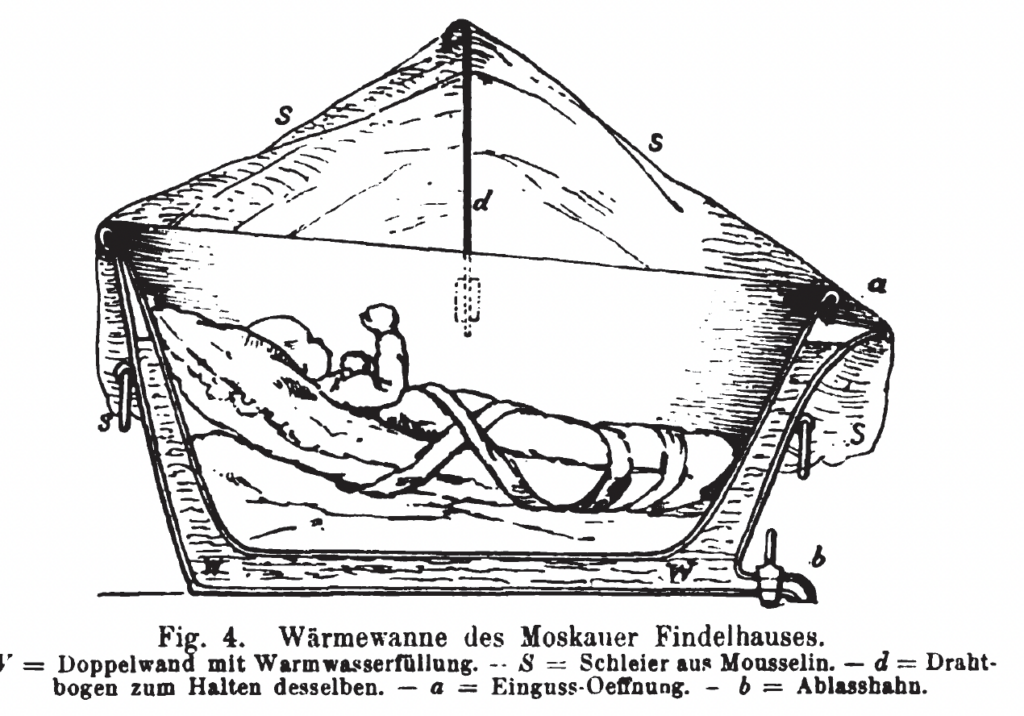
Fig. 4. Warming tub of the Moscow Foundling Home. W = double wall with warm-water filling. S = veil of muslin. d = wire arch holding it. a = filling opening. b = drain tap.
This double-walled warming tub is essentially two tubs of different size set one inside the other, and it has in fact been proposed, where a double-walled tub is not available, to improvise one in this way when needed. If the smaller tub rests on some support that allows the warm water poured between the tubs to heat the wall not only from the sides but also from below; if the smaller tub is sufficiently weighted so as not to be lifted up by the water; and if, further, the open spaces between the rims of the two tubs are suitably covered so that the water does not cool too quickly—then this is a substitute, albeit a very imperfect and unreliable one, for a proper double-walled tub.
In clinics, but also in private circumstances, the double-walled tub—when exactly operated by a good attendant—is doubtless a very good warming device, which, though it does not, like the couveuse, meet the highest demands for constancy of temperature, should as a rule suffice. Since it is considerably cheaper, no such great difficulties stand in the way of acquiring it. The justified wish that plumbers, instrument dealers and truss-makers might keep a few specimens in stock for hire—an arrangement that would at first benefit the inhabitants of larger cities—is fortunately beginning of late to be realized. It will then at least be possible to save a prematurely born, constitutionally weak child without being dependent on the goodwill of the director of a clinic whose inventory is lent to colleagues not at all, or only reluctantly.
That so simple a device as the double-walled tub was later reinvented, as it were, in other places as well (certainly without knowledge of its already long-standing existence) testifies to how obvious and practical the idea was, and is only a fresh proof that several people sometimes, wholly independently of one another, realize one and the same idea. Thus Denucé in Bordeaux described in 1857 (that is, 22 years later) a warming tub identical with the St. Petersburg one.¹ The author was kind enough to send me the pamphlet in question. It contains 12 essays, the last of which describes a “berceau incubateur pour les enfants nés avant terme.” D. had this double-walled tub (for such it is) made by Gendron in order to keep a six-month child alive by artificial warming. Denucé’s tub “is of zinc, has a double bottom and double wall; at the top the two tubs are joined together, and the cavity thus formed, intended for the warm water, is thereby closed off. At the upper rim there is a funnel, at the lower a drain tap. To check the loss of heat, the tub is wrapped in a woollen blanket. A thermometer placed in the warming tub indicates when water is to be added or let off. It suffices to let off ½ litre of water every 6 hours and to refill with the same amount of hot water in order to maintain a set degree of warmth.”
¹ Note sur quelques faits de Pratique Chirurgicale, by Denucé, Adjunct Professor of the surgical clinic at the Medical School of Bordeaux, 1857 (8°, 40 pp.).
Likewise, the double-walled tub described by Credé in 1884² (cf. Fig. 5) corresponds in its essence entirely to the St. Petersburg warming tub. Newly devised by the former, experienced director of the Leipzig maternity institution and “in use there for more than 20 years,” it is nonetheless in fact about 25 years younger than the Russian original, and had already been in use, long before, in Russia itself and in France. As the illustration shows, it agrees in principle completely with its predecessors, whose advantages it shares, as the good experience at the Leipzig obstetric clinic demonstrates. It is at any rate an interesting fact that in Leipzig the warming tubs of St. Petersburg and Bordeaux were as unknown as the tub in use there was, “in idea and execution new,” indeed “wholly unknown,” to the foreign physicians visiting the local clinic.
² Archiv f. Gynaekologie, Bd. XXIV, Heft 1, p. 128 ff., and Tägliche Rundschau, Berlin 1882, No. 264.
[p. 774] This is evident from Credé’s popularly written article in the Tägliche Rundschau, in which it is expressly stated: “Numerous native and foreign physicians from all countries of the earth have visited the Leipzig institution and become acquainted with my warming apparatus. Not a single one of them already knew the apparatus; to all the idea of imitating it seemed worthwhile, and many have since introduced my apparatus, or a similar one, in their home countries.” But when the author of that instructive article goes on to say: “I thus believed that my apparatus was at least sufficiently known in medical circles, and that it was not possible to re-import into Germany, as something new, out of France, Russia or America, the German invention that had emigrated to those countries”—this, as follows from the above historical facts, which are beyond all doubt, is an error. The double-walled warming tub is not a German invention but a Russian one. There can therefore be no question of an emigration of the idea and of its re-importation as something new. And even if it must be acknowledged that Credé specified the practical device on his own initiative and tested it in many years of trials, the rigour of historical justice nonetheless requires that priority be left to v. Rühl, and that it be emphasized that, in order of seniority, Denucé’s ranks in second place.
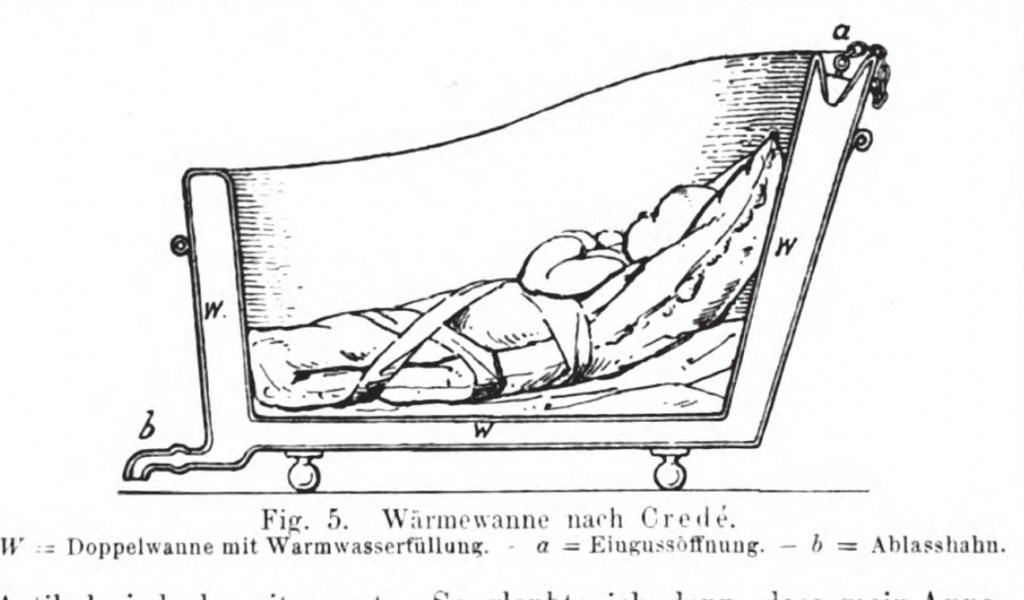
Fig. 5. Warming tub after Credé. W = double-walled tub with warm-water filling. a = filling opening. b = drain tap.
Whereas with the double-walled warming tub the source of heat proceeds from a layer of water lying beside and beneath the child, contained between the two walls of a tub specially constructed for the purpose, efforts have been made to simplify the device—which will indeed become more and more available in clinics—by using a source of heat readily available even in private circumstances. The endeavour to improvise a warming device with simpler means, by introducing warmed objects into a more or less closed container, has had the result that in place of complicated, expensive apparatuses simpler, cheaper ones have again come into use, which—acting nearly as well as double-walled tubs and likewise warming the child’s respired air—are easy to make anywhere.
That the hot-water bottles formerly used acted most imperfectly and unevenly—even when the prematurely born child, wrapped in cotton wool, was surrounded by them—cannot be denied; and even specially constructed hot-water bottles, such as the elongated, flat crocks introduced by Friedinger in Vienna since about 1875, are unable—without some kind of couveuse in which the warmth is held together with a certain constancy—to warm the child’s lungs and skin as evenly as is necessary in these frail individuals prone to collapse.
One must therefore describe as a happy idea that which A. Auvard¹ realized in Paris in 1883 with his “Nouvelle Couveuse pour la clientèle privée.” In view of the fact that Tarnier’s couveuse, despite its merits, could—on account of its price and bulk—find use in private practice only exceptionally, he constructed, following Tarnier’s views, a model that is simple and easily made by any joiner. The apparatus made by the instrument-maker Galante (Fig. 6) is a box 65 cm long, 36 cm wide and 50 cm high. The wall is about 25 mm thick. The interior of the box is divided into two parts by an incomplete horizontal partition situated about 15 cm above the floor. The lower compartment is intended to hold 4–5 prismatic bed-warmers filled with hot (not warm) water, of the kind known in Paris as “moines” (W)—vessels 29 cm long holding ½ litre, and which of course can be replaced elsewhere by the locally usual hot-water bottles. The compartment has two openings, of which one, lateral, occupying the entire length of the box and closable by a sliding door, serves for inserting the warmers; the other, situated at one end of the box, is an imperfectly closing sliding door (L) and serves to permit the entry of air into the box.
¹ Auvard, loc. cit., p. 29.
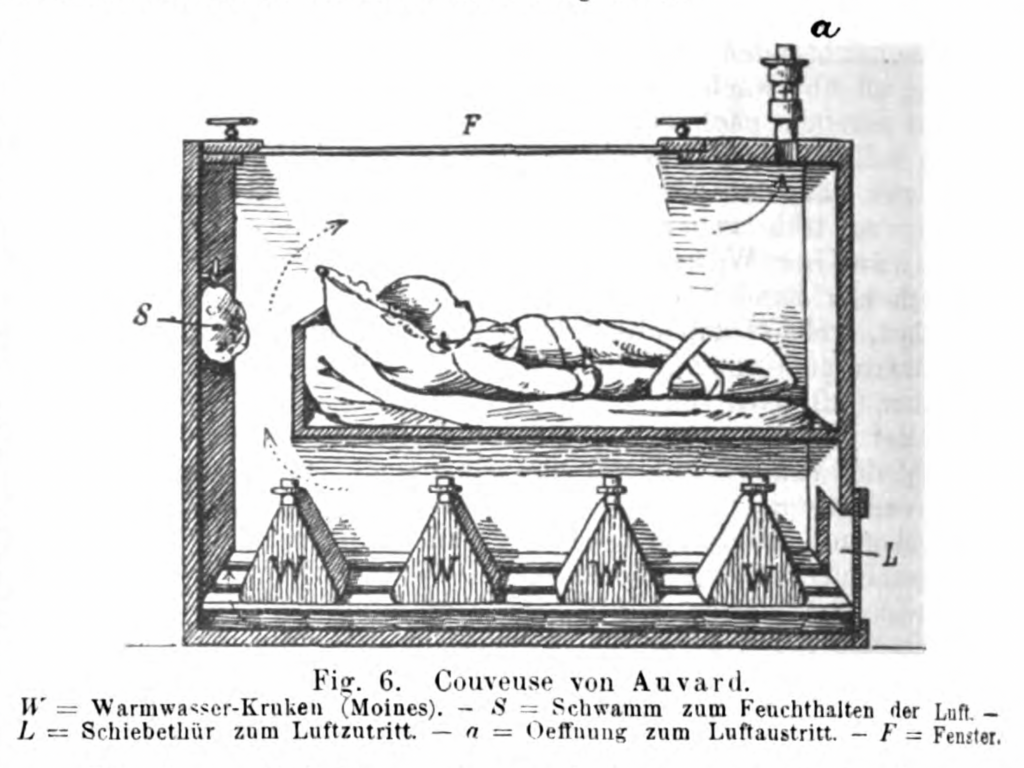
Fig. 6. Couveuse of Auvard. W = warm-water crocks (moines). S = sponge for keeping the air moist. L = sliding door for air entry. a = opening for air exit. F = window.
The upper compartment, intended to receive the child, contains cushions for this purpose. It is closed above as completely as possible by a glass window (F), which can easily be opened by means of two knobs fitted to its frame. On the upper wall there is also an air-exit opening (a) fitted with a very freely moving turbine, which is set spinning by the stream of air.
In the open space connecting the two compartments one hangs a sponge (S) soaked with water, which keeps the air moist. There is also a thermometer there, which indicates the air temperature of the apparatus.
The walls of the couveuse are, by virtue of their thickness, already good insulators and make possible a sufficiently warm and constant temperature. To increase this property still further, one may, on A[uvard]’s suggestion, line the walls inside and out with white felt or with white, wadded linen.
At a room temperature of 16–18° C the apparatus yields a warmth ranging between 31 and 32° C. To warm the apparatus up, A. begins with 3 hot-water bottles. In half an hour the desired temperature is reached and the child can be placed inside. If the temperature is still above 32° C, one opens the glass lid a little. After 2 hours a 4th bottle is inserted, and thereafter the most-cooled bottle is exchanged for a hot one every 2 to 2½ hours.
This combination—first specified by Auvard—of hot-water bottles immediately available on the spot with the enclosed space of a couveuse made from the simplest material may be called a very practical solution to the problem of surrounding prematurely born, constitutionally weak children with as uniform a moist-warm atmosphere as possible, even in private practice. It seems to me that at present the crux of this question does not lie in specifying ever more ingenious, complicated devices working with mathematical precision, such as can exist and be properly operated only in clinics, but rather in making the improvisation of such apparatuses possible in the simplest, most modest circumstances, even far from the resources of a large city. In the latter, everything necessary to keep a prematurely born child alive can always be procured sooner and more easily. But even there one is not always in a position to construct quickly and in suitable fashion an apparatus in the form of a double-walled tub.
Every attempt is therefore surely justified to make, along the path taken by Auvard, further proposals as to how, in such cases—which mostly come upon the family quite unexpectedly—one can quickly improvise a warming box with means immediately available everywhere.
As a very sustained source of heat I have come to know the clay-fired roof tiles, and with them I have constructed for myself an “improvised roof-tile warming box,” which can be arranged, in a primitive but purposeful manner, for producing a fairly constant, elevated temperature for the child without any difficulty. Any wooden box with a wooden lid (Figs. 7 and 8), at least 63 cm long, 37 cm wide, 42 cm high, is first fitted at the top, at the 4 corners, with small blocks of [p. 775] 1 to 1.5 cm in height, which are nailed on. These ensure that a gap (A) remains between the lid and the box for the exit of air. To create an entry opening for the air—through which tiles can also be pushed in from below—a piece is sawn out near the bottom with a compass saw (E).
In addition, a square piece is sawn out at the top with the compass saw and covered with a pane of glass, which can easily be fixed by a few small pins. One thus obtains a little observation window (F).
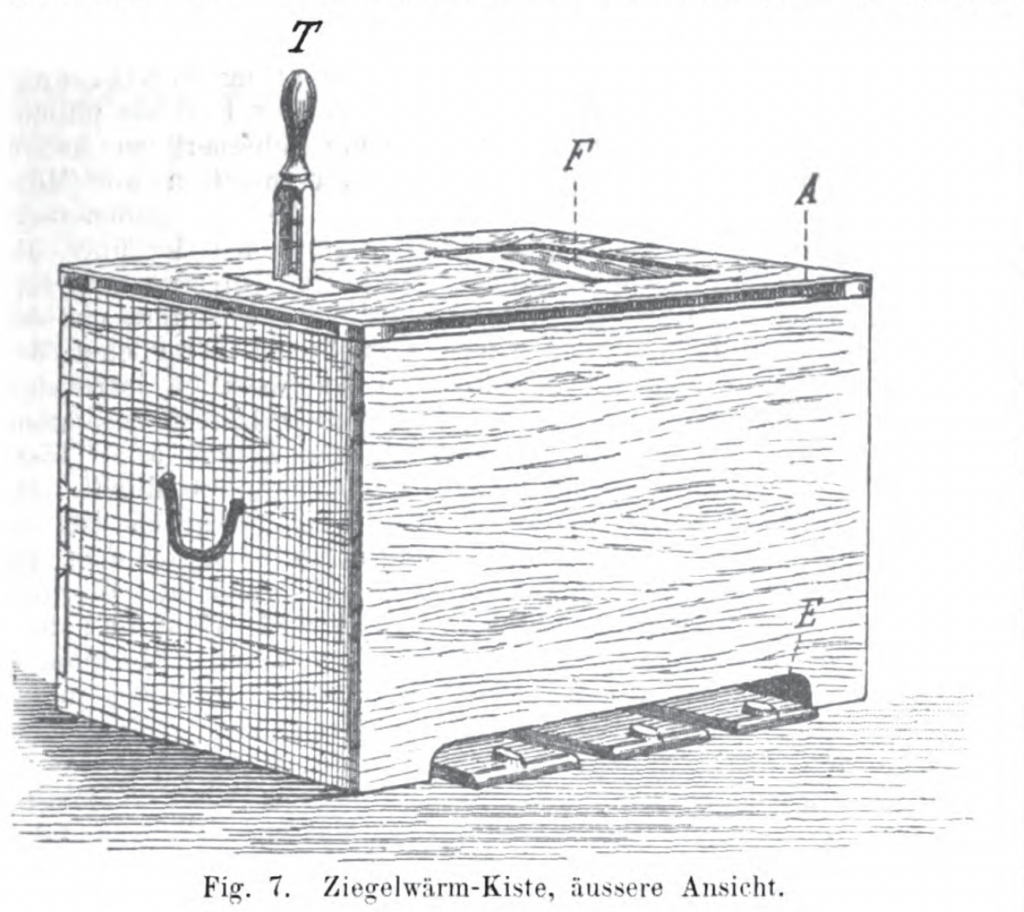
Fig. 7. Tile-warming box, exterior view.
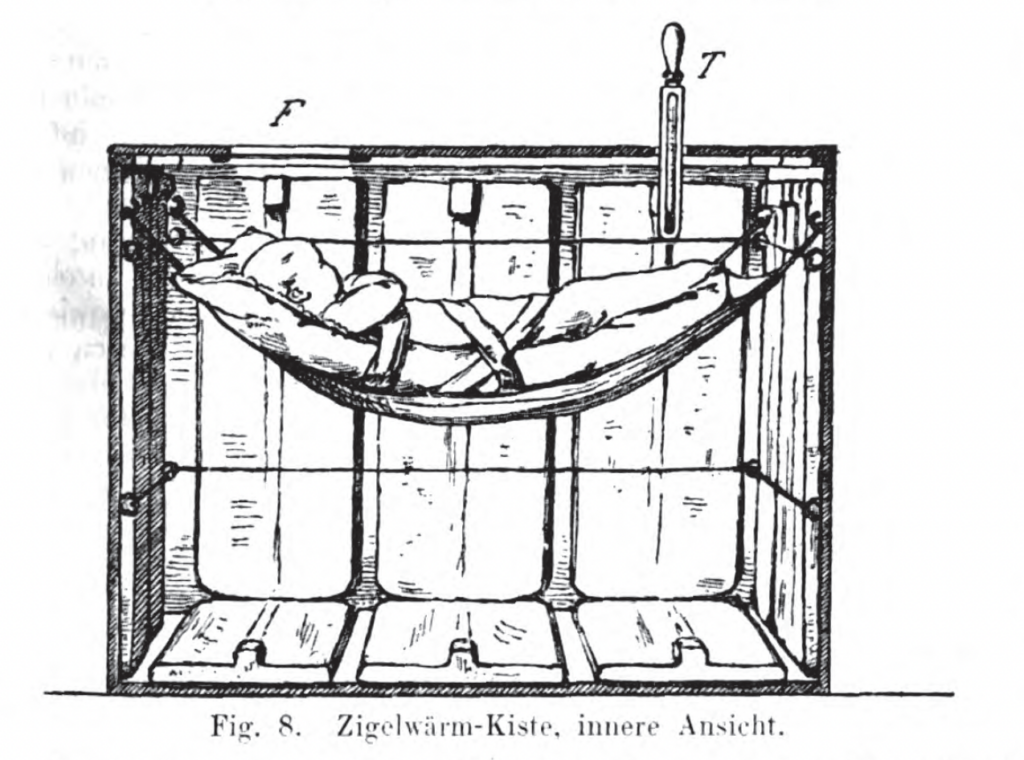
Fig. 8. Tile-warming box, interior view.
Since a bath thermometer is found in more or less every better-off family, this is used to monitor the internal temperature in the following way: a generously large square opening (T) is sawn out of the lid for it. The bath thermometer is then passed through a precisely cut piece of stiff cardboard so that this fits tightly against the wooden casing, and the thermometer is pushed through this cardboard disc as far as one wishes it to project above the box for monitoring. The cardboard disc keeps it from sinking deeper into the box, and one thereby obtains a uniform position of the thermometer.
To the two narrow sides of the box one attaches two handles of thin cord, simply by means of bored holes. This makes it easier to transport the warming box.
Just as simple as its exterior is its interior arrangement. Into each of the 4 corners one screws an eyelet at top and bottom (thus 8 in all) and draws wire horizontally through these eyelets. This serves merely to keep the vertically standing tiles from falling inward into the box. It must therefore leave enough room for the tiles so that they can easily be pushed in and removed, but not too much room, so that they remain standing upright.
For warming the box, 13 roof tiles 37.5 cm long and 16.0 cm wide are used. They are of the form of roof tile customary here (so-called “beaver-tails”), which have a projection at the straight end and are smooth and somewhat rounded at the other. The loam bricks are less suited to our purposes than the fire-resistant clay tiles, which withstand high heating without cracking. If one also has 2–3 spare tiles for exchange, so as, after the first warming of the box, to replace one or another cooled tile alternately with a warmed one and thus keep the temperature at a set level, this suffices. Such tiles are very cheap (individually about 8 Pf. apiece) and are to be had in all building-materials shops.¹
¹ They were supplied to me directly, with much-appreciated willingness, by the clay-tile factory of Kretschmar & Lomer in Borsdorf near Leipzig.
When this warming box is to be put into use, the tiles warmed on a stove-plate are inserted and the temperature is regulated until it is about 32° C (25.5° R), by either inserting more strongly warmed tiles or removing some and replacing them with cooler ones. Once the stated temperature is reached, it is easily maintained at nearly the same level by exchanging a single tile.
The child is laid, in its little bed, on an oblong rectangular piece of cloth which has, sewn to its four corners, bands with eyelets, and which can be hooked firmly, in the manner of a hammock, onto four little hooks screwed into the top corners of the box. On one or two of these hooks a water-soaked sponge can be hung to keep the air moist.
The air can circulate easily in this box. It enters near the bottom, is warmed and at the same time impregnated with moisture, rises upward, and passes out again under the lid. During this time it not only surrounds the child’s body surface on all sides but also supplies the lungs with a warmed medium that renews itself continuously. Thereby the body temperature is, as experience shows, raised, and the loss of heat from skin and lungs reduced, so as to protect the child from the cooling so dangerous to it.
The main point, however, is that this whole warming device can be completed within a few hours from cheap material available everywhere, even in the poorest classes, and can, with some skill and attention, be kept in operation for weeks. The child can be observed at all times and taken out at will for feeding or cleaning; the transport of the warming box with the child from one living room to another presents no difficulties.
Such a warming box—which could just as well be heated with the hot-water bottles proposed by Auvard, if three or four of these are available—is unquestionably easier to make or procure than a double-walled warming tub, and shares the advantage of every couveuse in also warming the respired air. The simplest form proposed by me should be especially suited for modestly situated families who from the outset must do without complicated, expensive warming apparatuses, but in general for rapid improvisation in private practice, whereas the warming tubs and the couveuses with automatic regulation of temperature will find their place rather in the clinics.
But precisely in private circumstances, where expert care and trained personnel are usually lacking, the saving of a prematurely born or constitutionally weak child will be possible only if, as soon as possible after birth, the warmth necessary for its survival can be provided to it by an apparatus that is simple to make and easy to supervise.
Three translator’s notes: “R” is Réaumur (32° C ≈ 25.5° R, as Fürst gives). “Doc. an d. Univ.” = Dozent (lecturer/Privatdozent). In the Auvard passage on p. 774 the two columns were interleaved in the source; I’ve restored the reading order (lower compartment → holds 4–5 “moines” → two openings, lateral loading door and end-mounted air door L), which is unambiguous from the sense and Fig. 6’s legend.
Last Updated on 08/15/26