Treatment of the Prematurely Born – Keizer
Keizer (1928), Chapter IV, pp. 71–85. Machine translation from the Dutch. Page numbers of the original are given in brackets. Author names are italicized as in the original. The term “couveuse” is rendered as “incubator” except where it forms part of a named device.
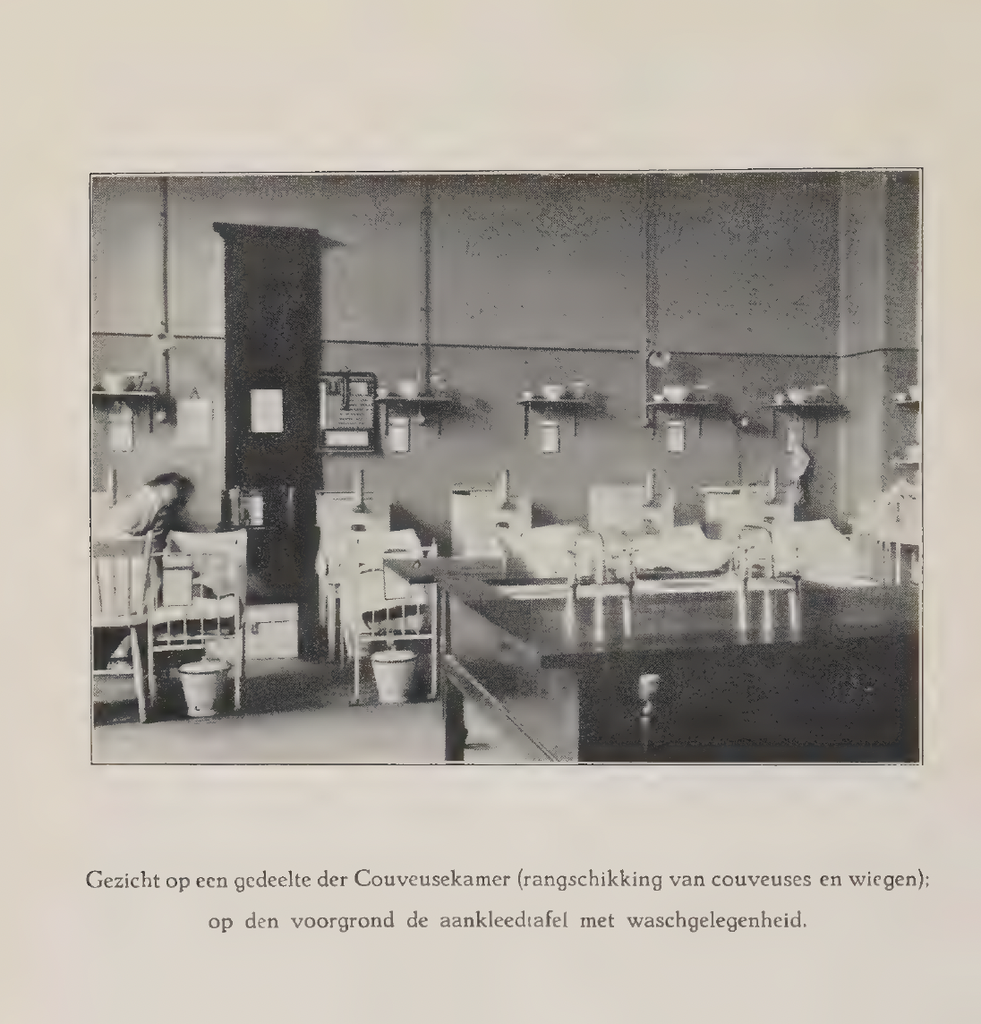
[p. 71]
In view of the emphasis placed on the occurrence of hypothermia, it is desirable to begin the discussion of treatment with the measures needed to prevent it. It is remarkable that even in earlier times the main emphasis was placed here, to such an extent that it was overrated and other, very necessary measures were pushed into the background.
§ 1. Prevention of Hypothermia
Of the Egyptians it is known only that they had boxes for hatching birds’ eggs in which a higher temperature could be obtained (Alexandria). These devices were probably also used for the care of premature infants, but this cannot be proven, since it is nowhere mentioned. Hippocrates (460 B.C.) states that children born before the 7th month of pregnancy do not survive.
The first deliberate attempts to prevent a fall in temperature consisted of wrapping in poorly conducting materials (cotton wool and the like). Eröss pointed out, not without reason, the unreliability of this.
Placing heat sources in the cradle created difficulties in nursing care, not to mention the danger of burns. Warm baths and stimulating enemas were steps that showed good insight and good will, but their drawbacks, and above all the short duration of their effect, outweighed their efficacy.
[p. 72]
Not until 1857 did Denucé in Bordeaux construct a kind of bathtub with a double wall, between which heated water was placed. Priority for this invention is disputed, and some credit Rühl of Petersburg with having built such a tub in 1837. Be that as it may, Denucé succeeded, among other things, in keeping a six-month infant alive in it for 14 days.
In 1864 in Leipzig, Credé used his Wärmewanne (warming tub), which he refilled with warm water every 4 hours in order to maintain a fairly constant temperature of 32° C. The great advantages here were better temperature regulation, good ventilation, and portability. Nevertheless, the results he achieved were in our eyes rather meager (of the weaklings of 1000–1500 grams, 83% died, and of those of 1500–2000 grams, 36%), although they compared favorably with those of his contemporaries.
Sterne placed the infants in a kind of oven, while Winckel of Munich in 1881 made a further attempt to imitate intrauterine conditions by placing his premature infants in baths of 36–38° C. His apparatus was rather complicated: he secured the infant against the sloping bottom of the small tub so that the head stayed above the water level, and it was protected from flies etc. by a fly hood. The temperature was regulated very precisely by adding fresh warm water every half hour to hour and checking it regularly with a thermometer. He later converted to a double-walled system. He retained permanent warm baths for sick infants (e.g., atelectasis, intertrigo, atresia ani after surgery, etc.).
In 1881 Tarnier introduced the first incubator (couveuse) at the Maternité in Paris. It consisted of a wooden box measuring 95 by 85 by 70 cm and was built by Odile Martin, director of the Paris Zoo, on the model of the incubator used for hatching eggs. At 10 to 12 cm above the floor there was a horizontal partition with openings, on which the wrapped infant was laid (originally an incubator was intended for 2 infants). Below the perforated partition was the space for the warm water, whose temperature was precisely regulated by a tap and thermosiphon. The roof of the incubator was of glass and removable, so that the infant could be observed at all times and easily taken out for the various procedures. The thermosiphon was heated by gas, spirit or petroleum, and the incubator temperature
[p. 73]
was monitored by a thermometer suspended next to the infant.
Fürst suspended the infants in a kind of small hammock fastened inside a fairly large chest with air holes and a glass lid, while heating was provided by heated stones. This “Dachziegelwärmekiste” (roof-tile warming chest) is a very simple and inexpensive system, but not to be recommended.
Heat regulation has remained a constant source of great concern, partly because of the fire hazard the heat source often creates.
Usually the reservoir was filled with water of 29–31°, which was renewed. The correct temperature was given differently by every author: Pinard took 34° as the average, while Auvard found 30° sufficient. The duration of incubator care was determined individually.
Odile Martin, Hochsinger and Hutinel constructed incubators that found little acceptance.
The “Couveuse humide” of Bonnaire served to avoid the dry air of the older incubators: here the incubator was saturated with water vapor, which however caused great difficulties because heat loss from the premature infant was impeded (attacks of convulsions, hyperthermia!).
Budin chose gas heating for his incubator and regulated the temperature automatically with a Regnard regulator, while an electric alarm served to announce unexpected rises in temperature. Through all these modifications of Tarnier’s old incubator, the apparatus became so costly and difficult to handle that Auvard constructed a simple warming box with space in the lower compartment (heat supply) for several stoneware hot-water jugs. A small chimney was placed on the glass lid for better ventilation, while the setting of the valves in the floor distributed the heat of the five jugs, each holding ½ liter, into the infant’s compartment. Humidity was maintained by hanging up a wet sponge.
Hearson constructed a similar incubator with an electric alarm for when the maximum permissible temperature was reached, as did Godson and Eustache.
Diffre, by introducing petroleum heating, turned Auvard’s good invention back into an unusable instrument.
In order to meet all requirements of cleanliness while
[p. 74]
not losing the advantages of the Auvard incubator, Hutinel built his “couveuse en fayence” (faience incubator).
The incubator of Lion is again a warming box with gas or petroleum heating and self-regulation of temperature, as are those of Couney and De Lee. The principle is always the same; only the method of heating, ventilation and humidification differs. They lost their popularity because they were difficult to handle.
Budin campaigned against initial cooling, in his view the greatest factor in the enormous mortality. Polano placed premature infants in a bath of 38° from birth. De Lee wanted premature infants transported as far as possible to clinics equipped for them, without the transport causing harm. Like Welde, he constructed a portable incubator in the form of an obstetric bag heated with hot-water jugs.
Pajot (1885) set up his “chambres d’étuve,” giant incubators with room for several patients. These chambres d’étuve, or sala incubatrice, give good results through:
1. ventilation;
2. regulation of humidity;
3. better observation.
Pajot’s example was followed by Bossy and Guidy (1895) in the foundling home in Florence, Corlat (1896) at the Charité in Lyon, Arnaud (1900) in Turin, Escherich and Pfaundler in Graz, Mora in Vienna and Brauer in Marburg.
Pajot’s system subsequently found no following worth mentioning. The obvious disadvantages are the uniform temperature for all infants (no individual regulation possible!). Feeding also takes place in an overly warm atmosphere, while temperature control is so difficult that the desired temperature of 34° can never be guaranteed. Added to this are the cost of construction, the impossibility of isolation, and the heavy burden on the nursing staff.
Reinachs calls for natural ventilation in his warming bed, which has a compartment for the heat source on which a glass bed without a lid is placed.
Simpler and fairly effective is the U-shaped hot-water jug of Rommel, in which the infant’s head lies in the open part while the legs face the connecting piece.
[p. 75]
Finkelstein likewise based his incubator on those of Tarnier and Auvard, providing a simple construction and good ventilation.
In addition to the hot-water jug, Rommel also constructed an incubator. This consisted of a space of 0.83 m³, enclosed on 3 sides by plate glass with rounded corners. Its main feature is the ventilation system, by which the air is renewed 100 to 120 times per hour. The humidity, which according to Pfaundler should be 46% at 28° and 64% at 32°, is easy to regulate. The quantity of warm water needed to keep this incubator at temperature is so large that there are almost no temperature fluctuations. The water is heated electrically.
The ideal, and therefore almost always unattainable, is the “chambre couveuse” of Escherich and Pfaundler. It consists of a cubicle built into the ward, closed on all sides, with room for two premature infants. The gas heating is regulated automatically, as is the ventilation. Ample light enters, and humidity is easy to regulate. All nursing care can be carried out inside the chambre couveuse (e.g., St. Anna-Kinderkrankenhaus in Vienna).
There has been no lack of attacks on the incubator.
Monté finds that bacteria grow faster in this environment.
Hutinel and Delestre saw much ophthalmia, sepsis, and nasal and throat catarrh.
In contrast, Escherich, like Birk, maintains that the incubator increases the resistance of the premature infant.
Marfan finds that 1. sterility is difficult to maintain, 2. it requires too much care, 3. there is a danger of heat stroke (coup de chaleur), 4. ventilation is poor. He therefore advises placing the cradle by the hearth with a screen around it, with the infant wrapped in cotton wool. Dufour would additionally cover the whole with taffeta.
Marfan is pleased not to have used the incubator for five years. A comparative statistic illustrating the “better” results is, however, conspicuous by its absence.
Thanks to the kindness of Prof. Dr. Moll, director of the Reichsanstalt für Mütter- und Säuglingsfürsorge in Vienna, I obtained some illustrations of what in his view is the best apparatus for raising premature infants. When equipping his clinic he dispensed with the costly incubators,
[p. 76]
which in his opinion had not met all expectations, and contented himself with his own invention. The frame, which holds 4 incandescent lamps of 5–16 candlepower, folds up, so that the whole is easy to transport. The thermometer
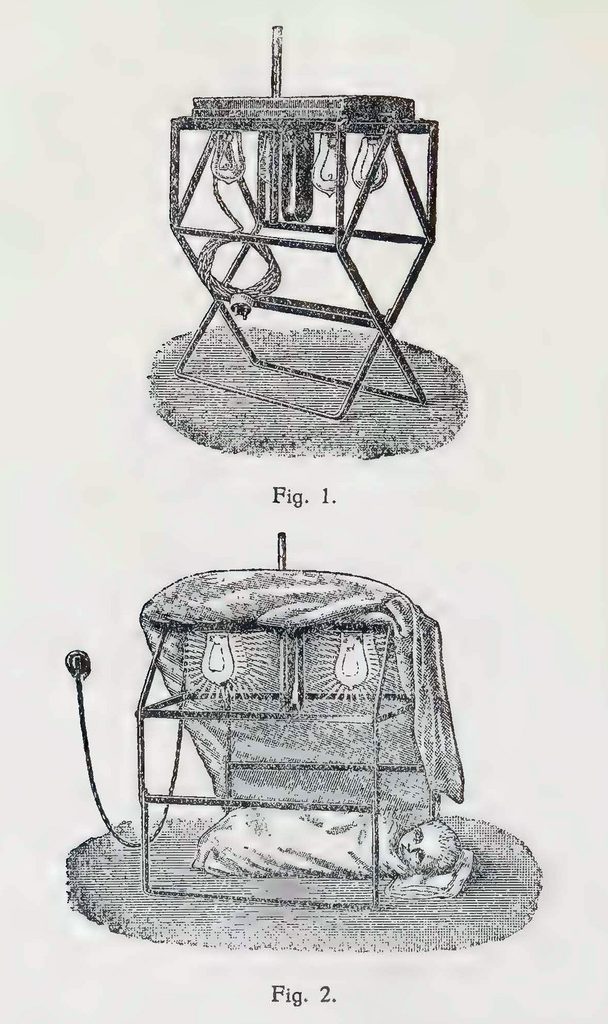
[Fig. 1: Moll’s folding frame with lamps and thermometer]
[Fig. 2: Frame with lamps lit, partly covered, infant lying beneath]
is inserted into an opening in the roof, after which the frame is covered with a flannel blanket (see Fig. 3). The heat source comes into operation as soon as the plug is inserted in the socket (four lamps lit!). As soon as the interior temperature reaches 47–48° C, 2 lamps are automatically switched off.
[p. 77]
When the temperature falls to 42°, the lamps are switched back on.
If a lower temperature is desired (below 37° is not possible), an additional regulator is fitted for this purpose.
The infant is positioned so that the head is in the outside air, which always guarantees pure air for breathing.
This apparatus has been in use in Vienna since 1918 and has been very satisfactory, all the more so because it has also proved therapeutically useful in exudative infants (intertrigo, eczema) and nervous infants, who become calmer under the warming screen.
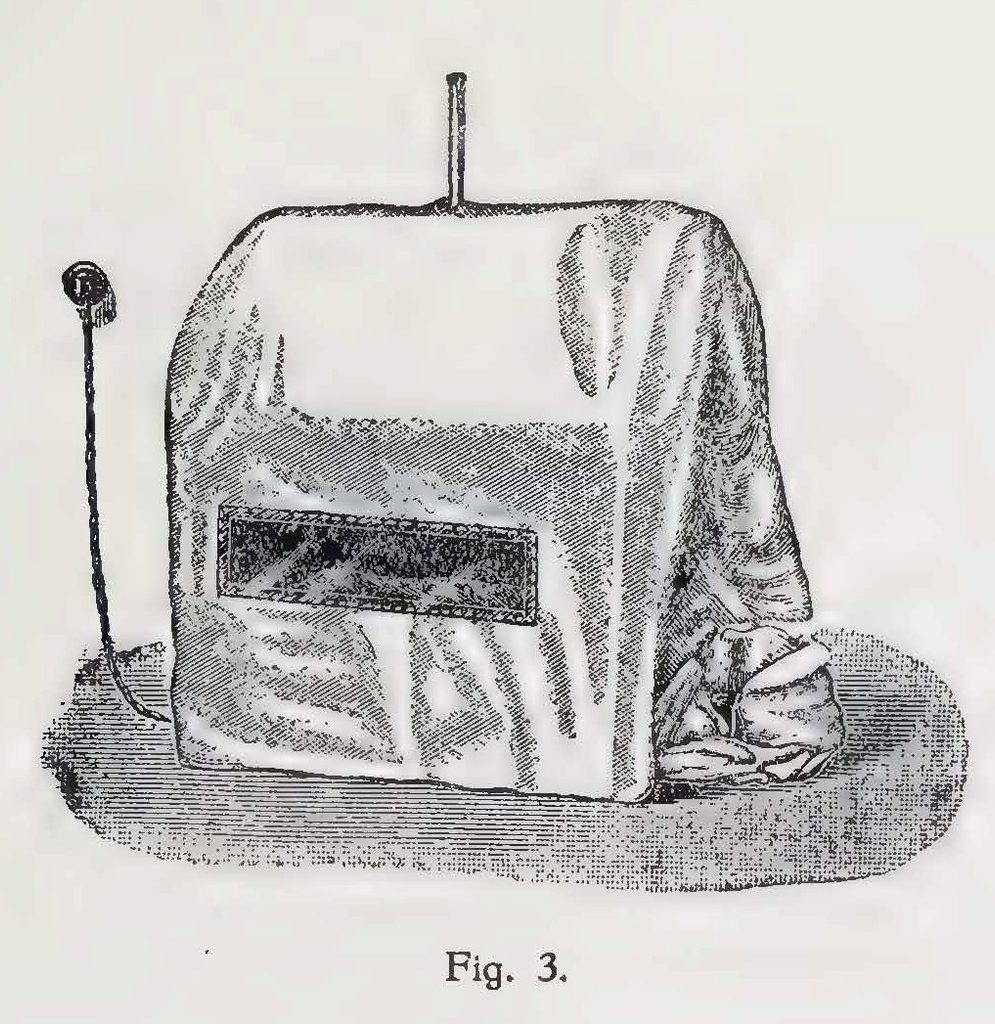
[Fig. 3: Apparatus fully covered with flannel blanket, viewing window in front]
In my opinion the major objections to Moll’s invention are:
- The uncovered head is an important surface for heat loss.
- If the whole is not in a room brought to temperature, the infant also loses too much heat through the lungs.
- With handling, feeding and the like, more inconvenience is to be expected than with the incubators of our incubator department.
- The base is unheated when the screen with lamps is removed for procedures.
At the Amsterdam University Women’s Clinic, under Prof. Treub, the incubator was set up according to the system of Auvard.
[p. 78]
After 1902 a separate small incubator room was created, where the average temperature was 70–75° [presumably °F, approx. 21–24° C], so that the weaklings were not exposed to excessive temperature changes during care. Heating was regulated individually: infants of 1500 grams, 37° C falling to 34°, and 32° C once they gained weight; infants of higher birth weight in poor general condition, first 37° C, then falling to 32° C. By means of flannel, the glass lid is sealed so well that there is no draft.
Prof. v. Rooy replaced the jug heating with an apparatus of 4 carbon-filament lamps of 10 candlepower, placed between 2 Eternit (asbestos-cement) plates mounted on wooden battens (see photo). The 4 lamps are wired in series so that an extra lamp can be switched in, one at a time. The whole unit is slid into the space of the Auvard incubator where the jugs were formerly placed.
The incubator model currently in use is 66 cm long, 40 cm wide and 54 cm high. The walls are 3 cm thick and lined inside with aluminum sheet, making the interior seamless with rounded corners, so that cleaning and disinfection are simple.
At approximately 12 cm above the floor is the wooden base on which the small bed rests (dimensions of this base: 54 cm long and 34 cm wide). The thermometer is fitted in the side wall of the incubator, while the wet sponge is hung above the foot end (see photo).
Handling this apparatus is extremely simple and inexpensive. Whereas formerly a nurse was needed to tend the jugs, the entire heat regulation now takes minimal time.
A cardinal point with regard to ventilation and accustoming the infant to the room temperature is that the lid slides open. (The old Auvard incubator has a removable lid.)
To nurse premature infants in a private home with some success, it is advisable to heat a dry, easily ventilated room to 20° and to place a small bed with a screen near the heat source. Cotton-wool wrapping (according to Marfan) is then appropriate, provided urine and feces are caught in cotton wool. If desired, jugs may be placed in the bed after checking the temperature.
[p. 79, plate]
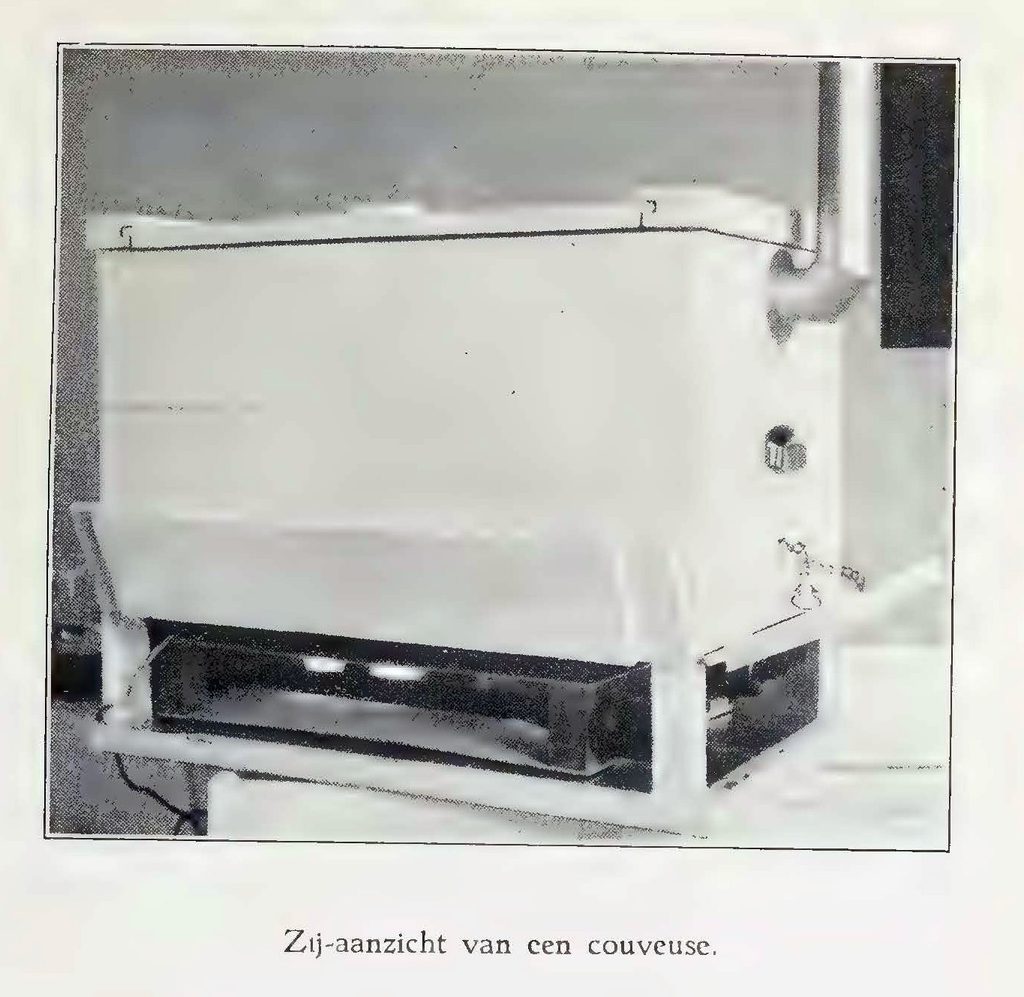
[Photo:] Side view of an incubator.
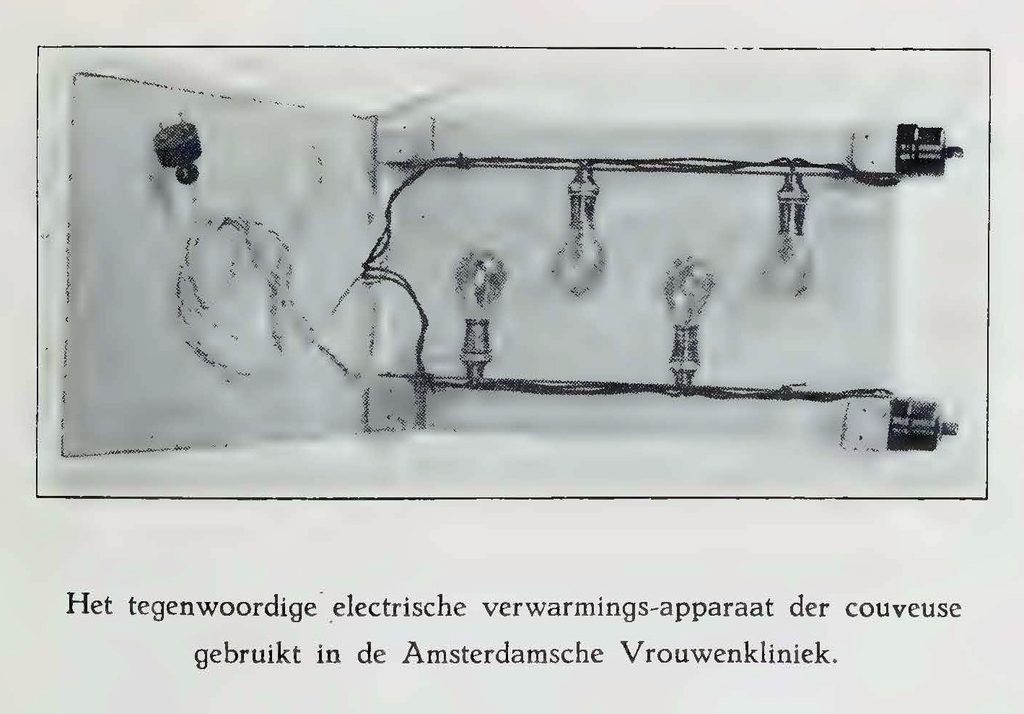
[Photo:] The present electric heating apparatus of the incubator used in the Amsterdam Women’s Clinic.
[p. 79]
§ 2. Feeding
Alongside heat regulation, feeding of the prematurely born infant has occupied a very important place in care. The difficulties rest mainly on a sucking power too weak, so that the infant quickly tires at the mother’s breast, does not get enough nourishment, has attacks of asphyxia and, last but not least, causes engorgement of the mother’s breasts. In addition, the tongue and lip mucosa lack the tactile sensitivity of term infants, and the swallowing and gag reflexes are often absent. There are also cases in which the infant is willing to suck but agalactia exists owing to weakness or illness of the mother (in ½% of cases) (Maygrier), while according to De Bruin and De Lange hypogalactia is fairly common. This is why means of administering feeding have been sought from the earliest times. The course of one of the last chapters convincingly demonstrates the indispensable value of breast-milk feeding.
If putting the infant to the breast fails, the simplest method of feeding is to express the milk into the infant’s mouth. In very weak infants receiving almost no fluid, Carr considers subcutaneous or intraperitoneal physiological saline or Ringer’s solution indicated. More practical is expressing milk with breast pumps and giving it with a specially shaped spoon (Kermauner or Gentille), by pipette, or by tube. It was especially the French who advocated the “gavage” method, although it has not lacked opponents.
Singer’s experiments showed that methylene blue solution injected over the base of the tongue runs along the pharyngeal wall via the piriform sinus and the interarytenoid sinus into the trachea. The condition for this is that the patient does not swallow, since then most of it ends up in the stomach. A further condition is that the vocal cords are open and that the vocal cords and epiglottis do not come into contact with the fluid. In adults it proved possible to inject the fluid through the nose into the trachea, provided swallowing was prevented. Here too the route made no difference. In infants who do not swallow or swallow poorly, feeding by pipette or spoon through nose or mouth must therefore carry a risk of aspiration.
[p. 80]
The father of “gavage” is almost certainly Marchand of Charenton, whose idea, however, was given definite form by Tarnier. They passed the tube through the mouth into the stomach.
Walter Lester Carr passes the tube to below the pharynx but not into the stomach, so as not to cause unnecessary injury to the esophagus. Lesions of the oral and esophageal mucosa, aspiration pneumonias and the like had been anticipated. Gavage is preferably done as simply as possible, using a catheter onto which a buret containing the feed is fitted. The whole must not be held too high. The tube must be inserted through the mouth. It had been thought that feeding through the nose offered some advantages with respect to aspiration and retching. Practice has shown that, provided it is done correctly, tube feeding through the mouth must be considered less dangerous than through the nose. The tube must be inserted to a distance of 14 to 15 cm, and the feeding should last as short a time as possible. Afterwards the infant is laid on its right side.
Neubauer found a mortality of 10% with breast milk, versus 40% with artificial feeding, among his premature births.
Oberwarth does well giving 200 grams of breast milk per kg body weight per day in the first quarter of life (140 calories). In his view, milk diluted with water and sweetened with sugar is poorly tolerated.
Feilchenfeld divides his infants into two groups: 1. breast-fed infants, i.e., infants who received breast milk for 1 month or longer; 2. bottle-fed infants, who received breast milk for a shorter time or not at all. He found striking differences in first-year mortality.
| Breast-fed | Bottle-fed | |||
| Weight | Number | Died within 1 year | Number | Died within 1 year |
| < 1000 g | 6 | 2 (33.3%) | 5 | 4 (80%) |
| 1000–2000 g | 37 | 14 (37.8%) | 13 | 9 (±70%) |
| 2000–2500 g | 39 | 3 (7.7%) | 18 | 10 (±55%) |
| Total | 82 | 19 (23.2%) | 36 | 23 (63.9%) |
Comparisons with our own material are found in one of the following
[p. 81]
chapters. It may already be noted here that our first-year mortality is very much more favorable.
The number of feedings depends on the infant’s birth weight and the amount given per feeding. Birk sometimes found it necessary to give 10 cc 10 to 12 times a day, while Czerny, Keller and Kaupe hold to 5–6 feedings a day (M. K. Orig. 15, 1919). Litzenberg also does well with 4-hour intervals between feedings, to give the infants more rest.
In practice, mothers with hypergalactia often nurse premature infants. It is necessary to be informed about the health of the wet nurse. The remark of Texeira de Mattos about the suckling of infants by goats in the foundling home of the Alpes-Maritimes is of more picturesque than medical value.
Opinions on the caloric requirements of weakling infants differ widely. Initially it was reasoned that, given the premature infant’s large surface area relative to its volume, the prematurely born must need more calories because of greater heat loss. The calories required per kg body weight are estimated at:
130–150 (Salge)
100–120 (Czerny–Keller)
120–130 (Langstein–Meyer)
140 (Budin)
Reiche found that infants under 2000 grams need 120–130 calories per kg body weight and those over 2000 grams 95–100.
Morse–Talbot estimate the amount at about 120, as does Cook, who observed 200 calories as the upper extreme.
Whereas the energy quotient was formerly set at 120, 115, 150 and 140, the investigations of Birk, Oberwarth, Cramer and others have shown that the prematurely born thrive on lower energy quotients (Finkelstein).
The amounts of feed taken were determined by weighing by Budin, Perret and Birk for infants up to 1800 grams. Above that weight the observations were made by the latter two. From their observations I calculated the following averages:
[p. 82]
| Age | Weight up to 1800 g | Weight 1800–2000 g | Weight 2000–2500 g |
| 2nd day | 74 g | 124 g | 166.5 g |
| 3rd day | 123 g | 174 g | 251 g |
| 4th day | 148 g | 236 g | 297 g |
| 5th day | 179 g | 294 g | 338 g |
| 6th day | 199 g | 318 g | 367 g |
| 7th day | 224 g | 341 g | 382 g |
| 8th day | 242 g | 357 g | 392 g |
| 9th day | 269 g | 386 g | 414 g |
| 10th day | 278 g | 407 g | 421 g |
Délestre, whose weight categories are somewhat different, drew up the following table:
| Age | Weight up to 1500 g | Weight 1500–2000 g |
| 2nd day | 125 g | 190 g |
| 3rd day | 135 g | 230 g |
| 4th day | 160 g | 290 g |
| 5th day | 165 g | 310 g |
| 6th day | 180 g | 320 g |
| 7th day | 185 g | 325 g |
| 8th day | 215 g | 330 g |
| 9th day | 235 g | 340 g |
| 10th day | 250 g | 345 g |
Cramer advises making no single feeding larger than 50 grams. At very low weights (under 1000 grams) it is sometimes impossible to give more than 50 grams per day, supplemented with fluid. One tries to increase the amounts as quickly as possible. In infants who vomit violently, breast milk is sometimes given by enema.
Marfan gives infants over 2000 grams no breast during the first 20 hours, the first breastfeed at 24 hours, 4 to 5 breastfeeds on the 2nd and 3rd day, and 7 feedings thereafter.
If the weight is under 2000 grams, they are fed every 3 hours on the 2nd day and every 2 hours thereafter.
In the absence of breast milk he recommends donkey’s milk, which is low in fat and rich in protein.
If this too is unavailable, he uses buttermilk (already used in 1865 by Ballot, in 1895 by De Jager, and in 1900 by Houwing and Teixeira de Mattos). To 1 liter are added 40 grams of cane sugar and 10 grams of rice flour. In weaklings, buttermilk had already been used by Kobrak, Kappe-Liman, Moll, Séhu, Finguety and Aris.
[p. 83]
Marfan adds aq. calcis (limewater) for neutralization. His regimen is as follows:
| Day | Buttermilk | Limewater | Calories |
| 2nd | 6 × 10 cc | + 10 cc | 30 |
| 3rd | 7 × 15 cc | + 10 cc | 52 |
| 5th | 7 × 20 cc | + 10 cc | 70 |
| 10th | 7 × 50 cc | + 10 cc | 175 |
| 15th | 7 × 60 cc | + 10 cc | 210 |
| 21st | 7 × 70 cc | + 10 cc | 245 |
| 30th | 7 × 90 cc | + 10 cc | 315 |
The lower the birth weight, the greater the likelihood of edema, which masks weight loss. It may be considered satisfactory when no more than 8 to 12% is lost and the original birth weight is regained after 3 to 4 weeks. A daily weight gain of 10 to 15 grams in small premature infants is already satisfactory (15 to 20 grams for larger ones), while weight doubles between the 50th and 100th day and triples by the 180th day.
As soon as breast milk is supplied in insufficient quantity or quality, supplementary feeding must be started. Experience has shown that when breast milk amounted to less than 50% of the total feeding, mortality rose rapidly.
Opinions on the most suitable kind of supplementary feeding differ widely.
Birk starts most simply. If the infants do not gain enough on breast milk, he adds 10 grams of plasmon per 24 hours. Then come the various cow’s-milk mixtures with added carbohydrates etc.; in a word, all the mixtures that are also used as sole artificial feeding, which is of course a very questionable matter.
Formerly one began with a mixture of cow’s milk and water in a ratio of 1:5 for fear of dyspepsia. The caloric content, however, is such that the quantities that must be taken are too large.
Schick adds 17 grams of cane sugar per 100 grams of breast milk to make it richer in calories. He then needs much smaller (half) quantities. However, the feed then contains too little protein and salt, so it can be continued for only 5–8 weeks; after that growth suffers. He then switches to cow’s milk and sugar.
W. L. Carr adds to the breast milk an equal volume of a 5 to 7% lactose solution. In hypothermia he finds benefit in adding cane sugar or maltose.
[p. 84]
Enrichment of caloric content was first attempted with carbohydrates (up to 17% cane sugar; Schick), which had the advantage of allowing smaller (half) quantities, but the disadvantage that dyspeptic symptoms appeared after a short time.
Formerly fat content was thought to be harmful (Czerny and Keller). Buttermilk seemed to support this hypothesis, as did the fact that skimmed breast milk often works better than ordinary breast milk in vomiting premature infants. Birk and Bendix give buttermilk with 1% flour and 6% sugar, adding some fat after 4 weeks and switching to butter-flour mixtures after 8 weeks.
Then the fear of concentrated and fat-rich mixtures began to subside, and Backhausmilch, Gärtner’s fat milk, and the butter-flour buttermilk feeding of Czerny and Kleinschmidt (7% fat, 1918) again found application in feeding the prematurely born.
A. Mola gives the infants fat-containing breast milk without ill effect.
Pfaundler likewise advocates fat-rich, protein-poor mixtures.
Finkelstein, on the other hand, gives buttermilk and Nährzucker.
Stolte pointed out that protein-rich feeding impaired calcium metabolism.
Davidson reports in The Lancet the case of an infant of 625 grams and 37.5 cm in length. He fed it for the first 2 days with a cream mixture (85 grams in 24 hours), then 5 grams of breast milk 12 times a day. In the third week it received 25 grams 8 times a day. The weight at the end of the fourth week was 1375 grams. He reports nothing of its further fate.
Heubner gives fat milk, Backhausmilch; Ibrahim, cream mixtures. Budin gives peptonized milk.
More recently this approach has again been abandoned, in view of the results with skimmed breast milk in the first days of life and the poor absorption of fats in the gastrointestinal tract of the prematurely born (Ylppö). This view is supported by the investigations of Rubner, Langstein and Stolte.
The feed must not fall below a certain fat content, since otherwise normal growth fails to occur (Ylppö; 1%).
A study by Langstein–Edelstein showed an average ash content in the prematurely born of 1.7 grams, versus 2.7 grams in term infants. On this Moll based the giving of butter- [p. 85] milk with alkalis. An additional advantage would be that the “Acidosebereitschaft” (predisposition to acidosis), which according to Ylppö is characteristic of the prematurely born, is counteracted.
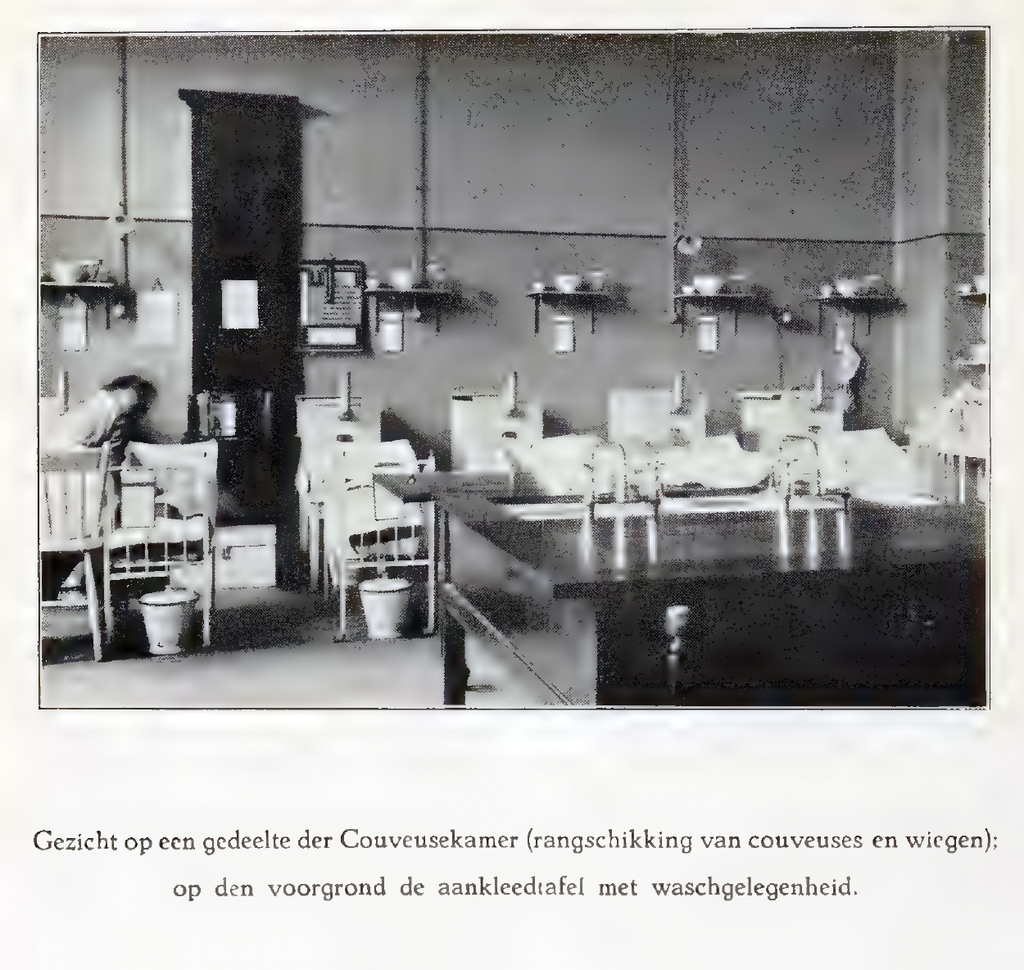
View of part of the incubator room (arrangement of incubators and cradles); in the foreground, the dressing table with washing facilities.
[p. 85]
According to Hess, it is advisable to boil artificial feeds for at least 2 minutes. This author forestalls the dangers of avitaminosis by adding lemon juice from the third week (8 drops in increasing amounts) and egg yolk. In these cases he also gave cod-liver oil from the fourth week (8 drops, rising to 30 drops by the eighth week), if necessary mixed with the lemon juice. Against anemia he gave iron compounds very early (4th–5th week).
Flour additions can be started later (4th–5th month), although Birk saw no disadvantage in adding 1% flour to the buttermilk from the first day of life.
Broth, vegetables and porridge are given on average around the 6th month. Again it is Birk who gives powdered spinach in the 4th month, in an amount of 2 teaspoons.
It has been thought possible to give artificial sunlight (Höhensonne, ultraviolet lamp), cod-liver oil and iron preparations prophylactically against anemia and rickets.
More recently, attempts have been made to prevent rickets with irradiated milk (experiments of Hess and Steenbock) and ergosterol (prepared by Windaus: under ultraviolet rays it is converted into vitamins). I could find no described, well-founded results for the prematurely born anywhere.
György and Holtz irradiated ergosterol and cured rickets with this product, which was later marketed by Merck as Vigantol. They found 1 to 4 milligrams per day sufficient in term infants to prevent rickets and tetany. (Krehl successfully treated an adult with osteomalacia with Vigantol.)
Huldschinsky showed that ultraviolet rays promoted ossification in his experimental animals. Peemöller found that heat rays had no value for this effect, while Rost attaches no value to the pigment as such. According to newer American studies, the skin contains a “provitamin” that is converted into vitamin D by ultraviolet rays. Schubert found that erythrocytes absorb a substantial part of the ultraviolet rays.
Some authors combated anemia with oxygen inhalations.
Last Updated on 10/04/26