Exposition Internationale Urbaine de Lyon, 1914
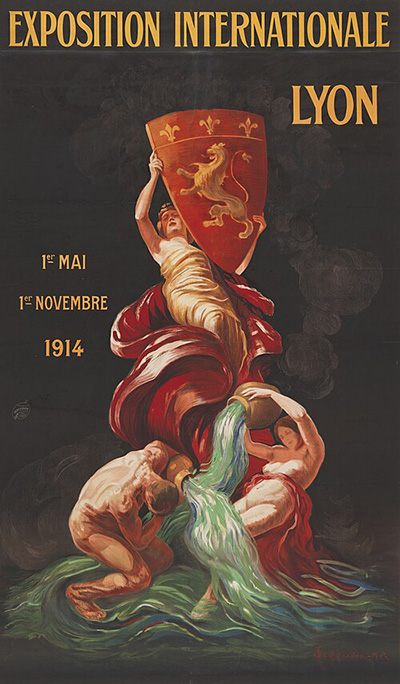
The 1914 Lyon International Urban Exhibition was born from the ambitious vision of Mayor Édouard Herriot, who sought to transform the city into a stage for his municipal policies and the burgeoning concept of the “Modern City.” Aiming for a grand success that would surpass Lyon’s previous fairs in 1872 and 1894, the organizers, including architect Tony Garnier and medical doctor Jules Courmont, curated a sprawling (75.38 hectares with 17,000 square meters of exhibit space), eclectic mix of industrial displays, foreign pavilions, and colonial exhibits, including a Senegalese village. It’s theme was the 20th century and modernity, focusing on improving sanitation, medical services, transportation, and cultural services, while improving housing and green spaces in Lyon. Herriott placed special emphasis on the urban planning aspect of the event, hence its name.
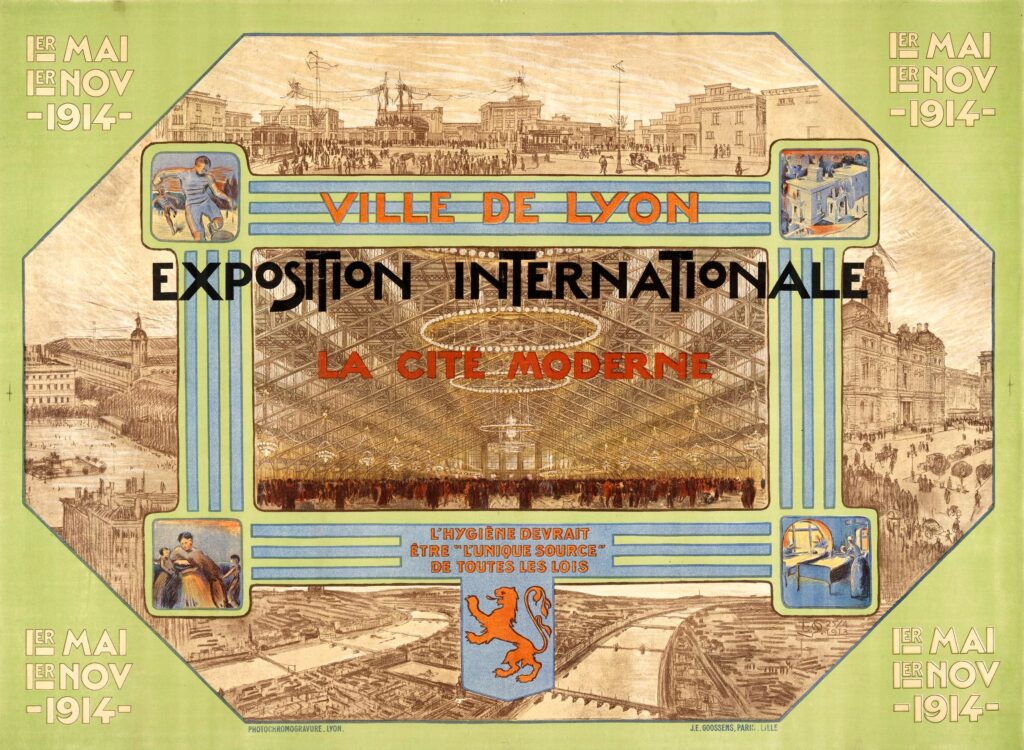
However, the event soon became a mirror for the era’s underlying instabilities. Even before its grandest ambitions were tested, the exhibition struggled with a “disordered profusion” of themes and a desperate need for profitability that blurred its educational goals. When President Raymond Poincaré inaugurated the event in May 1914, the atmosphere was already clouded by the memory of the 1894 fair, which had ended in tragedy following the assassination of President Sadi-Carnot.
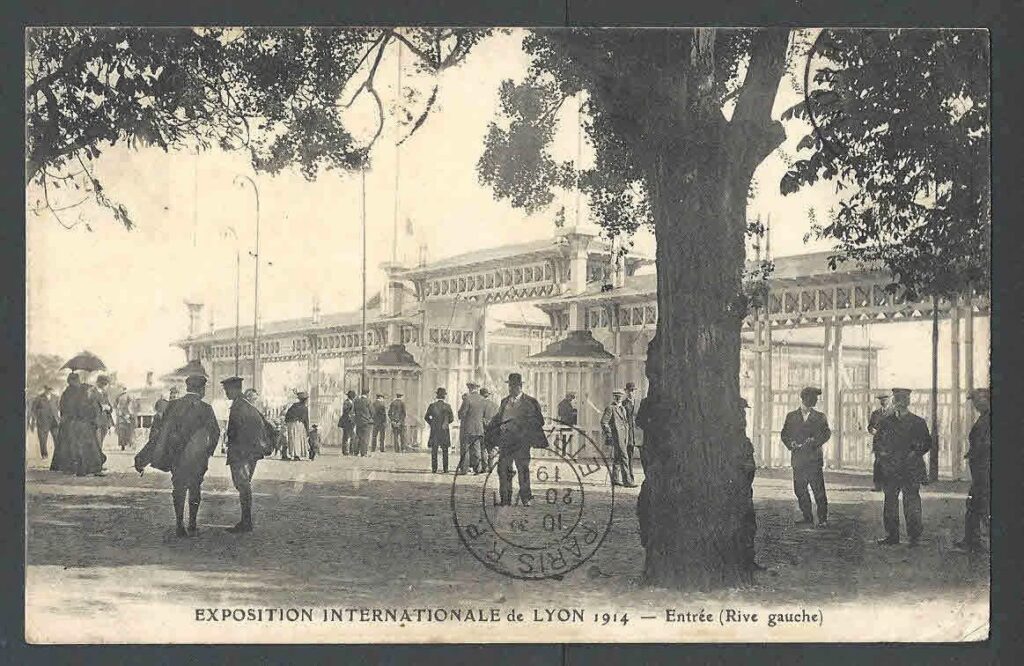
The exhibition’s ultimate failure was sealed not by internal mismanagement, but by the relentless march of history. By August, the declaration of World War I effectively dismantled the fair’s international spirit; German and Austrian pavilions were abruptly closed on August 2, 1914, and exhibitors from enemy nations fled as their goods were confiscated. The war was greeted in Lyon with patriotic demonstrations, and the attention of the municipal authorities was soon absorbed by other tasks (organizing the mobilization,
supplying provisions, etc.). At the official closure on November 1, many pavilions had been empty for a long time. The remarkable Halle Tony Garnier, the centerpiece of the exposition, was used as an arms factory during the war and later as a slaughterhouse. In 1988, it was reconstructed as an exhibition and event center.
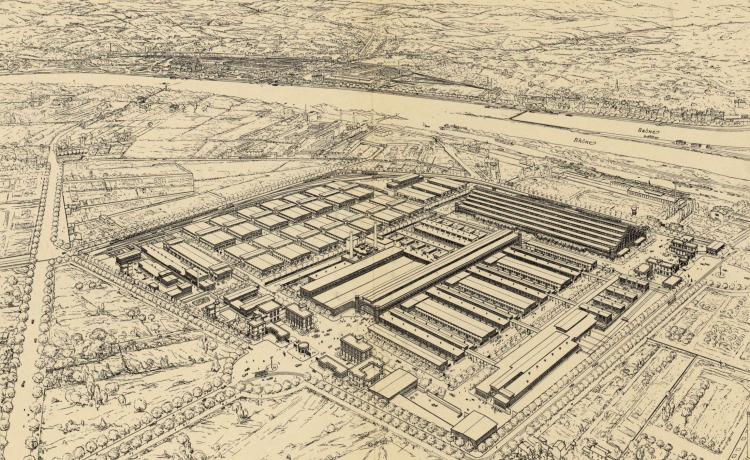
Ultimately, the 1914 Lyon exhibition stands as a poignant symbol of a broken ideal, proving that the utopia of global unity through trade and technology could not survive the violent upheavals of the 20th century.
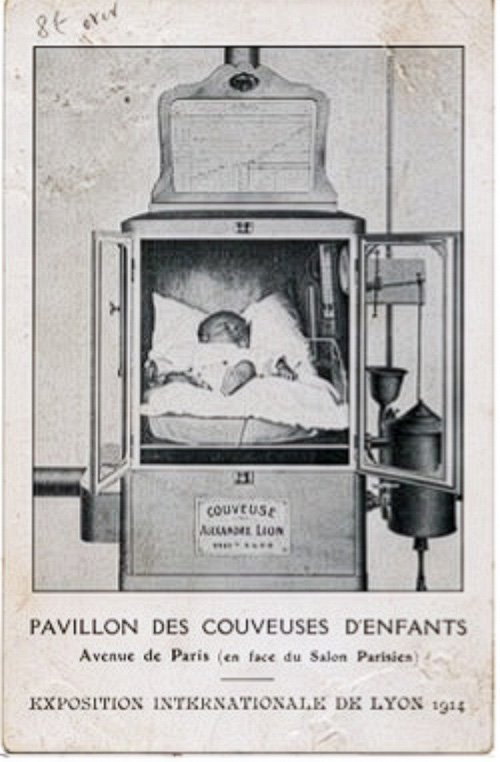
Based on the evidence by the postcard below, we know that Dr. Alexandre Lion had an incubator exhibit at the Lyon 1914 exposition, although I have not been able to find any other details about it or photographs until now. Dr. Lion’s first known incubator exhibit was at the Lyon exposition of 1894, and perhaps fittingly, his last known exhibit is at the Lyon exposition of 1914.
Last Updated on 01/28/26