Richard John Cremer (1925–2014)
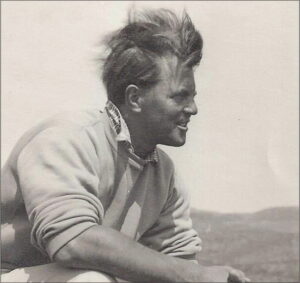
Richard John Cremer, MB Lond., DCH (January 4, 1925 – January 25, 2014) was a British paediatrician and general practitioner whose serendipitous observations at a small Essex hospital in the mid-1950s led to the discovery of phototherapy for neonatal jaundice — one of the most widely practised interventions in newborn care worldwide.
Born in Blean, Kent, Cremer was the son of an academic chemical engineer who held a post at King’s College London. Following in his father’s institutional footsteps if not his discipline, Cremer studied medicine at King’s College London, graduating in 1950. He subsequently obtained the Diploma in Child Health and entered paediatric practice as a registrar at Rochford General Hospital, Essex, under consultant Dr. R. H. Dobbs.
The premature baby unit at Rochford occupied a set of south-facing rooms arranged around a sunlit courtyard — a legacy of its earlier use as a puerperal sepsis unit, rendered redundant by the antibiotic era. Sister J. Ward, the sister-in-charge, had a firm belief in the therapeutic virtue of fresh air and sunshine and was accustomed to wheeling her more stable charges outside on warm days. During a ward round in the summer of 1956, Dobbs and Cremer observed a jaundiced premature infant with a sharply demarcated triangular patch of skin that was noticeably more yellow than the rest of its body — because, Sister Ward explained, the rest of the baby had faded while exposed to the sun, the covered patch being the exception. The observation was noted but not immediately pursued.
Weeks later, a second, more compelling event occurred. A serum bilirubin sample from a deeply jaundiced infant was inadvertently left on a sunny windowsill in the biochemistry laboratory. When Cremer’s colleague, biochemist P. W. Perryman, finally analysed it, the result was unexpectedly and inexplicably low — and the serum had turned green. Perryman’s original sample, still sitting in sunlight, was even lower than before. The implication was inescapable: light was degrading bilirubin. The green pigment was identified as biliverdin, a presumed conversion product thought to be less toxic to neural tissue than unconjugated bilirubin.
Working with Perryman and biochemist D. H. Richards, Cremer undertook a systematic series of experiments to characterise the effect. They confirmed that it was visible blue light — not ultraviolet radiation nor heat — that was responsible, and that unconjugated bilirubin (the form predominant in neonatal jaundice) was markedly more photosensitive than the conjugated fraction. A preliminary report of these biochemical findings appeared as a communication in the Biochemical Journal in 1957. Hospital engineers then constructed a practical treatment device — a curved stainless-steel reflector housing eight 40-watt blue fluorescent tubes, adjustable above a standard infant cot — and the treatment was cautiously applied to jaundiced neonates with promising results. Their findings were submitted to The Lancet and published in May 1958.
Despite the clarity and novelty of the work, the paper attracted little attention in the United Kingdom and was largely ignored in the US for nearly a decade, despite validation by studies in many other countries including Brazil, Uruguay, Chile, and then Italy, France, and England. It was only after American investigators began publishing widely on the technique that it entered mainstream clinical practice. Cremer later recalled this period of neglect with characteristic understatement in a 1975 retrospective account he co-authored with Dobbs in the Archives of Disease in Childhood.
Cremer left hospital medicine in the mid-1960s and entered general practice in Wallington, Surrey, where he remained until his retirement in the early 1990s. He is remembered by colleagues as a modest man who took quiet satisfaction in seeing the treatment he helped develop become a global standard of care, saving millions of infants from death and the neurological consequences of severe hyperbilirubinaemia.
Richard Cremer died in Carshalton, Surrey, on January 25, 2014. He was 89.
Biographical
- Obituary: Richard John Cremer. The Lancet. 2014;383(9931):1816. DOI: 10.1016/S0140-6736(14)60871-0. https://www.thelancet.com/journals/lancet/article/PIIS0140-6736(14)60871-0/fulltext
- Maisels MJ. Sister Jean Ward, phototherapy, and jaundice: a unique human and photochemical interaction. Journal of Perinatology. 2015;35(9):671–675. DOI: 10.1038/jp.2015.56.
- Brady S. The Birth of Phototherapy. Synnovis (formerly Viapath). Published February 9, 2017. https://www.synnovis.co.uk/news-and-press/the-birth-of-phototherapy
Key publications by Cremer
- Cremer RJ, Perryman PW, Richards DH, Holbrook B. Photosensitivity of serum bilirubin [abstract]. Biochemical Journal. 1957;66:60P.
- Cremer RJ, Perryman PW, Richards DH. Influence of light on the hyperbilirubinaemia of infants. The Lancet. 1958;271(7030):1094–1097. DOI: 10.1016/S0140-6736(58)91849-X.
- Dobbs RH, Cremer RJ. Phototherapy. Archives of Disease in Childhood. 1975;50(11):833–836. DOI: 10.1136/adc.50.11.833. [Retrospective narrative account by Dobbs and Cremer of the discovery of phototherapy; reproduced at https://neonatology.net/history/classic-books/phototherapy-dobbs-and-cremer/]
Portions of this page were drafted with machine assistance; the final text was reviewed, verified, and edited by the author. Click here to learn more.
Last Updated on 07/20/26