Roberto Caldeyro-Barcia (1921–1996)
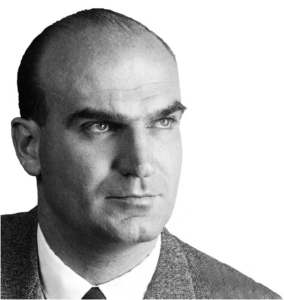
Roberto Caldeyro-Barcia was born on 26 September 1921 in Montevideo, Uruguay, into a family with deep roots in medicine. His father, Dr. Joaquín Caldeyro, was a distinguished physician, and his mother, Elvira Barcia, came from a family that also had medical connections. He attended the English School in Montevideo as a child — where he first met Ofelia Stajano, who would later become his wife — before going on to the Elbro Fernández School and then entering the Faculty of Medicine at the University of the Republic in 1938. He graduated with honors in December 1947. Inspired by the experimental physiology of Claude Bernard and Louis Pasteur, he chose a career in research rather than clinical practice.
While still a student, Caldeyro-Barcia began collaborating with Professor Hermógenes Álvarez, an associate professor of obstetrics and gynecology, on the mechanics of the human uterus during labor. Together they obtained the first recorded measurements of intrauterine pressure, achieved by placing a microballoon catheter within the uterine cavity and measuring the compression forces generated by contractions. From this work they developed the “Montevideo unit” (MVU) — a quantitative measure of uterine contractile activity calculated by summing the peak pressures above baseline across a ten-minute window. Montevideo units gave clinicians for the first time a rational, reproducible way to assess whether labor was progressing adequately and enabled a more judicious use of oxytocin. In 1952 they presented these findings in England, and their methods rapidly achieved international acceptance.
Through the 1950s the Montevideo group extended their methods to the simultaneous monitoring of uterine contractions and fetal heart rate, characterizing two distinct patterns of heart rate change during contractions. They described “Type I dips” (early decelerations), caused by fetal head compression and of limited clinical significance, and “Type II dips” (late decelerations), in which the heart rate falls after the peak of a contraction and recovers only slowly — a pattern indicating uteroplacental insufficiency and fetal hypoxia. This classification, developed independently but nearly simultaneously with the work of Dr. Edward H. Hon in the United States, established the conceptual framework that still underlies modern electronic fetal monitoring. The Type II nomenclature was later renamed “late decelerations” by other investigators, but the physiological insight was Caldeyro-Barcia’s.
In 1959 the University of the Republic appointed him founding chairman of a newly created Department of Obstetric Physiology, and his laboratory rapidly became an international destination for training in perinatal research. His team also worked on tocolysis, developing the pharmacological suppression of pathological intrapartum contractions as a means of averting unnecessary operative delivery. In 1969 he organized the PAHO-sponsored symposium “Perinatal Factors Affecting Human Development,” at which he presented evidence that oxytocin-stimulated contractions caused Type II dips in 38 percent of cases — a finding he used to argue for restraint in elective induction of labor.
In 1970 the Pan American Health Organization established the Latin American Center for Perinatology and Human Development (CLAP) in Montevideo and appointed Caldeyro-Barcia as its founding director. Under his leadership CLAP became a major regional training and research center, eventually producing over 2,000 publications and training more than 2,000 obstetricians, neonatologists, nurses, and midwives from across Latin America, the Caribbean, and Europe. He is widely credited with coining the term “perinatology” to describe the unified discipline spanning the fetal and neonatal periods surrounding birth.
A persistent theme of his later career was the defense of the natural physiology of childbirth against unnecessary technological intervention. He advocated for the upright or lateral birthing position rather than the supine lithotomy posture then universal in hospital delivery rooms, designed a birthing chair to facilitate upright birth, and in 1977 published research demonstrating that the common practice of prolonged directed pushing impaired fetal oxygenation — arguing that women should push spontaneously rather than on command. These positions, once controversial, are now mainstream elements of evidence-based maternity care.
After retiring from CLAP at age 60, Caldeyro-Barcia served as Director of the Maternal-Child Health Program at the Uruguayan Ministry of Public Health. In 1987, troubled by the exodus of Uruguayan scientists during the military dictatorship of 1973–1985, he co-founded the Programa de Desarrollo de las Ciencias Básicas (PEDECIBA) to facilitate the return of scientists who had left the country, and he led this effort until his death.
He held leadership roles in numerous international bodies, including the presidency of the International Federation of Gynecologists and Obstetricians (FIGO), and he co-founded the Journal of Perinatal Medicine. He received more than 300 honors and awards, including the Abraham Horwitz Award in Inter-American Health (1984), and was nominated three times for the Nobel Prize in Physiology or Medicine.
Roberto Caldeyro-Barcia died in Montevideo on 2 November 1996, at age 75, following cardiac surgery. The Global Congress of Maternal and Infant Health subsequently established the Roberto Caldeyro-Barcia Prize in Perinatal Medicine in his honor. His work — measuring the forces of labor, decoding the language of the fetal heart rate, and insisting that technology serve rather than supplant physiological understanding — remains foundational to the practice of perinatology and neonatal medicine worldwide.
References
- Dunn PM. Perinatal profiles: Roberto Caldeyro-Barcia: Obstetric Physiologist Extraordinary. NeoReviews. 2008;9:e187–e191. https://publications.aap.org/aapbooks/book/607/chapter/5822452/Perinatal-Profiles-Roberto-Caldeyro-Barcia
- Dueñas-Garcia OF, Diaz-Sotomayor M. Roberto Caldeyro Barcia (1921-96): establishing the basis of modern obstetric physiology. J Med Biogr. 2011 Aug;19(3):125-7. doi: 10.1258/jmb.2011.011020. PMID: 21810852.
- Mandile O. Roberto Caldeyro-Barcia (1921–1996). Embryo Project Encyclopedia. Arizona State University; 2017 Jul 2. https://embryo.asu.edu/pages/roberto-caldeyro-barcia-1921-1996
- Torget A. Roberto Caldeyro-Barcia: a pioneer in obstetrics. Tidsskrift for Den norske legeforening. 2025 Jun 23. https://tidsskriftet.no/en/2025/06/bygone-days/roberto-caldeyro-barcia-pioneer-obstetrics
Last Updated on 04/02/26