Sir Graham Collingwood “Mont” Liggins (1926–2010)
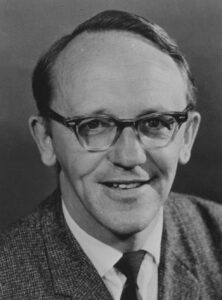
Graham Collingwood Liggins was born on 24 June 1926 in Thames, New Zealand, a twin to his sister Elizabeth and the youngest child of James Liggins, a surgeon. He attended Thames High School and Auckland Grammar School, then graduated with his medical degree from the University of Otago in 1949 and a Diploma in Obstetrics from the Royal College of Obstetricians and Gynaecologists in London the following year. Known to friends and colleagues as “Mont” — a childhood nickname derived from his attachment to Monty the Mouse — he chose a career in obstetrics and gynaecology and quickly became fascinated with the physiology of labor and birth.
In the late 1950s Liggins joined National Women’s Hospital in Auckland as a senior lecturer in obstetrics and gynaecology, where he set his sights on a fundamental question: what triggers the onset of labor? His hypothesis, unconventional at the time, was that the fetus itself — not the mother — provided the key signal. To test this, he taught himself to perform fetal hypophysectomies in sheep during a sabbatical at the University of California, Davis, confirming that removing the fetal pituitary allowed pregnancy to continue far beyond term. Back in Auckland, working with minimal resources in an abandoned shed on the hospital grounds, he pursued the logical corollary: if the fetal pituitary was necessary for the onset of labor, perhaps fetal glucocorticoids were the actual trigger. His 1969 doctoral thesis at the University of Auckland, titled “The Role of the Foetal Adrenal Glands in the Mechanism of Initiation of Parturition in the Ewe,” formalized this body of work.
The discovery that would define his career grew from a moment of careful observation in the sheep barn. While injecting pregnant ewes with glucocorticoids to study their effect on the timing of delivery, Liggins found one morning that a sheep had given birth overnight. The lamb was so premature it should not have survived — yet it was alive and breathing. Autopsy revealed that its lungs had fully inflated, rather than remaining collapsed and airless as expected at that gestational age. The conclusion of his 1969 paper in the Journal of Endocrinology noted that partial aeration of the lungs in these lambs might reflect accelerated surfactant activity — an incidental finding that would prove anything but incidental.
Liggins reasoned that if glucocorticoids accelerated lung maturation in sheep, they should do the same in human babies. At the time, most preterm infants died of respiratory distress syndrome caused by surfactant deficiency, and the first infant ventilators were only just being introduced. With remarkable speed, Liggins and his neonatologist colleague Ross Howie devised a randomised, placebo-controlled trial of antenatal corticosteroids and began enrolling women in 1969. The trial used betamethasone administered to mothers at risk of preterm delivery before 37 weeks. Among the 213 women in spontaneous premature labor who received at least 24 hours of treatment, early neonatal mortality was 3.2% in the treated group compared with 15.0% in controls, and respiratory distress syndrome occurred in 9.0% of treated infants versus 25.8% of controls. The manuscript was submitted first to Nature and then to The Lancet, which declined it on the grounds that it lacked general interest. It was published in Pediatrics in October 1972.
Despite the clarity of the results, the treatment was slow to enter routine clinical practice. New Zealand was not considered a hub of globally significant medical research at the time, and many clinicians were skeptical because smaller studies had not shown a comparable benefit. Liggins himself once remarked that the slow uptake was probably because people thought nothing important could come out of the colonies. It was not until a 1994 NIH Consensus Development Conference formally endorsed antenatal corticosteroids for women at risk of preterm birth before 34 weeks that the treatment became standard of care in the United States — more than two decades after publication. The 1992 Cochrane meta-analysis of twelve randomized trials showed that antenatal glucocorticoids approximately halved the risk of neonatal death, respiratory distress syndrome, intraventricular hemorrhage, and necrotizing enterocolitis in preterm infants — and the Cochrane Collaboration subsequently adopted the forest plot from that meta-analysis as its organizational logo, a tribute to the power of the original Liggins–Howie trial.
Liggins became Professor of Obstetrics and Gynaecological Endocrinology at the University of Auckland in 1971. His intellectual range extended well beyond preterm birth. In the late 1970s he studied the physiology of Weddell seals diving off the coast of Antarctica, finding that elevated cortisol levels helped the animals sustain breath-holding under extreme pressure — work that demonstrated the breadth of his curiosity and his willingness to follow biology wherever it led. Liggins was awarded the Polar Medal for Antarctic research in 1980, was elected a Fellow of the Royal Society of London in 1980, appointed Companion of the British Empire in 1983, and knighted for his services to medical research in 1991. He retired from clinical practice and the department chair in 1987.
The founding Director of the Liggins Institute, pediatrician and developmental physiologist Sir Peter Gluckman, compared Liggins’s place in New Zealand science to that of Ernest Rutherford, saying that few scientists had transformed so much through a single set of experiments — reshaping both the understanding of parturition and the treatment of respiratory distress syndrome. There is broad consensus that the intervention Liggins and Howie described has saved the lives of hundreds of thousands of premature infants and spared families and society the burden of lifelong disability. By all accounts Liggins was a humble and generous man; colleagues recall his intellectual openness and his willingness to share data and give credit freely. He died on 24 August 2010 in Auckland, aged 84, following a prolonged illness. The Liggins Institute at the University of Auckland, founded in 2001, stands as his lasting institutional memorial.
- O’Connor, Kathleen, “Sir Graham Collingwood Liggins (1926-2010)“. Embryo Project Encyclopedia ( 2012-02-16 ). ISSN: 1940-5030 https://hdl.handle.net/10776/2278
- Graham Collingwood Liggins – Wikipedia
- G. C. Liggins, R. N. Howie; A Controlled Trial of Antepartum Glucocorticoid Treatment for Prevention of the Respiratory Distress Syndrome in Premature Infants. Pediatrics October 1972; 50 (4): 515–525. https://doi.org/10.1542/peds.50.4.515
- Sir Graham Collingwood (Mont) Liggins Biography – The Royal Society
Last Updated on 04/04/26