Panama-Pacific International Exposition 1915
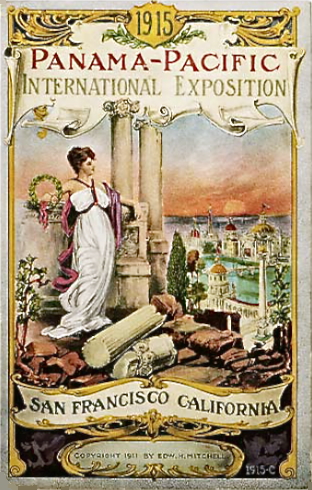
On February 20, 1915, President Woodrow Wilson pressed a telegraph key in Washington, D.C., sending a signal across the continent to San Francisco. The signal triggered a switch in the diesel powerhouse behind the Palace of Machinery, throwing open the doors of the exhibit halls, raising flags, and sending fountains skyward across 635 acres of reclaimed bay-front marshland — the Panama-Pacific International Exposition (PPIE) was open.
The fair’s official purpose was to celebrate the completion of the Panama Canal, but for San Francisco the deeper meaning was unmistakable. Nine years earlier the city had been devastated by the earthquake and fire of April 18, 1906, which destroyed nearly four square miles of buildings. The PPIE was the city’s declaration to the world that it had risen from the ashes. “Just think of what they have done!” Current Opinion magazine wrote at the time. “San Francisco nine years ago was in ruins. To-day it is rebuilt; and…they have brought into being at the same time this superb International Exposition.”
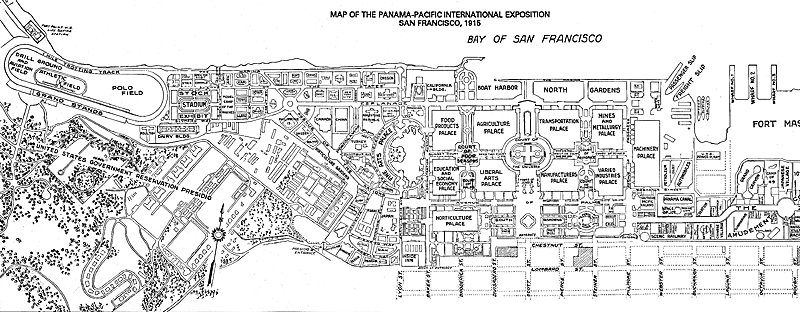
The fair ran nine months, from February 20 to December 4, 1915, drawing 18,876,438 total visitors — far exceeding even the most optimistic projection of twelve million. It occupied a site along San Francisco’s northern waterfront, between the Presidio and Fort Mason, in what is now the Marina District, built on land reclaimed from the bay by filling mud flats with sand dredged from the harbor. Twenty-four nations participated, and the approximately $50 million enterprise — funded through a combination of city, state, exhibitor, and concessionaire investment — turned a net profit.
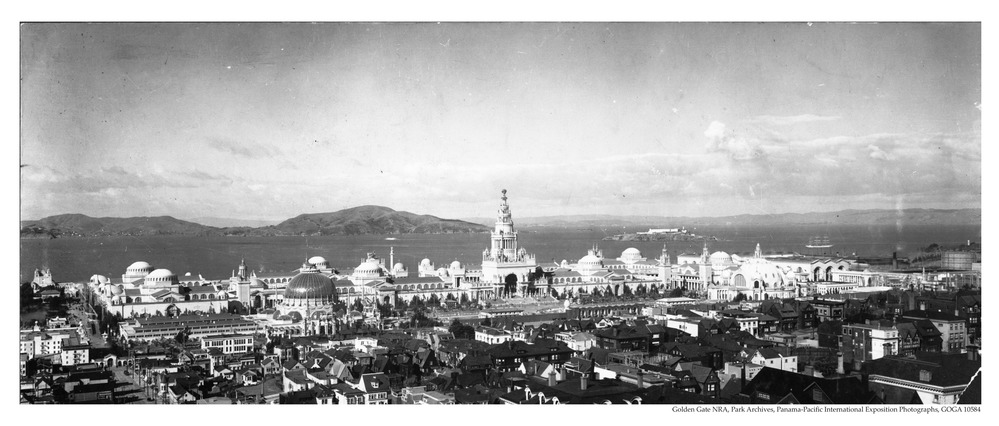
The fair’s ambition was staggering. Its official historian, San Francisco journalist Frank Morton Todd, captured the organizing aspiration in his five-volume official history: the PPIE intended to create “a microcosm so nearly complete that if all the world were destroyed except the 635 acres of land within the Exposition gates, the material basis of the life of today could have been reproduced from the exemplifications of the arts, inventions and industries there exhibited.” Eleven palatial exhibition halls surrounded by sculptures and fountains, with numerous foreign and state buildings (sources differ on the exact number), and a 65-acre amusement zone known as “the Joy Zone” gave physical form to that aspiration.
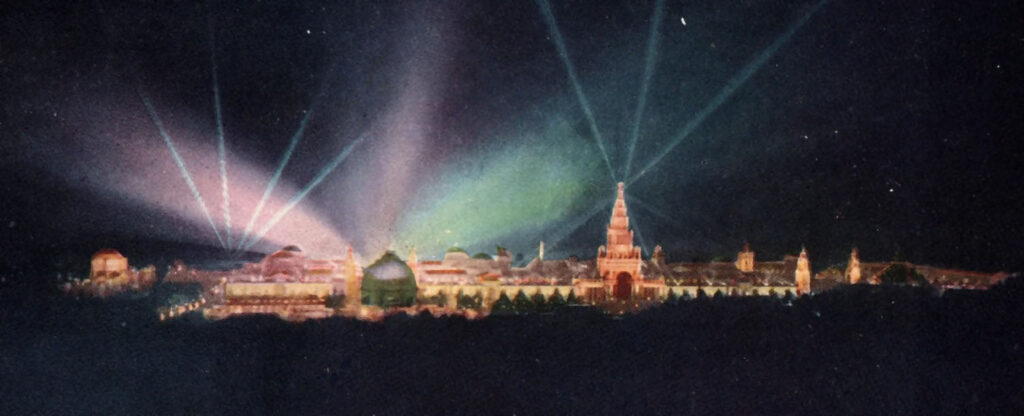
The centerpiece of the grounds was the 435-foot Tower of Jewels, its surface studded with more than 102,000 suspended, mirror-backed Austrian cut-glass prisms that refracted sunlight by day and reflected searchlight beams by night. Offshore, a barge called the Scintillator projected forty-eight colored searchlights into the sky, simulating the Northern Lights. Visitors came from every state and from across the world; more than 500,000 traveled from east of the Rockies. It was, by any measure, the greatest spectacle the American West had yet produced.
The Joy Zone
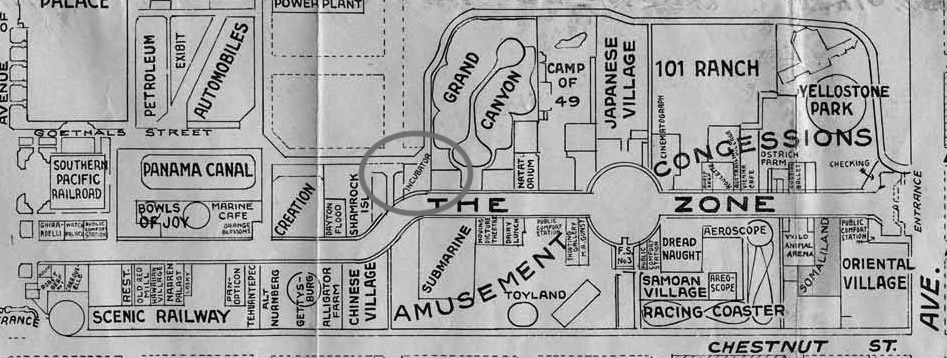
The Joy Zone, sequestered at the eastern end of the fairgrounds along Chestnut Street from Fillmore to Van Ness, represented the largest exposition amusement park ever built — sixty-five acres at a cost of approximately $3.5 million. It was the heir to the midway tradition inaugurated at the 1893 World’s Columbian Exposition in Chicago, offering diversions ranging from the spectacular to the morally questionable. Visitors could ride a moving platform around a five-acre replica of the Panama Canal, stand at the rim of a six-acre reproduction of the Grand Canyon contributed by the Atchison, Topeka & Santa Fe Railway, watch a simulated Old Faithful erupt on schedule in a Yellowstone Park reproduction, or be lifted nearly 300 feet in the air in a gondola on the Aeroscope.
Ghirardelli’s Chocolate and Welch’s Grape Juice flanked the Zone’s main entrance. Inside, the program ranged widely: “Creation,” a theatrical enactment of the Book of Genesis; a Cyclorama of the Battle of Gettysburg; an Ice-Hippodrome; Streets of Cairo; an Ostrich Farm; a Hawaiian Village; Dixie Land; Frederick Thompson’s Toyland; and a collection of inhabited “villages” representing peoples from Samoa, Somalia, Hawaii, Egypt, Japan, and elsewhere. The Zone’s racial politics were troubled; complaints about offensive representations and poor attendance plagued many of the village exhibits, and some closed long before the fair ended.
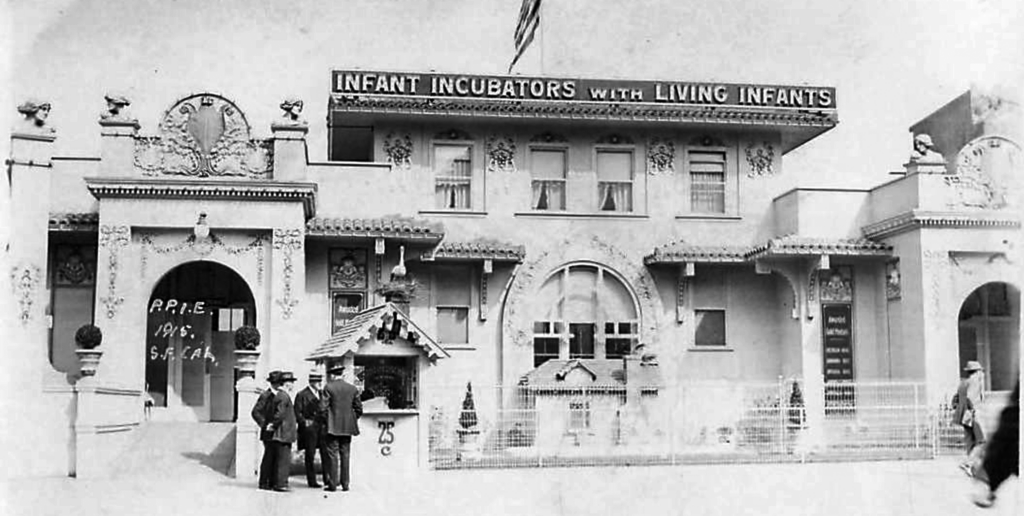
One Zone attraction occupied a different register entirely. Tucked among the spectacles — “a few steps,” as the Oakland Tribune noted on opening day (February 21, 1915), “from the frigid atmosphere of the Ice-Hippodrome” — stood a handsome Mission-style building with cream-colored stucco walls and a red-tiled roof, live storks pacing the garden before it. A sign above the entrance read: “Infant Incubators with Living Infants.”
A Model Hospital on the Zone
The PPIE concession was secured as early as February 1913, more than two years before opening day. A concession list released by Director of Concessions Frank Burt and reported nationally in papers including the St. Helena Star (February 7, 1913) and the Spokesman-Review of Spokane (February 2, 1913) listed “Drs. Couney & Fischel, infant incubators” at a contracted investment of $25,000. By the time the fair opened, the operation was described as under the sole direction of Dr. M. A. Couney, co-superintended by Dr. Schenkein of Berlin (San Francisco Examiner, February 20, 1915). (Claims of German medical training and a German origin for the incubators were an important part of the Couney self-created legend.) A July 1914 preview of Zone attractions in the San Francisco Bulletin (July 18, 1914) listed “Infant Incubators, showing how the lives of prematurely or weakly born infants may be saved” among the major concessions alongside the Grand Canyon, Panama Canal, Toyland, Creation, and the Yellowstone exhibit.
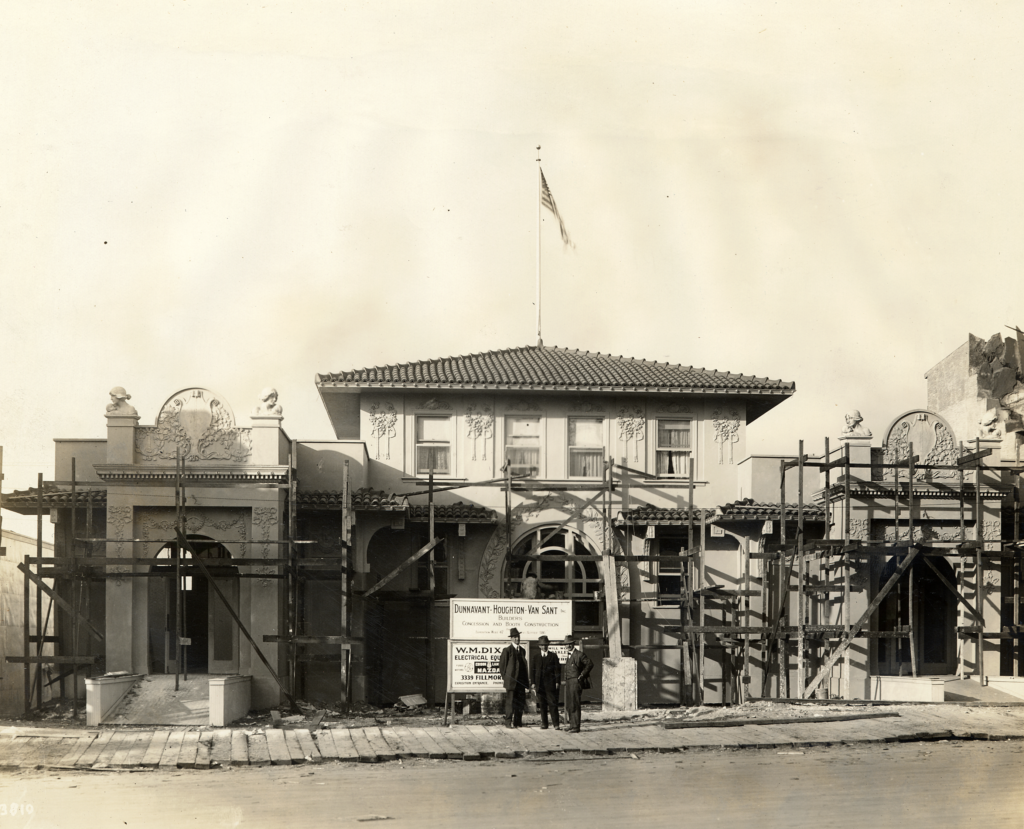
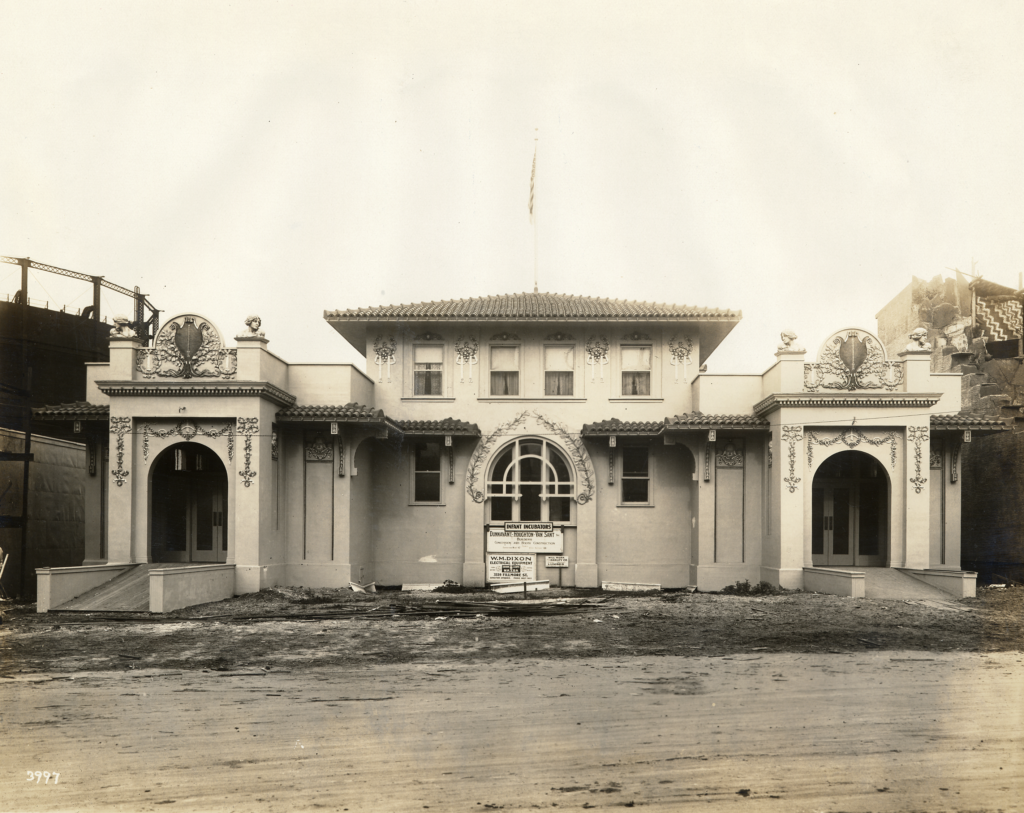
The Incubator exhibit building under construction. Source: San Francisco Public Library, Historical Photograph Collection.
In January 1915, the San Francisco Chronicle (January 16, 1915) introduced Bay Area readers to what they would find on the Zone. The Infant Incubator Hospital was, it reported, “practically without parallel” as a modern medical installation. A building contract for $10,000 had been let in June 1914 for the Mission-style structure (San Francisco Chronicle, June 23, 1914); by opening day the total investment — encompassing the concession fee, construction, equipment, and operational costs — had reached approximately $50,000. The building covered an area 100 by 150 feet and housed not only the incubator ward but a model diet kitchen on the second floor, sanitary modern accommodations for nurses and mothers, and administrative offices.
Couney’s medical credibility was carefully documented: he was vouched for, the Chronicle reported, “by the departments of health in New York and Chicago, by the New York Nursery and Child’s Hospital, by the Board of Health of Atlantic City and numerous physicians and institutions of high standing throughout the country.” His admissions policy was explicit and unequivocal. “We will take children regardless of color or race,” Couney told the Chronicle. “We look upon all children, regardless of their parentage, as human beings, and will use every resource of our institution to restore them to that heritage of health which is their birthright.” On the question of transparency, Couney was equally direct, telling the San Francisco Bulletin on opening day (February 20, 1915): “There will be nothing behind the scenes. This is to be open, for the benefit of humanity.”
To give the hospital a distinctive and symbolically resonant character, Couney had planned to import live storks from Germany, but the outbreak of the World War intervened and the shipment could not be completed (San Francisco Chronicle, August 8, 1914). Cy Devry, superintendent of Lincoln Park Zoo in Chicago, came to the rescue, providing storks from the zoo’s collection to serve as the exhibit’s mascots. By the time of the pre-opening press coverage the birds had been recast in more romantic terms — the January 1915 Chronicle described them as imported from Budapest, “the last to be exported from the Continent following the outbreak of war” — but the zoo records tell a more prosaic story. “Gradually the big birds have taken a fondness for their attendants,” the Chronicle noted, “and will now allow themselves to be handled and petted.” In the foreground garden a miniature peasant’s cottage of the Old World type had been erected; there the storks would retire at nightfall, their cottage windows illuminated after dark to create the impression of a real home.
Opening Day and Medical Protocols
On February 17, 1915 — three days before the fair opened — the San Francisco Chronicle reported that three infants were already in residence: a boy named Alphonse and two girls, Mary and Ottilie, ranging in weight from three to five pounds. The incubator house had capacity for fifteen; Dr. Couney expected a full house within a few weeks.
The San Francisco Examiner published on opening day, February 20, 1915, the most detailed account of the exhibit’s medical protocols to appear in the press. Headlined “Baby Incubator: A Conservator of Infant Life — Model Hospital on ‘Zone’ Will Show Scientific Method of Saving Lives of Infants,” the piece laid out the care protocols used in the “model hospital.”
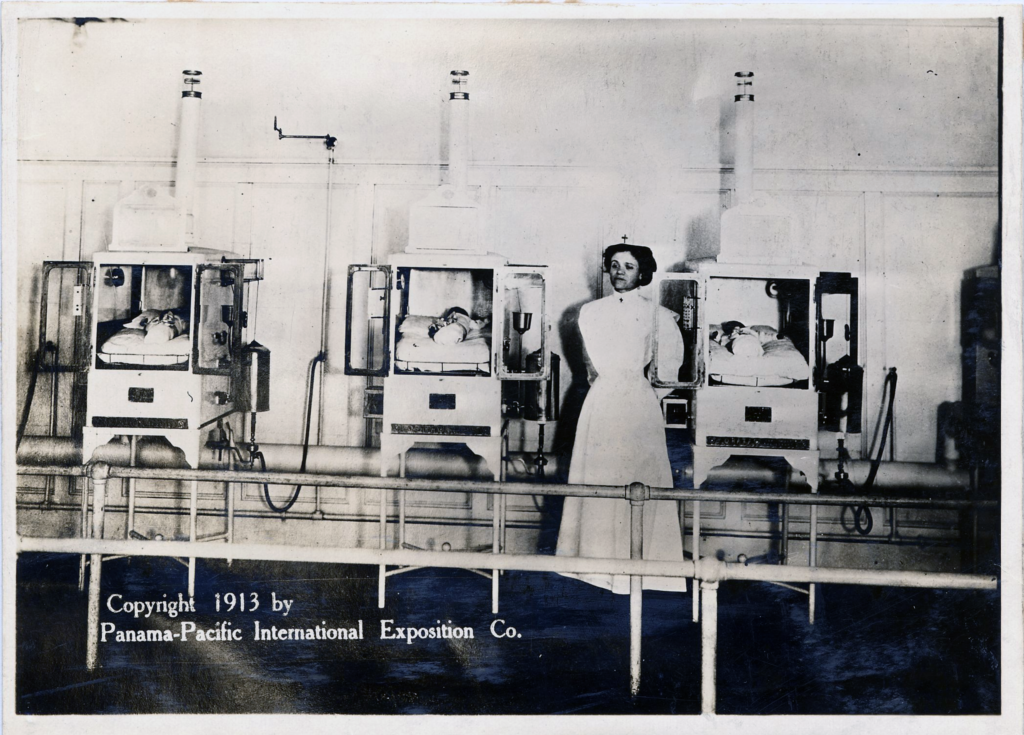
Upon admission, each was given a bath in mustard and water, after which two drops of brandy were placed in the mouth as a stimulant and the body rubbed with a specially prepared lotion. For the first four days the infant was maintained at a temperature of 90 to 105 degrees Fahrenheit and removed only every two hours, day and night, to receive fifteen grains of nourishment at each feeding. Half a dozen nurses staffed the hospital day and night.
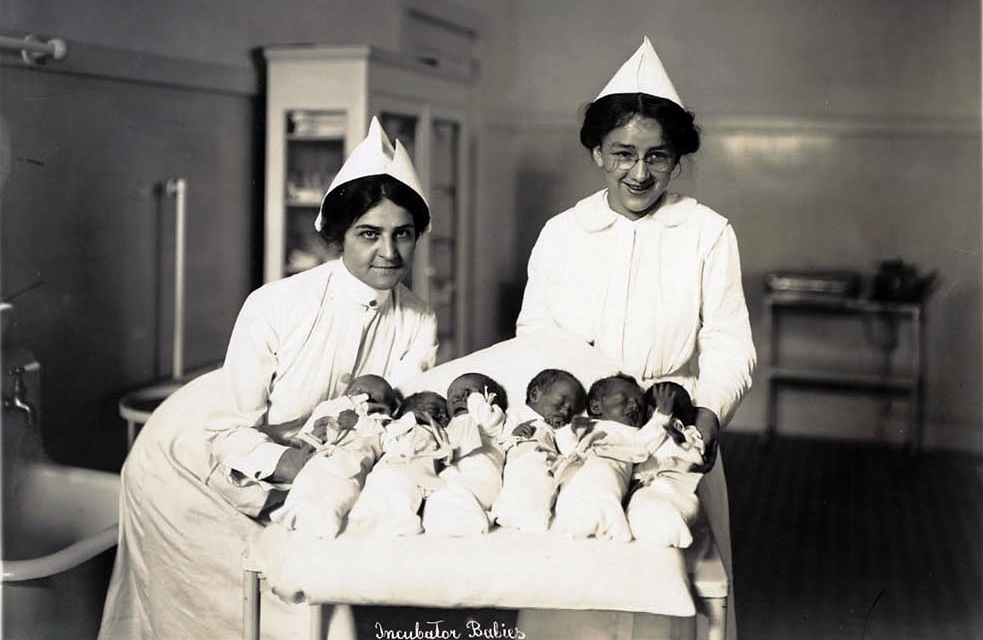
Breast milk, drawn from wet nurses, was placed in a tall glass immersed in warm water to maintain temperature. The infants were typically too weak to suckle when they arrived. Feeding was accomplished through a nasal spoon or a nasal tube. Every feeding was preceded and followed by a weighing to track nourishment taken; a complete record was kept of every detail of the incubator process.
Air inside the incubators was purified by passing through a current of antiseptic fluid and then through cotton before being warmed and admitted to the infant’s compartment. A thermometer mounted at the front of each incubator provided a constant check on thermal conditions; the automatic regulating mechanism kept temperature precisely correct.
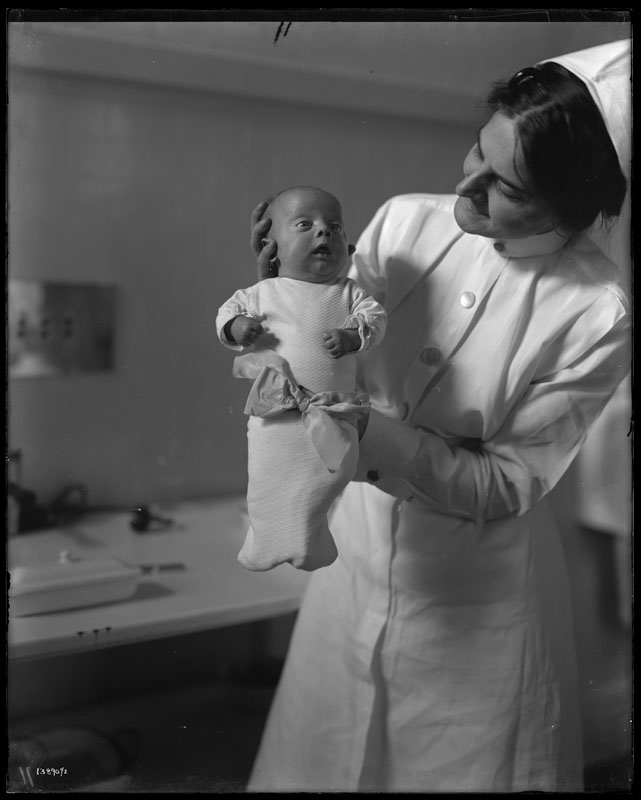
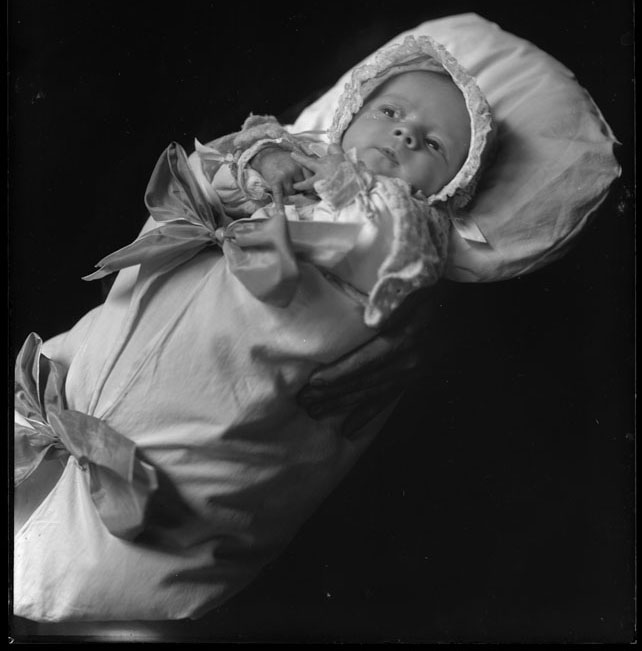
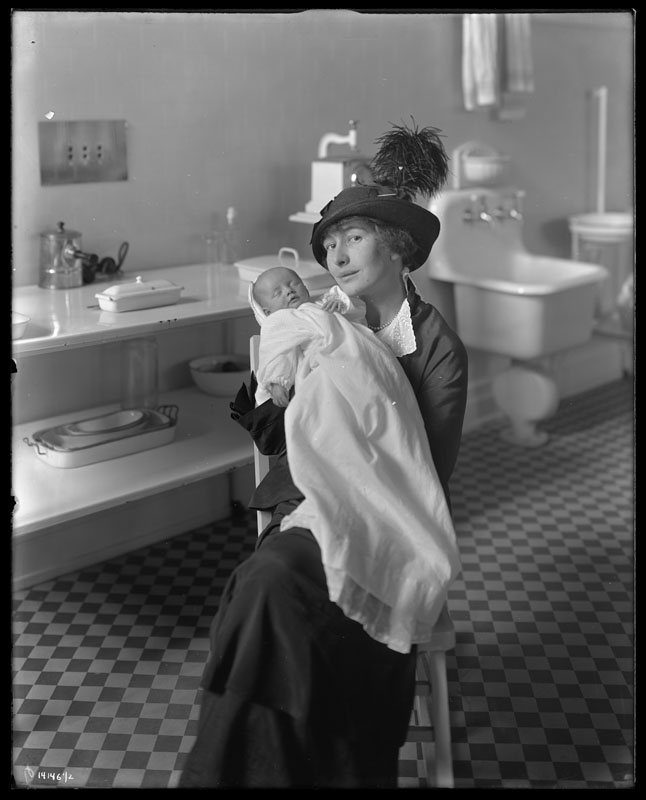
The criterion for discharge — “graduation,” in the vernacular of the press accounts — was the infant’s ability to take at least thirty grams, one ounce, of nourishment at a single feeding without assistance. According to the Examiner, only 15 percent of prematurely or weakly born infants survived under ordinary conditions. With incubator care, the survival rate reached at least 85 percent.
The Patients
The incubator hospital quickly became a functioning regional referral center for premature infants throughout the Bay Area and beyond.
On March 11, 1915, less than three weeks after the fair opened, the first “graduation” took place. The Oakland Tribune (March 11, 1915) reported that a girl born on February 4 to Antonio and Theresa Lazzire of 2242 Chestnut Street — within the PPIE’s own neighborhood — had been placed in the incubator weighing two and a quarter pounds. Her parents “had despaired of ever having been able to raise” her. After a month under the care of Dr. Couney and his staff, she left the incubator at six and a half pounds, dressed in her first baby clothes, restored to a “happy, smiling couple.” The San Francisco Bulletin (March 11, 1915) published a photograph: mother Teresa Lazzire holding the infant, nurse Miss Louise Fink at her side — the first published visual record of a PPIE incubator graduate.
Within days the hospital had admitted the San Jose triplets — Joseph, Josephine, and Johanna (the Chronicle of March 28 gives the third name as Jennie), who together weighed nine pounds — and they were thriving within ten days of arrival. On March 27, the Bulletin reported the arrival of “the smallest baby ever to take a long railroad journey”: Baby Herbert, who came from Porterville after a fourteen-hour train journey, weighing exactly one and a half pounds, accompanied by a nurse and his father. By late March, twenty-six babies in total were in care at the incubator hospital (San Francisco Chronicle, March 28, 1915).
The hospital recruited its wet nurses through newspaper classified advertising. A notice in the San Francisco Chronicle (March 13, 1915) sought “two or more healthy wet nurses, good milk supply, 1 year old baby preferred” and directed applicants to telephone the Incubator Hospital at Fillmore 2500 — suggesting that by mid-March, with patient numbers growing, demand for breast milk was outpacing supply. It was through a different channel — the City Dispensary of Berkeley — that one of the exhibit’s most affecting wet-nurse placements came about.
In early April, the City Dispensary of Berkeley arranged for a young Finnish immigrant woman, Mrs. Jane Paroine, to serve as a wet nurse at the incubator concession at $35 per month plus board. Mrs. Paroine had collapsed on College Avenue and delivered a four-pound premature baby in a police ambulance en route to Roosevelt Hospital. Miss Sarah Shuey, a visiting nurse at the City Dispensary, and Dr. Risdon of its Pediatric Clinic arranged the placement, through which mother and infant both received care. “It is the first time since she was a girl of 12 and started out to work that she has had rest,” the Oakland Tribune (April 10, 1915) reported. Mrs. Paroine’s infant was placed in the incubators alongside the others; both were doing well. The Berkeley Daily Gazette (April 9, 1915) reported that City Dispensary officials invited citizens visiting the Zone to call upon her case as an example of the institution’s work.
The geographic reach of the exhibit expanded as its reputation grew. Families came from Porterville, from San Jose, from Fort Bragg, and from the Bay Area’s immigrant neighborhoods. Physicians throughout the Bay Area were, as one visitor wrote in the News and Observer of Raleigh, North Carolina (April 25, 1915), “working enthusiastically with this exhibit to keep it supplied with under-sized infants” — though some families in the city with premature babies remained “ignorant and afraid to trust their children out of their sight.”
Among the visitors to the exhibit were alumni of Couney’s previous exhibits. A young woman of eighteen, enrolled as a student at Vassar College, visited the PPIE with her parents and came to thank Couney — she had been one of his incubator babies at the Trans-Mississippi Exposition in Omaha in 1897–98. A fourteen-year-old boy appeared on the grounds and sought out Couney to shake his hand; he had been saved at Couney’s exhibit at the Pan-American Exposition in Buffalo in 1901. And Couney’s own daughter, Hildegard, was herself a former incubator baby — born prematurely and given little chance of survival. By 1915 she was eight years old, so physically robust and healthy that she appeared more like a girl of eleven, a living rebuttal to those who questioned whether saving such fragile infants was worthwhile. She was by then a student at Holy Name Academy in Oakland (San Francisco Chronicle, November 20, 1915).
Public Reception
From opening day the incubator exhibit drew sustained crowds. The Oakland Tribune (February 21, 1915) reported that “a constant throng of visitors today viewed the little patients through the glass doors of their cosy nests.” By late March the San Francisco Call (March 29, 1915) described the exhibit as visited “daily by thousands of women, doctors and others interested in this scientific achievement.” The final certified financial accounts of the PPIE, presented to the fair’s board of directors in March 1916, recorded gross receipts for the infant incubator show of $72,838 (San Francisco Chronicle, March 29, 1916) — making it a solid performer among the Zone’s non-food amusements, behind the Panama Canal replica’s leading $338,315 but well ahead of many of the Zone’s other attractions. At the ten-cent admission price referenced in contemporary accounts, that figure implies something in the order of 700,000 paying visitors over nine months.
The exhibit attracted visitors of particular distinction. Helen Keller, touring the PPIE in April 1915, encountered the incubator through touch. She described the experience to reporter Winifred Black of the Chicago Examiner (April 8, 1915): “And then I saw the Incubator — the babies, the triplets! I held them. Yes, and hugged them, too, and oh, the little one — it tried to hug me.” She subsequently telegraphed her companion Mrs. Macy that she wanted to see the incubator babies “the very first thing” when Macy could visit the fair.
The News and Observer visitor from North Carolina called the incubator exhibit “the most human thing about the whole Exposition to me.” He described four babies present during his visit — two boys distinguished by blue sashes, two girls by pink — one of them “a little dark-skinned Italian baby.” When he observed to an attendant that one of the boys might someday become President, the attendant replied: “Yes — or a prize-fighter.”
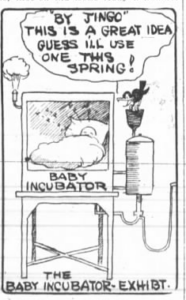
The exhibit entered the surrounding culture with remarkable speed. Just six weeks into the fair’s run, the Berkeley Daily Gazette (April 3, 1915) reported that the alumni of the California School of Arts and Crafts had included “the infant incubator by Miss Marion Hoyle” in the program of their April Fools’ party — the exhibit already sufficiently recognizable to be parodied. By late May, the Infant Incubators were listed as one of fourteen divisions in the grand Zone Day parade, marching between the Irish Village float and the Chinese Village band (San Francisco Bulletin, May 26, 1915). The exhibit took to the streets again in the Fourth of July celebration (San Francisco Bulletin, July 3, 1915).
Not all reception was uncritical. Helen Dare’s substantial feature in the San Francisco Chronicle (November 20, 1915), headlined “While on the Subject of Subnormal Babies,” recorded the skepticism she observed among fairgoers: “Kind, honest, good-souled men and women follow the lecturer from baby to baby in the show, and shake their heads dubiously and wonder aloud: ‘Is it right to save those little babies? What good can life be to such poor, little, handicapped things?'” Dare confronted the question directly, answering it with Couney’s accumulated evidence: the Vassar student from Omaha, the fourteen-year-old from Buffalo, the doctor’s own daughter Hildegard.
The Aftermath
By November 1915, with the fair entering its final weeks, the Chronicle reported that more than thirty infants’ lives had been saved during the exposition’s run — a figure that would be revised upward to forty by the time the fair closed. Couney had already determined what should come next.
On November 30, 1915, the San Francisco Chronicle announced that the Baby Incubator concession had been unconditionally donated to the Associated Charities of San Francisco, effective the fair’s closing day. The announcement followed a conference between Couney and Miss Katherine Felton, secretary of the Associated Charities. “We have saved the lives of forty babies this year,” Couney told the paper, “and I’ll be glad to see the lives of hundreds of San Francisco babies in the future similarly saved.” The transfer required no payment; the building itself and the concession were given outright.
The one remaining obstacle was practical rather than financial: the land lease was held by exposition officials until 1917. Miss Felton stated she hoped to meet with exposition officials within days to resolve the question. The land owners, the Chronicle reported, were willing to sell the entire block at a nominal consideration.
The Chronicle of December 3, 1915, carried a further appeal by Helen Dare, addressed directly to exposition exhibitors and participants, soliciting furnishings and equipment from their closing exhibits for the new permanent institution. The Babies’ Aid needed, Dare wrote, everything to outfit a working facility: beds, mattresses, bedding, kitchen equipment, gas ranges, electric fixtures, furniture for three dining rooms, and appointments for a babies’ department, a convalescent mothers’ department, and a trained nurses’ department — “simple, plain, good, useful things that will furnish its new home in a homelike way.” The building’s new function was evidently being planned in operational detail.
After the fair’s December 4 closing, a United Press wire story headlined “Baby Farm Is For Sale” reached papers as far as Rushville, Indiana (Rushville Daily Republican, December 10, 1915): “San Francisco can have it at its own price. It has saved scores of babies born into the world apparently without a chance to live.” The wire service appears not to have registered the donation already announced; the transfer to the Associated Charities had in fact already been made.
Whether the arrangement with the Babies’ Aid was ultimately completed is not found in the newspaper accounts of the time. What is clear is that the exhibit’s hold on the city’s imagination persisted: on December 8 — four days after the fair closed — the Berkeley Daily Gazette reported that the Twentieth Century Club celebrated its eleventh birthday by reenacting Zone attractions, with new members impersonating “the incubator babies” alongside “Madame Ellis” and “Captain, the trained horse.”
Newspaper Sources
Berkeley Daily Gazette, April 3, 1915, p. 4 — Alumni party program at the California School of Arts and Crafts included “the infant incubator by Miss Marion Hoyle.”
Berkeley Daily Gazette, April 9, 1915, p. 3 — Story of Mrs. Jane Paroine, Finnish immigrant, placed as wet nurse at the incubator concession at $35 per month plus board; City Dispensary officials invite citizens to visit her case.
Berkeley Daily Gazette, December 8, 1915, p. 7 — Twentieth Century Club birthday party reenacted Zone attractions; new members impersonated “the incubator babies.”
Chicago Examiner, April 8, 1915, p. 7 — Helen Keller describes holding the incubator babies: “And then I saw the Incubator — the babies, the triplets! I held them. Yes, and hugged them, too, and oh, the little one — it tried to hug me.”
News and Observer (Raleigh, NC), April 25, 1915, p. 16 — Visitor’s first-person account: “The most human thing about the whole Exposition to me was the exhibit showing the apparatus invented by a scientific German physician for nursing premature born babies into health and strength.” Four babies present, two boys with blue sashes, two girls with pink, one “a little dark-skinned Italian baby.”
Oakland Tribune, March 15, 1914, p. 18 — Pre-fair Zone preview listing “Infant Incubators” among concessions, noting that “child specialist Dr. M. A. Couney” will show premature infants through glass doors.
Oakland Tribune, February 21, 1915, p. 20 — Opening day: “It is but a few steps from the frigid atmosphere of the Ice-Hippodrome to the humid heat of the Infant Incubator… A constant throng of visitors today viewed the little patients through the glass doors of their cosy nests.”
Oakland Tribune, March 11, 1915, pp. 2 and 4 — First graduation: baby Lina Lazzire, born February 4, entered the incubator at 2¼ lbs, discharged at 6½ lbs. Note: this item spells the doctor’s name “Couey”; all other sources use “Couney.”
Oakland Tribune, April 10, 1915, p. 5 — Mrs. Paroine story: “It is the first time since she was a girl of 12 and started out to work that she has had rest.”
Rushville Daily Republican, December 10, 1915, p. 6 (United Press wire) — Post-closing: “Baby Farm Is For Sale… It has saved scores of babies born into the world apparently without a chance to live… Dr. Couney has been saving frail mites of humanity with the dimes paid for admission by the curious.”
San Francisco Bulletin, July 18, 1914, p. 6 — Zone preview listing “Infant Incubators, showing how the lives of prematurely or weakly born infants may be saved” among major concessions.
San Francisco Bulletin, February 20, 1915, p. 31 — Opening day: “There will be nothing behind the scenes. This is to be open, for the benefit of humanity.” Notes three babies offered before the hospital was ready to open; storks described following attendants about the garden.
San Francisco Bulletin, March 11, 1915, p. 5 — Photograph of Baby Lina with mother Teresa Lazzire and nurse Miss Louise Fink captioned “First Graduate of Exposition.”
San Francisco Bulletin, March 27, 1915, p. 5 — Baby Herbert arrives from Porterville by a fourteen-hour train journey, weighing 1½ pounds. San Jose triplets thriving after ten days.
San Francisco Bulletin, May 26, 1915, p. 9 — Infant Incubators listed in the fourth division of the Zone Day grand parade.
San Francisco Bulletin, July 3, 1915, p. 5 — Infant Incubators among Zone attractions represented in the Fourth of July parade.
San Francisco Call, March 29, 1915, p. 30 — Photograph of incubator building exterior with “Infant Incubators with Living Infants” signage visible; exhibit “visited daily by thousands of women, doctors and others interested in this scientific achievement.”
San Francisco Chronicle, June 23, 1914, p. 17 — Building contract of $10,000 let for the Mission-style incubator concession building.
San Francisco Chronicle, August 8, 1914, p. 18 — Stork story clarified: birds originally ordered from Germany but stranded by the outbreak of war; Lincoln Park Zoo in Chicago agreed to provide replacement storks to serve as the exhibit’s mascots.
San Francisco Chronicle, January 16, 1915, p. 18 — Major pre-opening feature with photograph of building. Couney quoted: “We will take children regardless of color or race. We look upon all children, regardless of their parentage, as human beings.” Building dimensions 100×150 feet; investment ~$50,000; storks described as imported from Budapest, secured through Cy Devry of Lincoln Park Zoo, Chicago.
San Francisco Chronicle, February 17, 1915, p. 3 — Three infants already in residence three days before opening: boy named Alphonse, girls Mary and Ottilie, ranging 3–5 lbs. Capacity fifteen infants.
San Francisco Chronicle, March 13, 1915, p. 12 — Classified advertisement: “WANTED — Two or more healthy wet nurses, good milk supply, 1 year old baby preferred; telephone to INCUBATOR HOSPITAL, Fillmore 2500.”
San Francisco Chronicle, March 28, 1915, p. 32 — San Jose triplets (Joseph, Josephine, Jennie) together weighing nine pounds; twenty-six babies total now in care; Couney described as having done this work for twenty years.
San Francisco Chronicle, November 20, 1915, p. 5 — Helen Dare, “While on the Subject of Subnormal Babies.” More than thirty lives saved during the fair. Vassar student was an incubator baby at Omaha 1897–98; fourteen-year-old boy saved at Buffalo. Hildegard Couney, age eight, former incubator baby, now a student at Holy Name Academy in Oakland, physically robust as a girl of eleven. Couney described as “a bug on incubator babies.”
San Francisco Chronicle, November 25, 1915, p. 5 — Helen Dare, “Babies Aid to Inherit an Exposition Building.” Associated Charities director Katherine Felton: “It’s just what we need… an opportunity coming to us at the psychological moment.” Building described: nine bedrooms, two baths, kitchen, diet kitchen, nurses’ dining room, two incubator wards, valued at $20,000, offered as gift to the city.
San Francisco Chronicle, November 30, 1915, p. 5 — “Baby Incubator Is Donated To S.F. Associated Charities.” Couney unconditionally transfers the concession to the Associated Charities effective closing day; forty babies saved during the fair’s run; land lease the only remaining obstacle. Couney quoted: “We have saved the lives of forty babies this year, and I’ll be glad to see the lives of hundreds of San Francisco babies in the future similarly saved.”
San Francisco Chronicle, December 3, 1915, p. 5 — Helen Dare, “Exposition Ahoy! Hear Ye! All Participants!” Solicitation of furnishings and equipment from exposition exhibitors for the Babies’ Aid’s new permanent facility in the incubator building; details the full range of household and medical equipment needed to make the building operational.
San Francisco Chronicle, March 29, 1916, p. 4 — Final certified financial accounts of the PPIE. Infant incubator show gross receipts: $72,838. Total paid admissions to amusement concessions: $4,715,523. Panama Canal led amusement concessions at $338,315.
San Francisco Examiner, February 20, 1915 — Most detailed clinical account in the record. Admission protocol: mustard bath, two drops brandy, lotion rub; maintained 90–105°F for four days; removed every two hours for fifteen grains of nourishment via nasal spoon. Survival statistics: 15% without incubator, 85% with. Credited to “Drs. M. A. Couney and S. Schenkein of Berlin.”
Spokesman-Review (Spokane, WA), February 2, 1913, p. 13 — Concession list from Director Frank Burt: “Drs. Couney & Fischel, infant incubators… $25,000.” Confirmed by St. Helena Star, February 7, 1913, p. 6.
Other Sources
Ackley, Laura A. San Francisco’s Jewel City: The Panama-Pacific International Exposition of 1915. Berkeley: Heyday / California Historical Society, 2014. — Primary secondary source for fair history, attendance, costs, and closing day.
Kale, Shelly. “Overview: What Was the PPIE?” and Ackley, Laura A., “An Introduction to the Panama-Pacific International Exposition” and “Closing Day at the Panama-Pacific International Exposition.” All published at ppie100.org (archived at web.archive.org).
National Park Service. “The Panama-Pacific International Exhibition” and “The ‘Joy’ Zone.” Golden Gate National Recreation Area. nps.gov/goga. — Source for Zone dimensions, costs, and character of its attractions.
Todd, Frank Morton. The Story of the Exposition. 5 vols. New York: G.P. Putnam’s Sons, 1921. — Official fair history; source of the “microcosm” quote.
Portions of this page were drafted with machine assistance; the final text was reviewed, verified, and edited by the author. Click here to learn more.
- The Panama-Pacific Exposition, National Park Service
- Panama-Pacific Exposition Photo Gallery at OpenSFHistory
- Panama-Pacific International Exposition on Wikipedia
- Panama-Pacific International Exposition on the USA World’s Fairs web site (America’s Best History)
- Expo 1915 on the Bureau International des Expositions web site
- YouTube video of the Exposition. Incubators and caregivers are seen at approximately 14:15-14:30.
More Information about Martin Couney
Martin Arthur Couney
- Short biography of Martin Couney
- Martin Couney, Wikipedia – contains outdated information
- Martin Couney’s Obituary, from The New York Times, March 2, 1950 – contains outdated information
Primary Source Documents
- Gellert Ship Manifest, 1888
- US 1910 Census
- US 1920 Census
- US 1940 Census
- Marriage Certificate 1903
- Passport Application 1904
Business and Associates
Martin Couney Exhibits in World’s Fairs and National Expositions
- Victorian Era Exhibition at Earl’s Court, 1897
- Trans-Mississippi Exposition, Omaha, 1898
- Pan-American Exposition, Buffalo, 1901
- Lewis and Clark Centennial Exposition, Portland, 1905
- Panama-Pacific International Exposition San Francisco, 1915
- Century of Progress International Exposition, Chicago, 1933-34
- New York World’s Fair, New York, 1939-1940
Martin Couney Sideshows in Amusement Parks
- Asbury Park Boardwalk, New Jersey
- Coney Island Sideshow at Luna Park
- Coney Island Sideshow at Dreamland
- Lakeside Amusement Park, Denver.
- Luna Park, Pittsburgh
- Wonderland – Minneapolis and St. Paul
- Wonderland – Revere Beach
- Boardwalk – Atlantic City
- White City Amusement Park – Chicago
- White City Amusement Park, Indianapolis, Indiana
- White City Amusement Park, Cleveland, Ohio
Recent Books
- The Strange Case of Dr. Couney, by Dawn Raffel, Blue Rider Press, ISBN 0399175741
- Buy on Amazon (your purchase will support “Neonatology on the Web”)
- Miracle at Coney Island, by Claire Prentice (Kindle or audiobook)
- Buy on Amazon (your purchase will support “Neonatology on the Web”)
General Articles
General articles about Martin Couney and his exhibits are linked below. Additional links may be found in specific posts about his participation in expositions or sideshows.
Reader beware: many of these were written before the full facts about Martin Couney’s background became known, or have not incorporated that new information, so they include information from his self-invented background legend.
- Incubator Baby Sideshows, by William Silverman, from Pediatrics.
- Postscript to Incubator-Baby Sideshows, by William. Silverman, from Pediatrics
- Martin Couney’s Story Revisited, by AAP Perinatal Section Ad Hoc Committee on Perinatal History, from Pediatrics
- Martin Couney’s Obituary, from The New York Times, March 2, 1950.
- A Patron of the Premies, by A. J. Liebling, from The New Yorker
- The Coney Island Baby Laboratory, by Gary R. Brown, from American Heritage Invention and Technology Magazine
- American Characters: Martin Couney, by Richard Snow, from American Heritage Magazine
- The Man Who Ran a Carnival Attraction… by Claire Prentice, from Smithsonian Magazine
- Life under Glass, audio documentary by Claire Prentice, from the BBC
- Martin Couney and Incubator Exhibits from 1896 to 1943, from the Embryo Project
- The Incubator Baby and Niagara Falls, by Arthur Brisbane, from The Cosmopolitan
- Babies on Display, from NPR
- Beginner’s Luck, from Family Circle Magazine 1993
- Coney Island’s Incubator Babies, by Rebecca Rego Barry, from JSTOR Daily
- The Infantorium, by Katie Shornton, from 99% Invisible
- How One Man Saved a Generation of Premature Babies, from BBC News
- Baby Incubators: From Boardwalk Sideshow to Medical Marvel, by Erin Blackmore, from History.Com
- Babies in Sideshows, by Julie Andreson, from Engines of our Ingenuity
- Dr. Martin Couney, from Coney Island History Project
- “The Use of Incubators for Infants,” The Lancet, May 29, 1897.
- “The Victorian Era Exhibition at Earl’s Court,” The Lancet, July 17, 1897.
- Incubator Baby Shows: A Medical and Social Frontier, by Hannah Lieberman, from The History Teacher 35.1, November, 2001.
- The Child Hatchery, from City Pages.
- Good Old Coney Island, by Edo McCullough, excerpt from the book
- “And Next to the Bearded Ladies…” from The New York Times (captured as PDF)

- Kinderbrutanstalt: Leisure Space and the Coney Island Baby Incubators, by Scott Webel, Text, Performance, Practice, 2003. (captured PDF)
- Premie Road Shows from Hippocrates (captured PDF)
- Transferring the Incubator: Fairs and Freak-Shows as Agents of Change, by Katie Proctor, 2004. (captured PDF)
- Pan-American Exposition Baby Incubator Exhibit in Buffalo, New York, 1901 (from the U. of Buffalo Library web site)
Martin Arthur Couney
- Short biography of Martin Couney
- Martin Couney, Wikipedia – contains outdated information
- Martin Couney’s Obituary, from The New York Times, March 2, 1950 – contains outdated information
Primary Source Documents
- Gellert Ship Manifest, 1888
- US 1910 Census
- US 1920 Census
- US 1940 Census
- Marriage Certificate 1903
- Passport Application 1904
Business and Associates
Martin Couney Exhibits in World’s Fairs and National Expositions
- Victorian Era Exhibition at Earl’s Court, 1897
- Trans-Mississippi Exposition, Omaha, 1898
- Pan-American Exposition, Buffalo, 1901
- Lewis and Clark Centennial Exposition, Portland, 1905
- Panama-Pacific International Exposition San Francisco, 1915
- Century of Progress International Exposition, Chicago, 1933-34
- New York World’s Fair, New York, 1939-1940
Martin Couney Sideshows in Amusement Parks
- Asbury Park Boardwalk, New Jersey
- Coney Island Sideshow at Luna Park
- Coney Island Sideshow at Dreamland
- Lakeside Amusement Park, Denver.
- Luna Park, Pittsburgh
- Wonderland – Minneapolis and St. Paul
- Wonderland – Revere Beach
- Boardwalk – Atlantic City
- White City Amusement Park – Chicago
- White City Amusement Park, Indianapolis, Indiana
- White City Amusement Park, Cleveland, Ohio
Recent Books
- The Strange Case of Dr. Couney, by Dawn Raffel, Blue Rider Press, ISBN 0399175741
- Buy on Amazon (your purchase will support “Neonatology on the Web”)
- Miracle at Coney Island, by Claire Prentice (Kindle or audiobook)
- Buy on Amazon (your purchase will support “Neonatology on the Web”)
General Articles
General articles about Martin Couney and his exhibits are linked below. Additional links may be found in specific posts about his participation in expositions or sideshows.
Reader beware: many of these were written before the full facts about Martin Couney’s background became known, or have not incorporated that new information, so they include information from his self-invented background legend.
- Incubator Baby Sideshows, by William Silverman, from Pediatrics.
- Postscript to Incubator-Baby Sideshows, by William. Silverman, from Pediatrics
- Martin Couney’s Story Revisited, by AAP Perinatal Section Ad Hoc Committee on Perinatal History, from Pediatrics
- Martin Couney’s Obituary, from The New York Times, March 2, 1950.
- A Patron of the Premies, by A. J. Liebling, from The New Yorker
- The Coney Island Baby Laboratory, by Gary R. Brown, from American Heritage Invention and Technology Magazine
- American Characters: Martin Couney, by Richard Snow, from American Heritage Magazine
- The Man Who Ran a Carnival Attraction… by Claire Prentice, from Smithsonian Magazine
- Life under Glass, audio documentary by Claire Prentice, from the BBC
- Martin Couney and Incubator Exhibits from 1896 to 1943, from the Embryo Project
- The Incubator Baby and Niagara Falls, by Arthur Brisbane, from The Cosmopolitan
- Babies on Display, from NPR
- Beginner’s Luck, from Family Circle Magazine 1993
- Coney Island’s Incubator Babies, by Rebecca Rego Barry, from JSTOR Daily
- The Infantorium, by Katie Shornton, from 99% Invisible
- How One Man Saved a Generation of Premature Babies, from BBC News
- Baby Incubators: From Boardwalk Sideshow to Medical Marvel, by Erin Blackmore, from History.Com
- Babies in Sideshows, by Julie Andreson, from Engines of our Ingenuity
- Dr. Martin Couney, from Coney Island History Project
- “The Use of Incubators for Infants,” The Lancet, May 29, 1897.
- “The Victorian Era Exhibition at Earl’s Court,” The Lancet, July 17, 1897.
- Incubator Baby Shows: A Medical and Social Frontier, by Hannah Lieberman, from The History Teacher 35.1, November, 2001.
- The Child Hatchery, from City Pages.
- Good Old Coney Island, by Edo McCullough, excerpt from the book
- “And Next to the Bearded Ladies…” from The New York Times (captured as PDF)
- Kinderbrutanstalt: Leisure Space and the Coney Island Baby Incubators, by Scott Webel, Text, Performance, Practice, 2003. (captured PDF)
- Premie Road Shows from Hippocrates (captured PDF)
- Transferring the Incubator: Fairs and Freak-Shows as Agents of Change, by Katie Proctor, 2004. (captured PDF)
- Pan-American Exposition Baby Incubator Exhibit in Buffalo, New York, 1901 (from the U. of Buffalo Library web site)
Last Updated on 07/20/26