Exposition Universelle et Internationale de Bruxelles, 1910
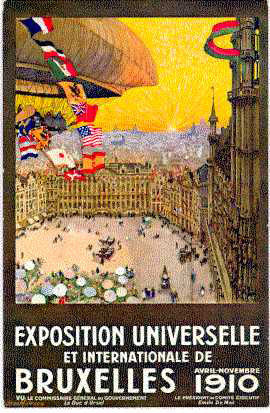
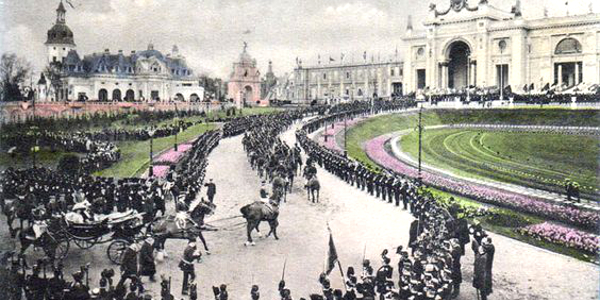
The exposition originated in Émile De Mot’s 1897 proposal that Brussels mark the seventy-fifth anniversary of Belgian independence in 1905, but regional pressure sent that fair to Liège, and Brussels received a government commitment to a later event instead. A joint-stock company, La Compagnie de l’Exposition de Bruxelles, was formed in 1906 with 484 shareholders to organize it; De Mot presided until his death a few months before the opening, with Georges Dupret as director-general and Baron Janssen presiding over the closing banquet. Belgium had two new things to display: the Congo, transferred from Leopold II to the Belgian state in 1908, and the accession of Albert I in 1909. The fair was staged accordingly, as a demonstration of Belgian industrial, commercial and newly colonial standing. Findling and Pelle’s Encyclopedia notes that the Ministry of Finance and Public Works ran most of the organization, with the Ministry of War supporting the military and imperial sections and King Albert as haut protecteur; he and Queen Elisabeth performed the official opening in person on Saturday 23 April, before crowds that had filled the Solbosch gardens since before noon.
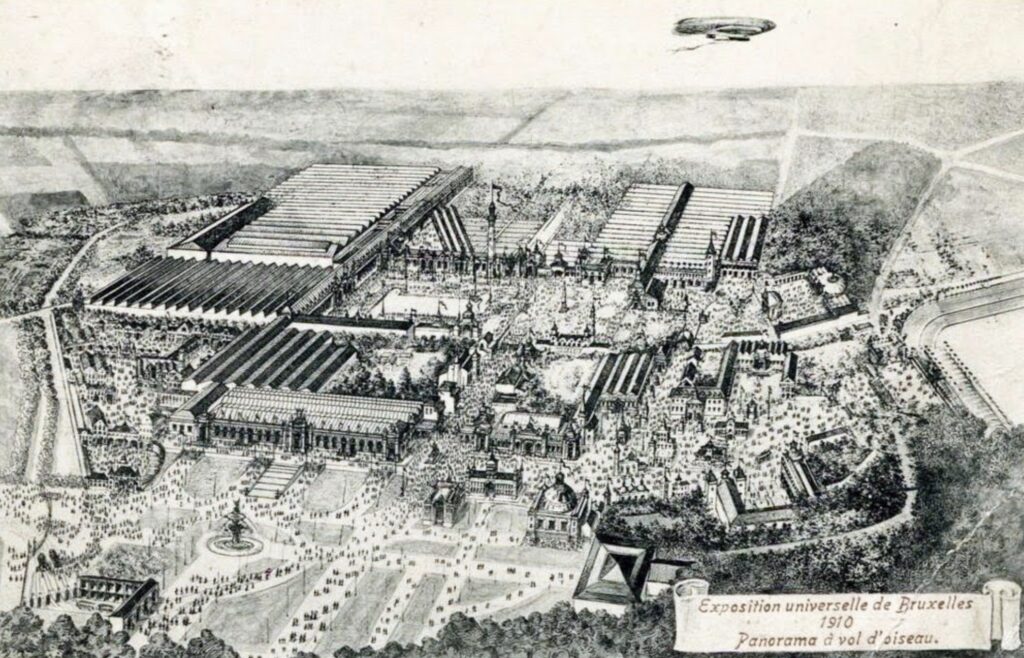
The site chosen in 1906 was the Solbosch — 90 hectares straddling Ixelles, northwest of the Bois de la Cambre — with annexes at Tervuren, for the Congo museum and colonial exhibition, and at the Cinquantenaire. The architecture was almost entirely neo-baroque; the Machine Hall, larger in floor area than the Paris Galeries des Machines of 1889 and 1900, was the one structurally notable building. Exhibits were arranged in twenty-two groups rather than the traditional divisions, and twenty-six countries participated. The strongest draws were the colonial sections, where the French pavilions for Indochina, West Africa, Algeria and Tunisia outshone the Belgian Congo display, and the fine arts, anchored by a major Flemish old-master show and a liberal modern French selection including Monet, Renoir, Rodin, Vuillard, Bonnard, Denis, Signac and Matisse. Promotion from 1908 onward was vigorous — Henri Cassiers’ poster in French, English, and Dutch, a house journal, and a large postcard series.
Opening on April 23, 1910, the fair drew close to 13 million visitors over 199 days — against a Belgian population of some 7.4 million — with roughly 29,000 exhibitors and some 19,000 awards, making it the largest exposition held in Belgium before 1914. On the evening of 14 August, around 8:45 PM, fire broke out in the central gallery of the Belgian section; wind-driven, it destroyed numerous pavilions within hours, damaging all or part of the Belgian, British and French sections and Bruxelles-Kermesse. No lives were lost. Organizers moved quickly to publicize that only a portion had burned and to reorganize the space, and the fair recorded its attendance peak the following day, remaining full to the close. The run ended with two days of closing festivities — a large firework display on Sunday 6 November and an illuminated evening procession on Monday November 7th — after which the grounds reopened for a few hours on the morning of November 8th with a 2-franc admission to let exhibitors liquidate their stock. All buildings were then demolished, and the site later became the campus of the Université libre de Bruxelles.
Incubator Exhibits at the Exposition
There were evidently three incubator exhibits at this exposition. There is little to be found in print about any of the exhibits, although a few photographs and postcards survive.
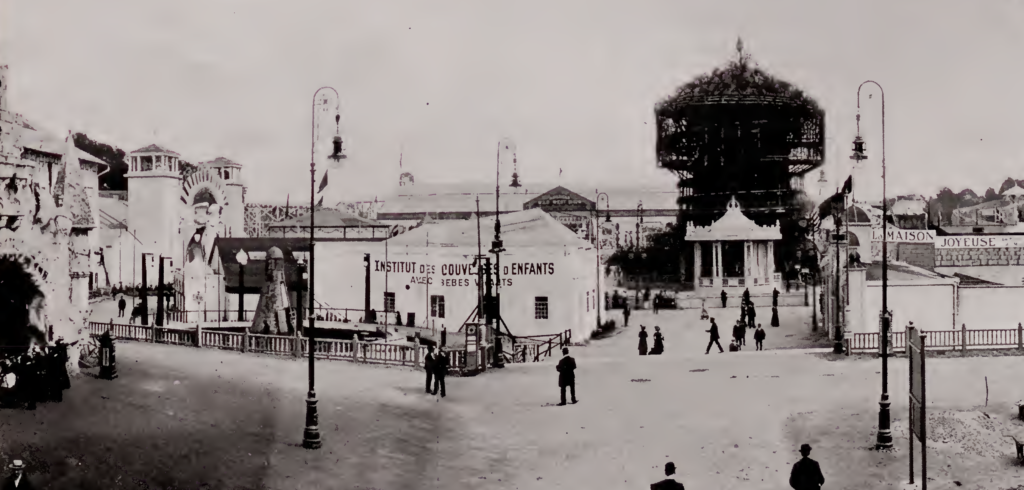
I believe the first photo below to be the exhibit of M. Ehrlich, as the name “Institut des Couveuses d’Enfants” and the location matches the cover of a souvenir booklet from his exhibit (personal communication T. Gras; the booklet is in the holdings of the Antwerp library). This building was located on the Plaine des Attractions, near the “Big Tree.” Due to its location this incubator pavilion shows up in many of the on-line photo albums and postcards of the exposition.


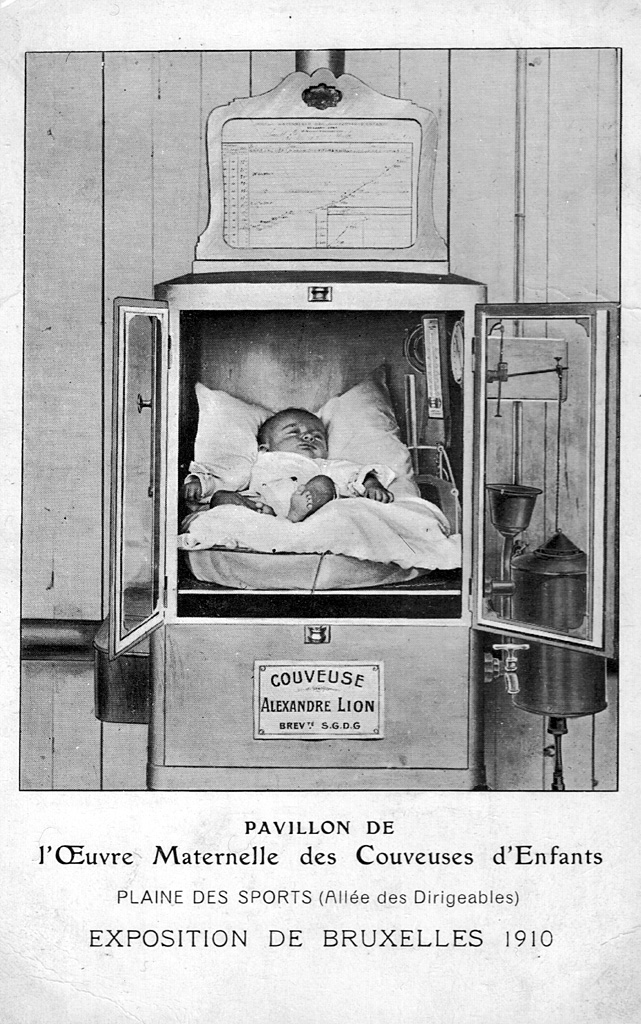
The photo below is labeled “Pavilion de l’Oeuvre Maternelle des Couveuses d’Enfants” on a Belgian blog website about the 1910 Exhibition; it is clearly an exhibit of Alexandre Lion, and is typical of his exhibits at other Worlds Fairs and expositions around the turn of the century in addition to his permanent storefronts in Paris, Bordeaux, Marseilles, Lyons, Nice, Brussels, New York, and other cities. (https://belgique-insolite-et-occulte.blogspot.com/2016/10/bruxelles-1910-exposition-universelle.html)
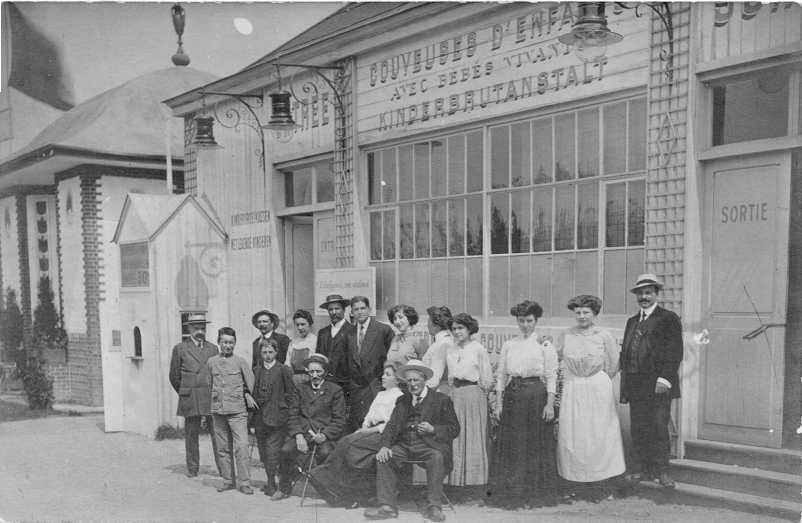
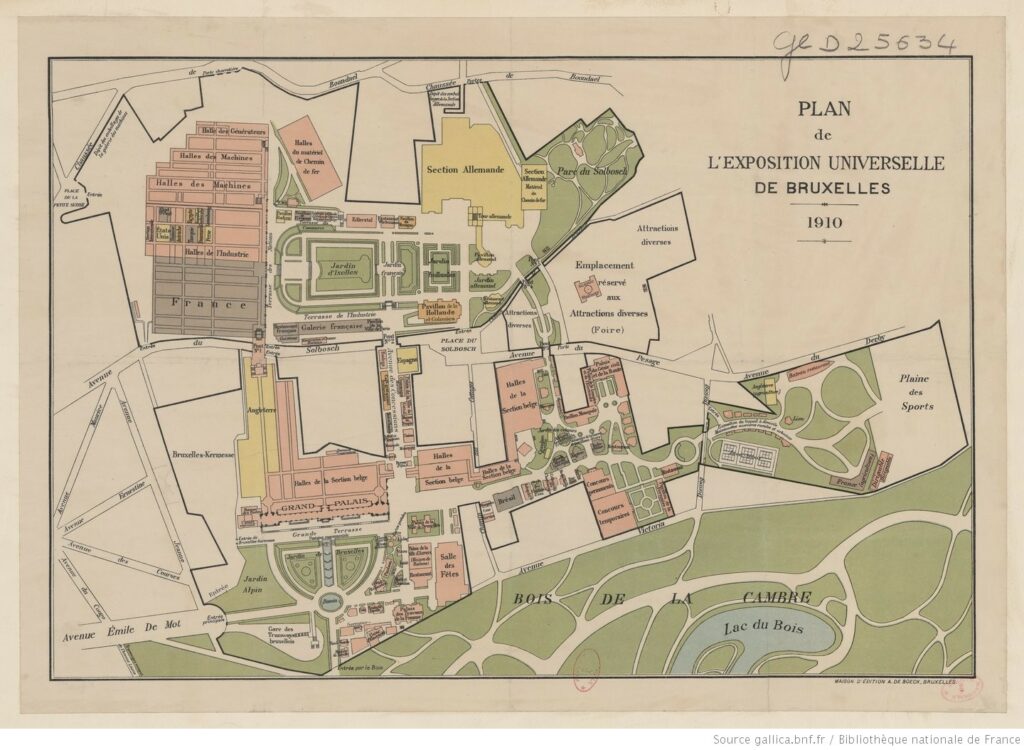
As was his usual practice, Dr. Lion had souvenir postcards made for his exhibit, which are still easy to find on eBay and similar sites. His postcard places the exhibit on the Plaine des Sports. It is also definitively located on the Plaine des Sports on the Exposition Universelle Bruxelles 1910 – Plan Officiel, a very large colored map that was sold for 1 franc.
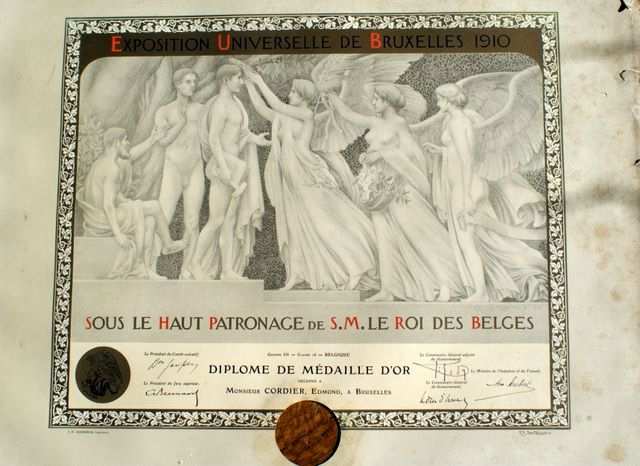
Finally, Elmond Cordier, founder of the Institut Puériculture de Bruxelles, also had an exhibit at the Exposition in the Belgian section, and received a Gold Medal. The family biography states: “A l’Exposition Internationale de Bruxelles toujours en 1910, l’Institut occupa un emplacement dans le groupe III de la section belge et y reçu aussi le diplôme de médaille d’or.” [At the Brussels International Exhibition, still in 1910, the Institute occupied a placement in group III of the Belgian section and also received there the diploma of gold medal.] No photos of his exhibit have been located to date, but I did find a copy of his gold medal award.
In short, based the fragmented evidence that is available today, the Brussels Exposition of 1910 had no less than three incubator exhibits, scattered across different areas of the grounds:
- Moritz Ehrlich’s Institut des Couveuses d’Enfants, on the Plaine des Attractions
- Alexandre Lion’s l’Oeuvre Maternelle des Couveuses d’Enfants, on the Plaine des Sports (near the Dirigibles)
- Elmond Cordier’s Institut Puériculture de Bruxelles, in the Section Belge (Belgian Section)
Press Coverage of the Incubator Exhibits
Press notice of the incubators at Brussels 1910 was thin and almost entirely incidental. No Brussels paper appears to have treated any of them as the subject of a notice, and none of the surviving clippings names an operator for the first two.
The Plaine des Attractions installation surfaces only in enumerations of the midway. A promotional dialogue in the Journal de Bruxelles of 29 May 1910, cataloguing “more than thirty great attractions,” placed couveuses d’enfants — glossed as “always so intriguing” — between the Village Sénégalais and the Roue Joyeuse, and noted that entry to the plaine itself was free. Le Soir of 19 July 1910 ran a comic recitation of the same ground, listing Couveuses d’enfants fourth, after the Village Sénégalais, the Paradis des Singes and the Waterbumps, and before the Roue Joyeuse, Maison Joyeuse, Miniature Railway, Wild West, Zillerthal and the American Bar. In both, the incubators appear in undifferentiated sequence with mechanical rides, ethnographic villages and drinking establishments, with no comment on their operation, staffing or clinical purpose.
Les merveilles de l’Exposition: Album-Souvenir mentions the Lion pavilion in passing: “At the far end of the Brussels garden stands a cluster of charming pavilions… behind the Boty Locksmithing exhibit and the Valentine & Sons pavilions, one finds the splendid Doecker Hospital, the Peru pavilion, the Cremation Pavilion, Aermotor, the Infant Incubators, and the French Workers’ Cooperative Pavilion.” In general, the Lion installation on the Plaine des Sports drew notice only through its neighbour, the pavilion of the Société belge de la Crémation. Le Soir of 12 June 1910, announcing the pavilion’s inauguration on the 16th, described it as standing on a lawn lined with constructions of varied purpose — colonial establishments, couveuses d’enfants, tuberculosis, aermotors — a grouping institutional rather than commercial in character. Le Matin of 2 October 1910 made the juxtaposition explicit, observing that the crematorium was the direct neighbour of the infant incubators, so that modern civilization bent with equal solicitude over man before his entry into life as after his death, a contrast the correspondent thought would have moved Victor Hugo. The satirical “Carnet d’un Passant” in Le Petit Bleu du matin of 12 July 1910, signed Pangloss, worked the same general theme.
In the Livre d’Or and other official documents that I have been able to locate online, Cordier’s exhibit was the only exhibit named and identified. Le Soir of 2 November 1910, reporting the palmarès under Groupe X (Aliments), Classe 46 — couveuses d’enfants, enfants en nourrice ou s’élevant mal — recorded a gold medal to the Institut de Puériculture de Bruxelles, rue Chant-d’Oiseau, Woluwe-Saint-Pierre, directed by Dr Cordier.
General Information Sources
- Livre d’or de l’Exposition universelle et internationale de Bruxelles 1910. Brussels: Em. Rossel, 1910. — p. 475, “Ouverture officielle de l’Exposition par Leurs Majestés le Roi et la Reine.” Digitized at Gallica, ark:/12148/bpt6k34113413.
- Les merveilles de l’Exposition: Album-Souvenir, Agence Dechenne, Bruxelles, 1910, page 11.
- Greenhalgh, Paul. “Brussels 1910.” In John E. Findling and Kimberly D. Pelle, eds., Encyclopedia of World’s Fairs and Expositions, 206–209. Jefferson, NC: McFarland, 2008. ISBN 978-0-7864-3416-9.
- Bureau International des Expositions, “Expo 1910 Brussels.” https://www.bie-paris.org/site/en/1910-brussels (accessed 18 July 2026).
- “Exposition universelle de Bruxelles de 1910,” French Wikipedia. https://fr.wikipedia.org/wiki/Exposition_universelle_de_Bruxelles_de_1910 (accessed 18 July 2026).
- ArchivIris, “Renaître de ses cendres: l’Exposition universelle de Bruxelles de 1910.” https://archiviris.be/fr/archives/8416 (accessed 18 July 2026).
- Worldfairs.info, “Exposition universelle et internationale de Bruxelles 1910.” https://www.worldfairs.info/expohistoire.php?expo_id=39 — text from Bruxelles 1910 (by permission of Dexia).
- Americasbesthistory.com, “Brussels, Belgium 1910.” https://americasbesthistory.com/wfbrussels1910.html (accessed 18 July 2026).
- La Belgieque des Quatre Vents (blog), La Belgique d’Antan Bruxeles – 1910 – Exposition Universelle – https://belgique-insolite-et-occulte.blogspot.com/2016/10/bruxelles-1910-exposition-universelle.html
Press Sources
- Journal de Bruxelles, 29 May 1910, p. 3, “Où passer la journée?” — Plaine des Attractions dialogue; couveuses d’enfants among “more than thirty great attractions”; free entry to the plaine.
- Le Soir, 12 June 1910, p. 2 — inauguration of the crematorium pavilion announced for the 16th; couveuses d’enfants listed among the neighbouring constructions toward the plaine des jeux.
- Le Petit Bleu du matin, 12 July 1910, “Le Carnet d’un Passant,” signed Pangloss — cremation ranked among the attractions alongside the artificial incubators.
- Le Soir, 19 July 1910, p. 4, “À la Plaine des Attractions” — enumeration of attractions; Couveuses d’enfants fourth in the list.
- Le Matin, 2 October 1910, p. 4, “À l’Exposition de Bruxelles: pour la crémation” (correspondance particulière) — Société belge de la Crémation pavilion near the plaine des sports, direct neighbour of the infant incubators.
- Le Soir, 2 November 1910, “Le Palmarès de l’Exposition,” Groupe X (Aliments), Classe 46 — gold medal to the Institut de Puériculture de Bruxelles, rue Chant-d’Oiseau, Woluwe-Saint-Pierre, directed by Dr Cordier.
- Le Matin, 24 June 1910, page 4, “L’Exposition de Bruxelles” — thirty participating countries; 2,250,000 admissions recorded 15 May–20 June; site described as a hundred hectares; French section over 50,000 m²; Chapsal as French commissioner-general.
- Le Soir, 2 November 1910, p. 2, “À l’Exposition: le jour de clôture” — official closing “irrevocably fixed” for Monday 7 November; festivities of 6 and 7 November; passes expiring from 8 November; public access 8–12 November at 2 francs for exhibitors’ liquidation.
- Le Soir, 7 November 1910, “La clôture” — gala evening at the Chien Vert marking the final closing of the Bruxelles-Kermesse restaurant; carriages authorized to enter the Exposition.
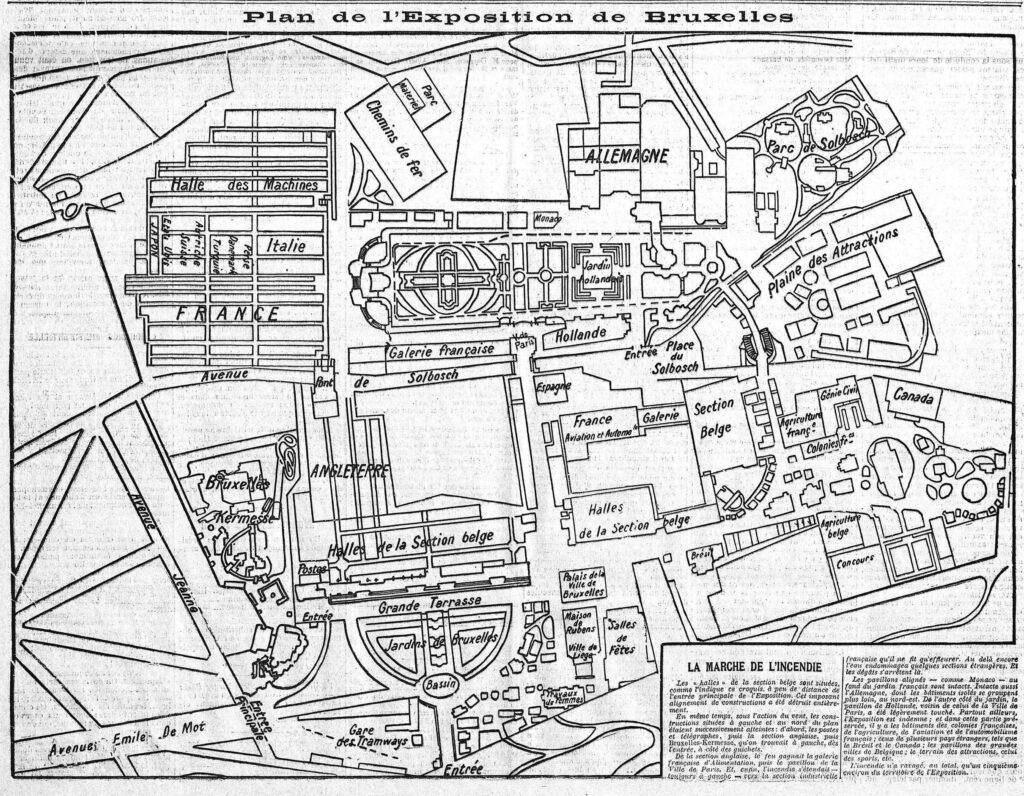
- Le Figaro, 16 August 1910, page 2. Map of the exposition.
* Moritz Ehrlich, referred to in most news accounts as M. Ehrlich, is a somewhat mysterious figure. I have not been able to find much information about him other than his claimed origin in Vienna and a later residence address at Lothringerstraße 59 in Berlin. He used Lion incubators, and his exhibits usually were named “Baby Incubator Institute” or some variation on that in the local language. He is known to have exhibited at Manchester in 1902 and 1903, Glasgow in 1903-1904, Bradford in 1904, Liege in 1905, Birmingham in 1905, Bucharest in 1906, Dublin in 1907, Edinburgh in 1908, Motherwell Scotland in 1934, Brussels in 1910, and Brussels in 1935. Undoubtedly there were others as yet unidentified. He also had some connection with Albert Leotardi, another entrepreneur on the incubator exhibit circuits, as evidenced by a lawsuit between them filed in Berlin on September 12th, 1899.
More Information about Alexandre Lion
- General Information
- Alexandre Lion
- The Lion Incubator
- The Engineer and the Newborns, by W. A. Nelson and Paul L. Toubas
- Lion Patents (France)
- Patent 201550, 1889, Couveuse électro-automatique
- Patent 221716, 1892, Couveuse automatique
- Patent 262090, 1896, Chambre vivifiante
- Patent 281687, 1898, Système de filtration de l’air
- Patent 287557, 1899, Système de filtration des fumées, de l’air et de toutes masses gazeuses avec tirage et ventilation
- Patent 189989, 1899, Appareil pour le filtrage et la purification de l’air et des fumées
- Maternité Lion Institutes and City Exhibits
- Alexandre Lion’s first incubator baby exhibit in Marseille, 1890.
- Œuvre Maternelle des Couveuses d’Enfants, Nice
- Œuvre Maternelle des Couveuses d’Enfants, Lyon
- Œuvre Maternelle des Couveuses d’Enfants, Paris
- Œuvre Maternelle des Couveuses d’Enfants, Toulouse
- Œuvre Maternelle des Couveuses d’Enfants, Amiens
- Œuvre Maternelle des Couveuses d’Enfants, New York
- Œuvre Maternelle des Couveuses d’Enfants, Barcelona
- Œevre Maternelle des Couveuses d’Enfants, Brussels
- Maternité Lion Souvenir Booklets
- Œuvre Maternelle des Couveuses d’Enfants , Paris Institute, Booklet Version #1 (appears to be ~1896)
- Œuvre Maternelle des Couveuses d’Enfants , Paris Institute, Booklet Version #2 (appears to be ~1901)
- Pamphlet from Alexander Lion’s exhibit at the 1898 exhibition in Torino, Italy. (PDF supplied by Dr. Thijs Gras, Amsterdam)
- Press Coverage
- La Maternité “Lion de Nice” pour Enfants Nés Avant Terme ou Débiles, by Dr. Ciaudo, 1895. Source: gallica.bnf.fr.

- Presentation d’Appareil, by M. A. Pinard, Bulletin de l’Académie nationale de médecine, 1893. Source: gallica.bnf.fr.
- Les couveuses d’enfant et le gavage, by César-A Queirolo, Includes discussion of Lion incubator and comparison to other types. Thèse de doctorat: Univ. Genève, 1897.
- Les Couveuses pour Enfants, Gazette Médicale de Paris, No. 40, October 6, 1900
- Couveuses d’Enfants, La Maternité Lion, Paris, La Patrie, 1897
- Paris Letter: An Improved System of Incubators, by O. Jennings, Pediatrics 1:427-428, 1896
- Baby Incubators, The Strand Magazine, 1896, by James Walter Smith
- Human Infant Incubation: A True Fairy-Tale of Modern Science from Leslie’s Weekly, 1897
- The Saving of Human Life, Maternité Lion in NYC, The Literary Digest, 1898
- Immature Infants in France, from The Lancet, January 16, 1897, page 196.
- De Lion Incubator at Low Maternity Hospital, by Francis H. Stuart, Brooklyn Medical Journal, 1901
- Alexandre Lion’s Incubator Charities in Europe (1894–1898) (The Embryo Project)
- La Maternité “Lion de Nice” pour Enfants Nés Avant Terme ou Débiles, by Dr. Ciaudo, 1895. Source: gallica.bnf.fr.
- Worlds Fairs and Expositions
- Maternité Lion at the Lyon Exposition Universelle et Coloniale, 1894
- Maternité Lion at the Lyon Exposition Universelle – Le Monde Illustré, 1894
- Maternité Lion at the Bordeaux Exposition of 1895.
- “La Maternité Lion,” by Louis Énault, Journal of the Bordeaux Exposition, 1895
- Maternité Lion at the Amsterdam World Exposition, 1895
- Maternité Lion at the Berliner Gewerbeausstellung, 1896
- “Bericht ǔber die Couveuse (Lion) oder Kinderbrutanstalt” [Report about the Lion Incubator] from Berlin und seine Arbeit – Amtlicher Bericht der Berliner Gewerbe-Ausstellung 1896. English Translation.
- Maternité Lion at the Exposition National Suisse, Geneva, Switzerland, 1896
- “Quelques Réflexions sur le Fonctionnement et les Résultats des Couveuses Lion pendant l’Exposition Nationale,” by Dr. Hector Maillart, Revue Médicale de La Suisse Romande, 1896. English translation.
- Internationale Ausstellung für Körperliche Erziehung, Gesundheitspflege und Sport, Innsbruck, 1896
- Maternité Lion at the Tennessee Centennial Exposition, 1897
- Maternité Lion at the Brussels International Exposition, 1897
- Maternité Lion at the Turin L’Esposizione Generale Italiana, 1898
- Maternite Lion at the Ghent Provincial Exposition of 1899
- Maternité Lion at the Greater Britain Exhibition of 1899
- Maternité Lion at the Paris Exposition Universelle of 1900
- Maternité Lion at the Woman’s Exhibition in Earls Court, London, 1900
- Maternité Lion at the Lille Exposition of 1902
- Maternité Lion at the Exposition Internationale de Reims, 1903
- Maternité Lion at the Nantes Exposition of 1904
- Maternité Lion at the Exposition du Nord de la France, 1904
- Maternité Lion at the Liège Exposition Universelle et Internationale, 1905.
- Maternité Lion at the Marseille Colonial Exposition of 1906
- Maternite Lion at the Bordeaux International Maritime Exposition of 1907
- Maternité Lion at the Marseille Exposition Internationale d’Électricité, 1908
- Maternité Lion at the Exposition Internationale de l’Est de la France, Nancy, France, 1909
- Maternité Lion at the Brussels Exposition Universelle et Internationale, 1910
- Maternite Lion at the Exposition du Centre de la France, Clermont-Ferrand, 1910
- Maternité Liion at the Rome International Exposition of 1911
- Maternité Lion at the Turin International Exposition of 1911
- Maternité Lion at the Exposition Internationale de Dunkerque, 1912
- Maternité Lion at the Ghent International Exposition of 1913
- Maternité Lion at the Exposition Internationale Urbaine de Lyon, 1914
- Maternité Lion at the Lyon Exposition Universelle et Coloniale, 1894
French primary sources were machine-translated, then checked against the originals and edited by the author. Portions of this page were drafted with machine assistance; the final text was reviewed, verified, and edited by the author. Click here to learn more.
Last Updated on 10/05/26